powassan-encephalitis
AI, Lyme Science Blog
Sep 11

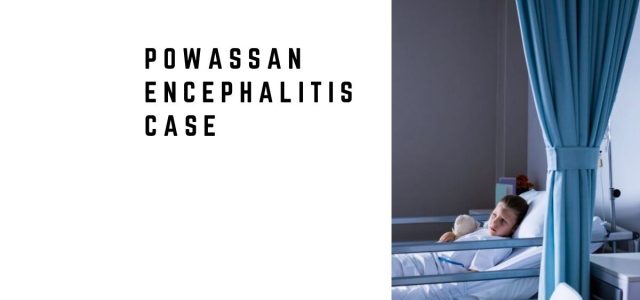
Powassan Encephalitis: Young Boy Develops It After Camping Trip

Like
Visited 410 Times, 2 Visits today

Powassan encephalitis can be transmitted within 15 minutes of tick attachment and carries a 10-15% fatality rate with up to 50% of survivors experiencing long-term neurologic damage. A 9-year-old boy developed life-threatening Powassan encephalitis one week after returning from a camping trip in northern Ontario, presenting with fever, neck stiffness, and severe headache that rapidly progressed to nonverbal unresponsiveness requiring ICU transfer. With no treatment available for Powassan virus and cases rising across North America, this tick-borne infection represents an emerging threat that can progress from initial symptoms to critical illness within days, emphasizing why tick prevention during outdoor activities is essential.

Rising Cases Across North America

This summer, a 9-year-old boy in Canada developed Powassan virus encephalitis, a life-threatening condition. In Pennsylvania, another young child was hospitalized with the virus. And, in April, an older man from Massachusetts was infected. Meanwhile, last year, a Maryland resident died from Powassan encephalitis after contracting it in Canada.

The geographic spread and increasing frequency of cases indicate Powassan virus is an emerging threat, not a rare curiosity. Cases are being reported across the northeastern United States and Canada, wherever blacklegged ticks are found.

Powassan Virus: Transmitted in 15 Minutes

The Powassan virus, which is transmitted through the bite of an infected blacklegged tick, can be deadly. And, most concerning, as cases are rising, the infection can be contracted within 15 minutes of a tick attachment.

This 15-minute transmission timeline is critical. Lyme disease typically requires 24-48 hours of tick attachment for transmission, giving time for tick checks and removal to prevent infection. Powassan virus has no such grace period — by the time you find and remove the tick, transmission may have already occurred.

Symptoms and Neurologic Complications

The virus can cause fever, headache, vomiting, loss of coordination and memory and speech problems. It can also cause encephalitis (inflammation of the brain) and meningitis (inflammation of the membranes surrounding the brain and spinal cord.)

However, it often does not present with any symptoms, according to the CDC.

This asymptomatic presentation is particularly concerning. Many infected individuals never know they had Powassan virus, but those who develop neuroinvasive disease face devastating complications. The unpredictability — most have no symptoms, some develop fatal encephalitis — makes it impossible to predict outcomes.

Powassan Encephalitis Can Be Deadly

From 2004 to 2022, the US reported 288 cases of Powassan virus infection. Of these cases, 72 (25%) occurred in children, 264 patients (92%) required hospitalization, and 36 patients (13%) died.

Patients infected with the virus have a “10% risk of developing fatal encephalitis and up to 50% of infected patients have long-term neurologic damage.”

Up to 50% of patients have long-term neurologic complications.

The prognosis for individuals with Powassan virus neuroinvasive disease is poor. The case fatality rate is 10%–15%, and survivors have about a 50% probability of persistent neurologic deficits, including headaches, altered mental status, and cognitive difficulties.

These statistics are sobering. A 10-15% chance of death and 50% chance of permanent neurologic damage means most patients with neuroinvasive Powassan disease will either die or have lifelong disability. Unlike Lyme disease, which is treatable with antibiotics, there is no treatment for Powassan virus.

No Treatment Available

There is no treatment for the Powassan virus.

This bears repeating: there is no antiviral medication, no immunotherapy, no cure. Treatment is purely supportive — IV fluids, respiratory support, seizure management, monitoring. Doctors can only support patients through the acute illness and hope their immune system clears the virus before irreversible brain damage occurs.

Case Report: 9-Year-Old Boy

In July, a 9-year-old boy, residing in Canada, was hospitalized with Powassan encephalitis, after returning from a camping trip in northern Ontario.

Blatman and colleagues describe the case in their article, “Powassan virus encephalitis in a 9-year-old.”

The young boy was admitted to the hospital with a fever, neck stiffness and headache, which began 1 week after returning from his camping trip.

The one-week incubation period is typical for Powassan virus. Symptoms appear 7-10 days after tick bite, initially resembling viral meningitis or other infections.

Initial Treatment for Presumed Bacterial Meningitis

Initially, he was treated with ceftriaxone and vancomycin for suspected meningitis.

PCR testing of the CSF for viral causes of meningitis or encephalitis, however, was negative. Bacterial culture and Gram stain of the CSF sample was also negative. And, an MRI of the brain was unremarkable.

The patient had no known tick bites or rashes.

“Over the next 48 hours, blood cultures showed no growth,” the authors state. However, “The patient remained persistently febrile with ongoing severe headache.”

This diagnostic uncertainty is common in Powassan cases. Standard bacterial and viral testing comes back negative. MRI may be initially normal. Without tick bite history or rash, clinicians have few clues pointing toward tick-borne infection.

Rapid Deterioration to ICU

After 3 days in the hospital, the boy’s condition worsened and he was transferred to the ICU. At this point, he was nonverbal and nonresponsive to commands, according to the authors.

Testing for Lyme disease was negative.

“Tick-borne Powassan virus encephalitis is associated with high mortality and a risk of long-term neurologic sequelae in survivors.”

The progression from fever and headache to nonverbal unresponsiveness in just three days demonstrates the aggressive nature of Powassan encephalitis. This isn’t a slowly progressive illness — it’s a medical emergency that can deteriorate within hours.

Diagnostic Findings

Repeat EEG showed generalized slowing of brain activity. Meanwhile, a repeat MRI of the patient’s brain and full spine showed subtle bilateral basal ganglia and substantia nigra.

However, CSF testing was negative for autoimmune encephalitis.

The basal ganglia and substantia nigra involvement on MRI is significant — these deep brain structures control movement, coordination, and cognitive function. Damage here explains the altered mental status and neurologic deficits. The EEG slowing indicates diffuse brain dysfunction.

Treatment Attempt With IVIG

“Given concern for potential autoimmune encephalitis, the patient received intravenous immunoglobulin at a dosage of 1 g/kg for 2 days, with notable improvement in his level of consciousness within 24–48 hours,” the authors state.

Within 2 months, the boy had made a complete recovery.

The IVIG response is interesting. While there’s no specific antiviral for Powassan, immunoglobulin may modulate the immune response and reduce inflammation. Whether the improvement was from IVIG or natural viral clearance is uncertain, but the complete recovery is remarkable given the severity of his presentation.

Age and Mortality Risk

New research indicates that the Powassan virus may be more deadly in older patients. “… only minimal infectious doses of the virus were highly lethal in older mice and that lethality increased >10-fold with age,” states Mackow.

This age-dependent lethality has important implications. While children like this 9-year-old can develop severe disease, older adults face dramatically higher mortality risk. This suggests elderly patients with tick exposure and unexplained neurologic symptoms warrant urgent evaluation for Powassan virus.

The Need for Clinical Awareness

“Increased awareness of Powassan virus among clinicians in Canada will likely lead to increased identification of Powassan virus and other arthropod-borne infections, which should always be reported,” the authors state.

Clinical Perspective

This case highlights the diagnostic challenges and clinical urgency of Powassan encephalitis in children. The boy presented with classic meningitis symptoms — fever, neck stiffness, headache — one week after a camping trip. Yet without known tick bite or rash, and with negative initial testing for common causes, the diagnosis was elusive.

The rapid deterioration from verbal responsiveness to nonverbal unresponsiveness within three days is typical of severe Powassan encephalitis. Unlike Lyme-related cognitive symptoms which typically progress gradually over weeks to months, Powassan neuroinvasive disease can progress to life-threatening complications within days.

The absence of tick bite history deserves emphasis. Most patients don’t recall tick bites, particularly children who may not notice or report them. The nymphal blacklegged ticks that transmit Powassan are tiny — poppy seed sized — and easily missed. Lack of tick bite history should never exclude tick-borne infection from the differential.

The initial MRI being unremarkable is also important. Early in encephalitis, imaging may be normal despite severe clinical symptoms. Only on repeat MRI days later were basal ganglia and substantia nigra changes visible. This means normal initial brain imaging doesn’t rule out encephalitis — clinical judgment and repeat imaging are essential.

The IVIG treatment, while empiric for suspected autoimmune encephalitis, may have contributed to his recovery. Some experts advocate for IVIG in severe viral encephalitis to modulate immune responses, though evidence is limited. His dramatic improvement within 24-48 hours suggests either IVIG benefit or fortunate timing with natural viral clearance.

The complete recovery after two months is fortunate but atypical. Given that 50% of Powassan survivors have permanent neurologic deficits, his full recovery represents the best-case scenario. Many children and adults are left with cognitive impairment, motor deficits, or seizure disorders requiring lifelong management.

The broader public health implications are concerning. With 25% of Powassan cases occurring in children and 92% requiring hospitalization, this isn’t a rare disease we can ignore. The 15-minute transmission time eliminates the protective window that tick checks provide for Lyme disease prevention. And with no treatment available, prevention through tick avoidance is the only strategy.

For families planning outdoor activities in endemic areas — essentially anywhere blacklegged ticks are found from northeastern United States through Canada — tick prevention is essential: permethrin-treated clothing, DEET repellent, staying on trails, avoiding tall grass and brush. But even with perfect prevention, ticks can still attach. This case reminds us that any child with fever and neurologic symptoms after outdoor activities in endemic areas deserves evaluation for tick-borne infections, even without tick bite history.

Frequently Asked Questions

Can children get Powassan encephalitis?

Yes. From 2004 to 2022, 25% of reported Powassan virus cases in the US occurred in children. Children can develop serious complications including encephalitis requiring ICU care.

What are the symptoms of Powassan encephalitis in children?

Symptoms include fever, neck stiffness, headache, vomiting, loss of coordination, and altered mental status. Some children may be nonverbal or unresponsive. Symptoms typically appear 7-10 days after tick bite.

Can you recover from Powassan encephalitis?

Recovery is possible, but up to 50% of survivors have long-term neurologic complications including cognitive deficits, motor problems, and seizures. The case fatality rate is 10-15%.

How fast can Powassan virus be transmitted?

Powassan virus can be transmitted within 15 minutes of tick attachment, much faster than Lyme disease which requires 24-48 hours. This rapid transmission eliminates the protective window that tick checks provide for Lyme prevention.

Is there treatment for Powassan encephalitis?

No. There is no antiviral medication or specific treatment for Powassan virus. Treatment is purely supportive — IV fluids, respiratory support, seizure management. Some patients may receive IVIG for suspected immune-mediated inflammation.

Why was Lyme disease testing negative in this case?

This patient had Powassan virus, not Lyme disease. Both are transmitted by blacklegged ticks, but they’re different infections requiring different testing. Coinfections can occur when a single tick transmits multiple pathogens.

How common is Powassan virus?

From 2004 to 2022, 288 cases were reported in the US. However, actual cases are likely higher as many infections are asymptomatic. Cases are increasing, particularly in the northeastern United States and Canada.

References:

  1. Blatman A, et al. Powassan virus encephalitis in a 9-year-old. CMAJ 2024 August 26;196:E973-6. doi: 10.1503/cmaj.240227
  2. Mladinich MC et al. Age-dependent Powassan virus lethality is linked to glial cell activation and divergent neuroinflammatory cytokine responses in a murine model. Journal of Virology (2024). DOI: 10.1128/jvi.00560-24
  3. Siegel E, et al. Passive surveillance of Powassan virus in human-biting ticks and health outcomes of associated bite victims. Clinical Microbiology and Infection, Volume 30, Issue 10, 1332-1334

Related Posts

Leave a Comment

Your email address will not be published. Required fields are marked *