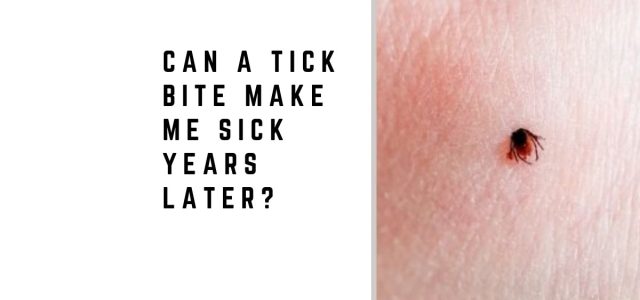
Can a Tick Bite Make Me Sick Years Later?
Many patients ask the same troubling question years after a hiking trip, camping vacation, or unexplained illness:
Can a tick bite make me sick years later?
For some individuals, the answer may be yes.
Not everyone with Lyme disease becomes seriously ill right away. Some people recover quickly after treatment. Others experience symptoms that evolve slowly over time—sometimes months or years after the original exposure.
Why the Timeline Can Be Confusing
Most people expect Lyme disease to begin immediately after a tick bite with a rash, fever, or flu-like illness.
Sometimes it does.
But many patients never notice a tick bite or develop a classic bull’s-eye rash.
Others experience mild symptoms that fade temporarily before more persistent problems appear later.
Patients may initially attribute symptoms to:
- Stress
- Aging
- Overwork
- Sleep problems
- Viral illness
- Anxiety or burnout
Only later—when symptoms worsen or begin affecting daily function—does the possibility of Lyme disease re-emerge.
At that point, the concern is no longer theoretical—it is personal.
Can Lyme Disease Remain Unrecognized for Years?
Yes. Studies have described patients with neurologic Lyme disease whose illness persisted for years before diagnosis.
Logigian and colleagues described patients with chronic neurologic manifestations of Lyme disease who experienced fatigue, memory impairment, sleep disturbance, headaches, and nerve-related symptoms long after the original infection.
These patients often had fluctuating symptoms and delayed recognition of their illness.
Halperin also reviewed the neurologic manifestations of Lyme disease, describing how Lyme infection may involve both the central and peripheral nervous systems.
Neurologic symptoms may include:
- Brain fog
- Memory difficulty
- Numbness or tingling
- Balance problems
- Dizziness
- Facial weakness
- Headaches
- Sleep disruption
Why Symptoms May Appear Later
There are several possible explanations for delayed symptom recognition.
In some individuals, the original infection may have been mild or partially treated.
Others may have experienced subtle symptoms that slowly evolved over time.
Physical stress, surgery, illness, hormonal shifts, sleep disruption, or major life stressors sometimes appear to precede worsening symptoms.
These events do not necessarily cause disease themselves, but they can reveal an underlying vulnerability or worsen preexisting dysfunction.
Does This Mean Active Infection Is Always Present?
No.
Symptoms appearing long after exposure do not automatically prove ongoing infection.
Some clinicians believe persistent symptoms may reflect immune dysregulation, inflammation, nervous system dysfunction, or residual tissue injury following infection.
Others believe persistent infection may continue contributing to symptoms in at least some patients.
This uncertainty is one reason patients continue asking whether a past tick bite could explain illness years later.
Why Missed Lyme Disease Matters
Delayed diagnosis may allow symptoms to become more widespread and difficult to recognize.
Patients with delayed Lyme disease diagnosis are often evaluated for:
- Fibromyalgia
- Chronic fatigue syndrome
- Autoimmune disease
- Anxiety disorders
- Depression
- Functional neurologic disorders
Some patients ultimately discover that earlier unexplained symptoms may have followed outdoor exposure or an unnoticed tick bite years before.
Key Takeaway
Can a tick bite make you sick years later?
For some patients, symptoms associated with Lyme disease may evolve gradually and only become fully recognized long after the original exposure.
Symptoms appearing years later do not automatically prove persistent infection, but delayed recognition of Lyme disease is well documented.
If unexplained fatigue, neurologic symptoms, joint pain, cognitive dysfunction, or autonomic symptoms follow possible tick exposure—even years earlier—Lyme disease may deserve consideration as part of a broader medical evaluation.
Frequently Asked Questions
Can Lyme disease symptoms appear years later?
Some patients report symptoms that evolve gradually over time and are only recognized years after the original infection or exposure.
What if I never saw a tick bite?
Many patients with Lyme disease do not remember a tick bite because deer ticks can be extremely small and easy to miss.
Can Lyme disease symptoms come and go?
Yes. Symptoms may fluctuate over time, sometimes improving temporarily before worsening again.
Does delayed illness prove active infection?
Not necessarily. Persistent symptoms may involve multiple mechanisms including inflammation, immune dysfunction, autonomic dysfunction, or possibly persistent infection in some patients.
References:
- Logigian EL, Kaplan RF, Steere AC. Chronic neurologic manifestations of Lyme disease. N Engl J Med. 1990;323(21):1438-1444.
- Halperin JJ. Neurologic manifestations of Lyme disease. Curr Infect Dis Rep. 2011;13(4):360-366.
Dr. Daniel Cameron, MD, MPH
Lyme disease clinician with over 30 years of experience and past president of ILADS.
Symptoms • Testing • Coinfections • Recovery • Pediatric • Prevention


I have lived with dogs and bush areas my whole life. Had huge tick bite and got very ill. I have had it a few times but each time not so bad. Now at 70 I am now beginning to wonder if I have Lymes. I suspect I do and am often under the weather wit lots of body pains, neurological problems. Dr just looks at me when I ask to be tested as if I am crazy. Ticks are part of my life, pull them of daily. Dogs are treated but they hitchhike and come to me.
It took me 7 or 8 mos. to get the doxy I knew I needed. Dr. wouldn’t help because of negative lyme test ( a joke, anyway), but I had the tick, dated when I took it off of me, and it was the Lone Star tick. Went through months thinking I was going to die. Once I found an outlet for the doxy I stayed on it for 2 to 3 mos. Went to a wound clinic, they punched the bite out of my leg, and sent to a university. Had a disease, and mouth of that tick had stayed in my leg all those months.
Needless to say, I am 71 and fearing the possibility of the disease being back or I have several new saved ticks and dates. Like you, help is not out there. For one thing, I had always heard and am experiencing now, the fact that when you get older and hit a certain age, modern-day doctors don’t want to really try to find out what is going on with you….it is always “you’re getting older or it is just your age”. Very frustrating! Good luck to you!
I am sorry to hear you struggle. Two things. The mouth part typically works it way out. I remove the mouth part if someone comes in early. The Black Legged deer tick is the main vector rathe than Lone Star Tick.
Ich bin 1968, acht Jahre nach einem Zeckenstich mit blasser Hautrötung, erkrankt. Der Beginn war eine Überanstrengung beim Maschine schreiben. Die Erkrankung ist schrittweise vorangegangen (auch nach einer unnötigen Blinddarmoperation) und hat sich zwei Jahre später eine akute Nervensystem-Erkrankung ergeben.
Die LB wurde nicht erkannt und mit Cortisol behandelt.
Bis heute bin ich chronisch krank. Antibiotikatherapien führen nun zu lang anhaltenden Herxes, eine Besserung ist derzeit ungewiss.
Ich wollte mit diesem Bericht sagen, dass eine LB nach einem Zeckenstich Jahre später auftreten kann.
Ich danke Herrn Dr. Cameron für die interessanten immer leicht verständlichen Posts.
Beste Grüße aus Österreich.