Contact us at 914-666-4665

Dr. Daniel Cameron

Board-certified physician with 38+ years specializing in Lyme disease and tick-borne illnesses. Past President of ILADS (International Lyme and Associated Diseases Society) and first author of ILADS treatment guidelines. Dr. Cameron operates a solo practice focused on patient advocacy and evidence-based Lyme disease treatment. He is the author of 1,100+ articles spanning diagnosis, treatment, co-infections, and recovery from tick-borne illnesses. His work challenges conventional approaches that often leave patients undiagnosed or undertreated, emphasizing clinical judgment over rigid adherence to testing criteria that frequently produce false negatives.

Dr. Daniel Cameron

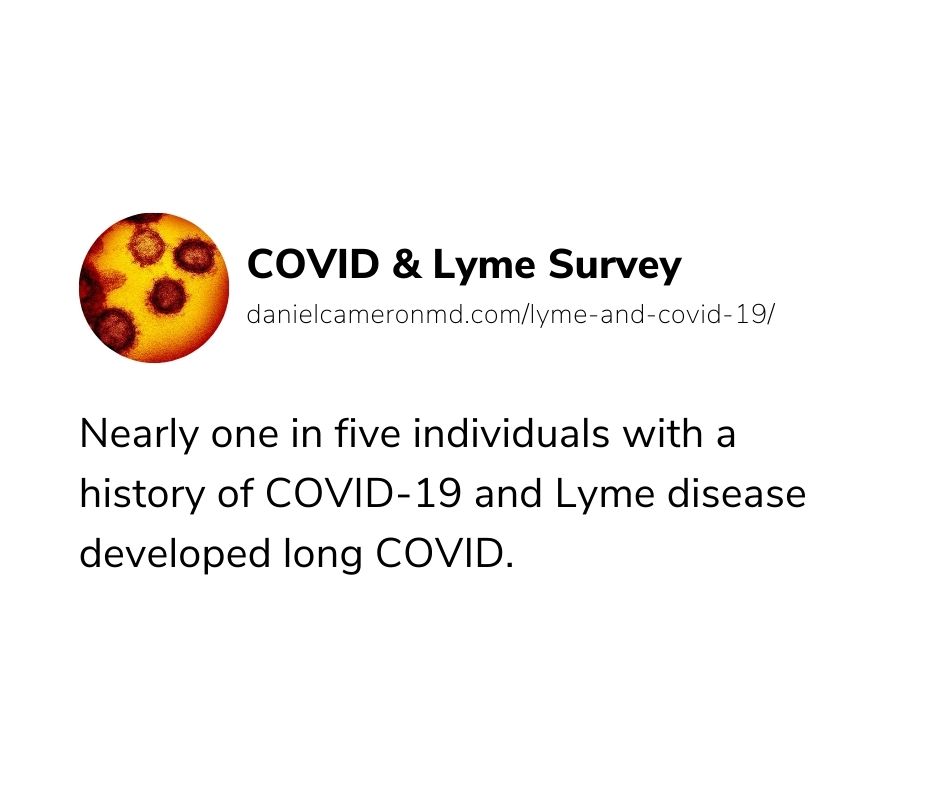
Nearly one in five individuals with a history of COVID-19 and Lyme disease developed long COVID.

Nearly One in Five Individuals with COVID-19 and Lyme Disease History Developed Long COVID In my peer-reviewed study published in the journal Antibiotics (2023), I examined the experiences of 889 individuals with a history of Lyme disease who contracted COVID-19. The findings were striking: nearly one in five developed Long COVID.This rate is significantly higher […]
Nearly one in five individuals with a history of COVID-19 and Lyme disease developed long COVID. Read More »

Can Lyme Cause Weight Loss or Weight Gain?

Lyme Disease Weight Gain and Weight Loss: Why Both Happen

Lyme Disease Weight Gain and Weight Loss: Why Both Happen Lyme disease weight gain and weight loss can both occur—and often confuse patients. Some people lose weight quickly without trying. Others gain weight despite eating the same or less. These changes reflect how Lyme disease affects inflammation, metabolism, hormones, gut function, sleep, and the autonomic

Lyme Disease Weight Gain and Weight Loss: Why Both Happen Read More »

Why Lyme Patients Feel “Tired But Wired”

Tired but Wired Lyme Disease: Why Your Brain Won’t Shut Off

Tired but Wired Lyme Disease: Why Your Brain Won’t Shut Off After 37 years treating Lyme disease, I’ve seen patients struggle to explain a pattern that feels contradictory but deeply real: “My body is exhausted, but my brain won’t shut off.” This tired-but-wired pattern is common in early Lyme disease, during treatment, and often persists

Tired but Wired Lyme Disease: Why Your Brain Won’t Shut Off Read More »

Muscle Pain in Lyme Disease: Symptoms, Causes, and Patterns

Sacroiliitis in Lyme Disease as a Cause of Low Back Pain

Sacroiliitis in Lyme Disease as a Cause of Low Back Pain When Back Pain Doesn’t Add Up You’ve tried stretching, therapy, or even imaging — but your back pain won’t quit.For some, this pain isn’t purely mechanical. Many Lyme disease patients report chronic back or hip pain that actually stems from sacroiliac joint inflammation —

Sacroiliitis in Lyme Disease as a Cause of Low Back Pain Read More »

Why Lyme prevention fails

Why Lyme Disease Prevention Fails: The Mindset That Leads to Illness

Do Lyme Disease Prevention Methods Really Work? What the Evidence Shows Do Lyme disease prevention methods actually work? Tick checks, repellents, and protective clothing are widely recommended—but the evidence supporting them is more limited and inconsistent than many expect. Understanding what actually works to prevent Lyme disease requires looking beyond general recommendations and examining how

Why Lyme Disease Prevention Fails: The Mindset That Leads to Illness Read More »

Night Sweats Babesia: The Symptom Doctors Miss

Babesia Air Hunger: Why Breathing Feels Manual

Babesia Air Hunger: Why Breathing Feels Manual Babesia air hunger causes a sudden, terrifying sensation of not being able to draw a full breath, even when oxygen levels appear normal. For a broader overview of Babesia symptoms, testing, and treatment, see our Babesia and Lyme disease guide. The first time many patients experience it, the

Babesia Air Hunger: Why Breathing Feels Manual Read More »

babesia treatment protocol medications

Babesia Coinfection Treatment: Options When Lyme Fails

Babesia Coinfection Treatment: Options When Lyme Fails When Lyme disease treatment fails to resolve symptoms, co-infections like Babesia are frequently the missing piece. Understanding treatment options for this parasite can make a significant difference in recovery outcomes. Why Babesia Treatment Matters When Lyme Therapy Fails When patients remain ill after Lyme disease treatment, co-infections like

Babesia Coinfection Treatment: Options When Lyme Fails Read More »

Why Medicine Must Refuse to Abandon Lyme Patients

When Lyme Guidelines Fail Patients

When Lyme Guidelines Fail Patients This discussion highlights ethical failures that occur when patients are dismissed in the face of diagnostic uncertainty. When Policy Replaces Judgment: Justice and Diagnostic Uncertainty in Lyme Disease Modern medical policy is designed to protect patients. Guidelines aim to standardize care, reduce harm, and prevent overtreatment. But when policies are

When Lyme Guidelines Fail Patients Read More »

Lyme Disease Treatment Options Explained

Lyme Disease Treatment Options Explained

Lyme Disease Treatment Options Explained Lyme disease treatment is often described as straightforward: identify the infection, prescribe antibiotics, and expect recovery. For many patients, that approach works well. For others, treatment is far more complex. In clinical practice, patients present at different stages of illness, with varying symptoms, co-infections, immune responses, and treatment histories. These

Lyme Disease Treatment Options Explained Read More »