Doxycycline Shortage in the Hudson Valley: What It Meant for Lyme Disease Patients
The doxycycline shortage Lyme disease patients faced in the Hudson Valley highlights a critical vulnerability: access to treatment can disappear when it is needed most.
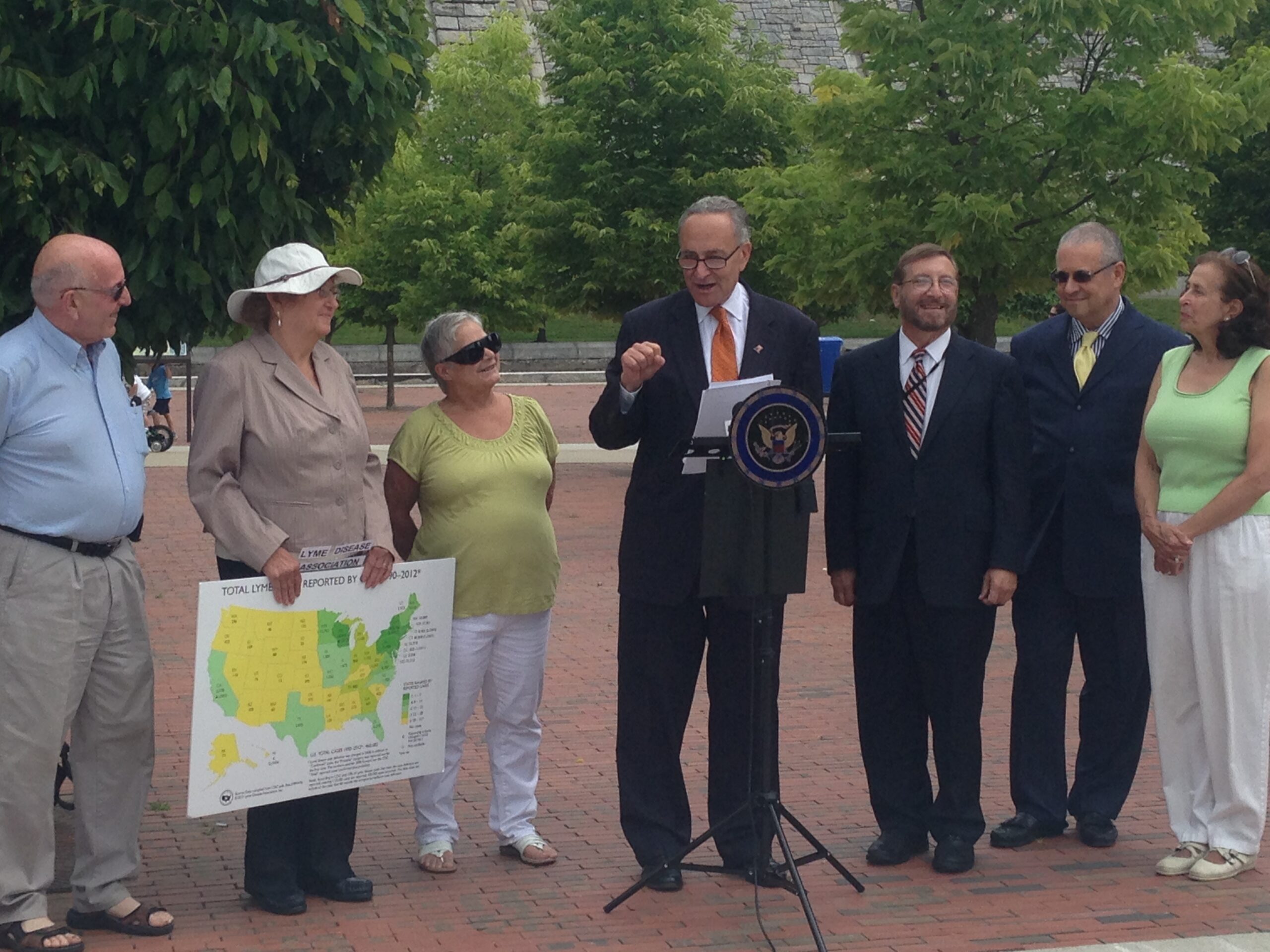
Ira Aurebach, Pat Smith, Rachel Dildilian, Senator Schumer, Dr. Robert Amler, Dr. Daniel Cameron, and Jill Aurebach
Senator Schumer Addresses Doxycycline Shortage During Peak Lyme Season
During a press conference on August 12, 2004, Senator Schumer addressed a growing shortage of doxycycline in the Hudson Valley, New York. At the time, Lyme disease cases were rising sharply across the region.
Access to doxycycline—one of the most commonly prescribed antibiotics for early Lyme disease—was becoming increasingly limited.
Senator Schumer warned:
“Looming shortage of doxycycline, an antibiotic used to treat Lyme disease, is sending the price of the drug skyrocketing during one of the worst Lyme seasons.”
“Lyme disease is increasing throughout the Hudson Valley and across New York State… Access to doxycycline is essential to prevent high-risk tick bites from progressing to chronic Lyme disease.”
The Senator called on the FDA to investigate the situation and stabilize supply.
Media Coverage Highlights the Impact of the Doxycycline Shortage
Reporting by The Journal News documented the real-world consequences of the shortage:
- “There’s a lot of price gouging going on,” said pharmacist Stuart Feldman.
- The cost of 500 generic doxycycline pills reportedly rose from ~$60 to $1,600.
- Other pharmacies reported similar dramatic price increases.
- Limited supply made it difficult for patients to access timely treatment.
This combination of rising demand and reduced supply created a perfect storm for patients.
Patient and Physician Concerns
Advocates and clinicians—including Dr. Robert Amler, Dr. Daniel Cameron (then President of ILADS), Pat Smith, Jill Aurebach, and Rachel Dildilian—spoke in support of federal action.
Their concerns focused on a simple but critical issue:
If patients cannot access treatment early, the risk of long-term complications increases.
As reported:
- “It is very hard for people to afford it,” said Rachel Dildilian.
- Dr. Amler emphasized prevention and early treatment.
- Dr. Cameron stressed the importance of timely care.
- “If you don’t, the price is a steep one.”
Why This Matters
Doxycycline is a first-line treatment for early Lyme disease and is often used to prevent progression following a high-risk tick bite.
When access is limited, the consequences extend beyond cost—they affect outcomes.
Delays in treatment can lead to:
- More severe illness
- Persistent symptoms
- Increased healthcare burden
This shortage highlights how supply chain issues can directly impact patient care.
Clinical Perspective
The doxycycline shortage in the Hudson Valley serves as a reminder that effective treatment depends not only on medical knowledge—but also on access.
Public health planning must account for medication availability during peak disease seasons.
Ensuring access to essential antibiotics is critical to preventing long-term complications of Lyme disease.
When early treatment is delayed, patients often pay the price.
Dr. Daniel Cameron, MD, MPH
Lyme disease clinician with over 30 years of experience and past president of ILADS.
Symptoms • Testing • Coinfections • Recovery • Pediatric • Prevention