Babesia in Canada: An Emerging Coinfection With Lyme Disease
Babesia is spreading beyond the U.S.
Coinfection with Lyme is common
Symptoms may be more severe
Diagnosis can be challenging
Babesia in Canada is emerging as an important tick-borne infection—often occurring alongside Lyme disease. This coinfection can increase symptom severity and complicate diagnosis and treatment. :contentReference[oaicite:0]{index=0}
The spread of tick-borne illnesses has been evolving, with growing recognition that Babesia microti may now be established in parts of Canada.
First Reported Case in Canada
Researchers identified one of the first known cases of Babesia microti infection in Manitoba.
A 7-year-old boy with a complex medical history:
- Acquired the infection locally
- Had not traveled outside the province
- Was successfully treated with atovaquone and azithromycin
This case raised concern that Babesia transmission is occurring within Canada.
Evidence Babesia Is Established in Canada
Investigators found multiple indicators supporting local transmission:
- Babesia-infected blacklegged ticks identified in multiple Manitoba locations
- Prevalence rates ranging from 1.8% to 10%
- Detection of Babesia in rodent populations
- Evidence of infected bird-borne ticks in Ontario
These findings suggest the infection is not isolated but part of a broader ecological shift.
Why Babesia and Lyme Disease Often Occur Together
Babesia and Lyme disease share the same tick vector.
Research shows:
- Borrelia burgdorferi and Babesia microti frequently co-occur in ticks
- Coinfection increases human exposure risk
Patients infected with both organisms may experience more severe and prolonged illness.
For more, see Lyme coinfections overview.
Symptoms of Babesia Infection
Babesia symptoms can vary widely.
Common symptoms include:
- Fever and chills
- Sweats
- Fatigue
- Headaches
- Muscle aches
- Nausea
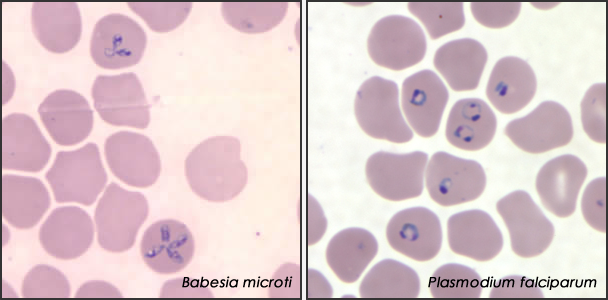
The infection can also cause hemolytic anemia, as the parasite infects red blood cells.
Some individuals remain asymptomatic, while others—particularly older or immunocompromised patients—may develop severe illness.
Why Babesia Is Difficult to Diagnose
Babesia is frequently missed.
Challenges include:
- Symptoms overlap with Lyme disease and other infections
- Blood smear testing detects only a subset of cases
- PCR and antibody testing are often required
Coinfection can further complicate diagnosis.
Treatment Considerations
Babesia requires different treatment than Lyme disease.
- Standard Lyme antibiotics (e.g., doxycycline) are not effective
- Common regimens include atovaquone plus azithromycin
Proper diagnosis is essential to guide appropriate therapy.
Additional Risks
Unlike Lyme disease, Babesia can be transmitted through:
- Blood transfusion
This makes it a concern beyond tick exposure alone.
Clinical Takeaway
Babesia in Canada is an emerging public health concern.
Coinfection with Lyme disease can increase symptom severity and complicate diagnosis.
Clinicians should consider Babesia in patients with persistent or severe symptoms—especially in endemic regions.
Dr. Daniel Cameron, MD, MPH
Lyme disease clinician with over 30 years of experience and past president of ILADS.
Symptoms • Testing • Coinfections • Recovery • Pediatric • Prevention
Given the complete lack of Lyme/Babesia specialists in Canada, how could anyone say that this illness is “new” or “emerging”?
This narrative is nothing more than a shallow attempt of the medical community to cover their behind after decades of extreme neglect. There are over thirty know species of Babesia; only a handful of those bacteria have any identifiable lab tests. The tests that do exist are in no way reliable.
You sir are spreading misinformation in order to cover the tracks of gross medical mismanagement. You should be ashamed of yourself.
I’m from Toronto Canada. I’m positive on a Babesia Fish test. I can’t afford to go to Europe. Why is this not on the Toronto public health. Mepron is 770$ a month way overpriced!!
Doctors in the U.S. are increasingly recognizing Babesia following a tick bite. B. microti, the causative agent of Babesia, is the second most common infection in the tick in the NorthEastern United States. It follows a tick bite. Other modes of transmission have not been studied. It is important for a doctor to make sure the the clinical picture fits in case the Babesia test is a false positive. It is a shame that the cost has not dropped for Mepron even with the introduction of a generic product.
Ok. So where in B.C. can a test be performed for Babesia? Anyone?
We have a mother and her three children here in Alberta. Mother has Lyme disease. Three children tested positive for babesia, oldest daughter is quite ill now. They need treatment, can you recommend someone. They live here in Alberta, Canada.
Sorry to hear you are finding it difficult to find a doctor. I am not familiar with the doctors in your area.
Join Canadian Lyme groups and they will point in right direction
Check out Dr Taylor in Calgary. She’s an ILADS trained naturopath, who can prescribe. She treats Lyme patients from all over Canada. She’s amazing!
https://www.drtaylornd.com/
I live in Kentucky, USA. I presented with flu-like symptoms, 102+ fever…I continue to have a low-grade fever, extreme fatigue, aches…received a positive blood test for babesia. My dr. Sent me to an infectious disease dr who then ran a PCR, which came back negative. I continue to have episodes of flu-like symptoms with 102 fever…but neg. On flu. Are there any conditions that can mimic and give a false positive?
There are several Babesia tests
1. parasites in the red blood cells if caught early
2. PCR
3. antibodies.
Some patients never have a positive test. I used clinical judgment after ruling out other causes.