Lyme Disease Prevention: How to Avoid Tick Bites and Reduce Your Risk
Preventing tick bites is the best way to reduce Lyme disease risk.
Personal protective measures and yard management both play a role.
No single strategy eliminates risk, so combining approaches works best.
Lyme disease prevention starts with reducing exposure to infected blacklegged ticks. The most useful strategies include using tick repellents, wearing protective clothing, checking for ticks after outdoor activities, showering after being outdoors, removing attached ticks promptly, and reducing tick habitat around the home.
“The probability of being infected with Lyme disease is related to the risk of encounters with Ixodes scapularis ticks infected with Borrelia burgdorferi sensu lato, which reflects both the environmental tick hazard and human behaviors,” writes Bron and colleagues in the journal Ticks and Tick-borne Diseases.1
In other words, the risk of Lyme disease depends not only on whether infected ticks are present in the environment, but also on how people work, play, garden, hike, care for their yards, and protect themselves after outdoor exposure.
How to prevent Lyme disease
The most practical way to prevent Lyme disease is to reduce the chance of a tick bite. This is especially important for people who live in or travel to areas where Lyme disease is common, including many parts of the Northeast, Mid-Atlantic, upper Midwest, and other expanding regions of the United States.
Common prevention steps include:
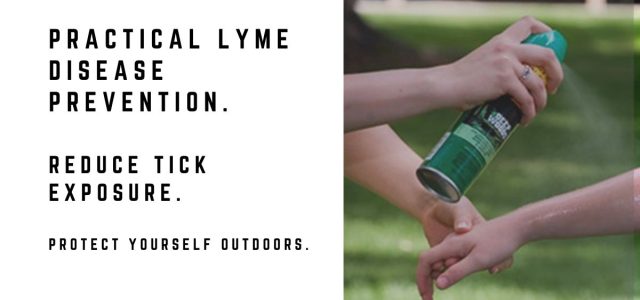
- Use an EPA-registered tick repellent when outdoors.
- Wear long sleeves, long pants, and socks when walking in grassy, brushy, or wooded areas.
- Wear light-colored clothing to make crawling ticks easier to see.
- Tuck pants into socks when practical.
- Avoid walking through tall grass, brush, and leaf litter whenever possible.
- Stay near the center of marked trails and avoid brushing against vegetation.
- Consider permethrin-treated clothing for higher-risk outdoor exposure.
- Check your body carefully for ticks after being outdoors.
- Shower or bathe soon after coming indoors.
- Check children, pets, shoes, backpacks, and clothing for ticks.
- Remove attached ticks promptly and properly.
Prompt tick removal may reduce the risk of Lyme disease because transmission generally requires time after tick attachment, although the exact timing can vary.
Pets can carry ticks into the home, so routine tick checks and veterinarian-recommended tick prevention products are also important.
These measures are not perfect, but they can reduce the risk of tick attachment and may lower the chance of developing Lyme disease symptoms after outdoor exposure.
How to Check Yourself for Ticks and Early Signs of Lyme Disease
You cannot determine through a self-check alone whether you have Lyme disease. However, checking carefully for ticks and monitoring for an expanding rash or new symptoms can help you recognize when medical evaluation is needed.
After spending time outdoors, examine your clothing, gear, pets, and entire body. Pay particular attention to:
- The scalp and hairline
- Behind the ears
- Under the arms
- Around the waist and belly button
- The groin and between the legs
- Behind the knees
- Around the ankles and between the toes
Use a full-length or handheld mirror to examine areas that are difficult to see, or ask another person to help. Immature blacklegged ticks can be extremely small and easy to miss. Check children carefully, especially around the scalp, ears, waist, armpits, groin, and behind the knees.
Showering soon after coming indoors may help wash away unattached ticks, but it does not replace a careful tick check. Clothing and outdoor gear should also be examined because ticks may be carried indoors before attaching.
During the following days and weeks, watch for an expanding rash, fever, chills, headache, unusual fatigue, neck stiffness, muscle or joint pain, facial weakness, dizziness, numbness, tingling, palpitations, or new joint swelling. Take photographs of any changing rash and record when symptoms began.
A normal tick check does not rule out Lyme disease. Many patients never find the tick, and some do not develop or recognize an erythema migrans rash.
Personal protective measures studied by Bron and colleagues
Bron and colleagues compared behavioral and peridomestic risk factors that might influence an individual’s exposure to ticks. “Peridomestic” refers to the area around the home, including yards, gardens, wooded edges, brush piles, fences, bird feeders, and other features that may affect tick exposure.
The authors examined risk factors between two high-incidence states in the Northeast, New York and New Jersey, and one high-incidence state in the Midwest, Wisconsin.1
The study described a broad range of activities that may result in exposure to tick-borne pathogens. These included bird watching, camping, fishing, hiking, hunting, visiting the beach, gardening, and mowing the lawn.
Using a smartphone survey tool, The Tick App, the authors identified five personal protective measures that participants used to minimize their risk of tick bites and assist in the prevention of Lyme disease:
- Performing tick checks
- Applying repellents
- Wearing protective clothing, such as long sleeves or pants tucked into socks
- Showering or bathing after being outdoors
- Using permethrin-treated clothing
- Between 74% and 87% of participants reportedly performed regular tick checks.
- On average, about 50% of participants reported using repellents, protective clothing, and showering or bathing to remove ticks.
- Far fewer individuals used permethrin-treated clothing.
What should you do after a tick bite?
Many people search for how to prevent Lyme disease after a tick bite. The first step is to remove the tick as soon as it is found. Use fine-tipped tweezers, grasp the tick close to the skin, and pull upward with steady pressure. Avoid twisting, crushing, or applying substances such as petroleum jelly, alcohol, or heat.
After removing the tick, clean the bite area and watch for symptoms. A rash, fever, chills, headache, fatigue, muscle pain, joint pain, neck stiffness, facial weakness, or new neurologic symptoms should prompt medical evaluation. Some patients never notice a classic bull’s-eye rash, so clinical judgment should not rely on rash appearance alone.
Patients should also be aware that early Lyme disease testing can be negative. If symptoms develop after a tick bite, diagnosis may require clinical judgment rather than relying only on early blood test results.
Reducing tick exposure around the home
Bron and colleagues also described peridomestic risk factors that may increase exposure to ticks and make Lyme disease prevention more difficult.
Risk factors included outdoor seating, lawns, gardens, woods or trees, log or brush piles, fences, bird feeders, children’s play equipment, and chicken coops.
The authors described several interventions that participants used around the home, targeting deer, rodents, and the environment. These included:
- Yard pesticide application
- Deer-resistant planting
- Rodent killing, such as trapping
- Deer repellent spray
- Deer-proof fencing
- Rodent relocation using live traps
- Rodent tick tubes, such as Damminix or Thermacell, which provide permethrin-treated cotton material for use in nests by mice
- Deer attractants, such as forage, bait, or water
- Rodent bait boxes, which contain bait and a wick to apply an ectoparasite treatment, such as fipronil, to chipmunks and mice
In practical terms, homeowners may reduce tick habitat by keeping grass short, removing leaf litter near the home, clearing brush at lawn edges, moving wood piles away from frequently used areas, discouraging deer where appropriate, and creating a barrier between lawn and wooded areas.
Regional differences in prevention behaviors
Bron and colleagues found that prevention behaviors differed between study participants in the Northeast and Wisconsin.1 Compared with Wisconsin residents, participants in the Northeast were less likely to report using personal protective measures but were more likely to use environmental pesticides and deer-focused interventions around the home.
One in three homes in the Northeast used pesticides, compared with one in five homes in Wisconsin. Wisconsin participants were more than twice as likely to kill nuisance rodents, such as chipmunks and mice, on their property.
These findings suggest that Lyme disease prevention strategies may need to be tailored to local environments, property features, outdoor habits, and regional ecology.
Why Lyme disease prevention requires multiple strategies
No single prevention method can fully eliminate the risk of Lyme disease. Repellents may wear off. Clothing may not cover every area. Ticks may be missed during checks. Yard interventions may reduce exposure in one area but not prevent ticks from being encountered during hiking, gardening, camping, or outdoor work.
For this reason, Lyme disease prevention works best when several strategies are combined. A person who uses repellent, wears protective clothing, checks for ticks, showers after outdoor exposure, and removes ticks promptly has more layers of protection than someone relying on only one measure.
Prevention is also important because Lyme disease can present with a wide range of symptoms, and delayed recognition may increase the risk of persistent or complicated illness. Patients with ongoing symptoms after a tick bite may need evaluation for Lyme disease misdiagnosis, coinfections, or other medical conditions.
Study limitations
The Bron study has several important limitations. Participants recruited through The Tick App may have been more likely to be active outdoors or to have been diagnosed with a tick-borne disease than the general population.
The study also did not determine whether the personal protective measures or peridomestic interventions were effective in preventing Lyme disease or other tick-borne illnesses. Instead, it described behaviors and risk factors that may influence exposure to ticks.
Frequently Asked Questions
How can you check yourself for Lyme disease?
You cannot confirm Lyme disease through a self-check alone. After possible tick exposure, examine your body, clothing, gear, and pets for ticks and monitor for an expanding rash or new symptoms. Because many patients never find a tick or recognize a rash, concerning symptoms should be evaluated by a clinician.
How can Lyme disease be prevented?
Lyme disease can be prevented by reducing tick exposure. Useful steps include using tick repellent, wearing protective clothing, avoiding tall grass and brush, checking for ticks after outdoor activities, showering after being outside, and removing attached ticks promptly.
Can Lyme disease be prevented after a tick bite?
After a tick bite, the most important step is prompt tick removal. Patients should monitor for rash, fever, fatigue, headache, joint pain, neurologic symptoms, or other new illness. Medical evaluation is important if symptoms develop, even if early Lyme disease tests are negative.
Does permethrin-treated clothing help prevent tick bites?
Permethrin-treated clothing can add another layer of protection by reducing the chance that ticks will remain attached to clothing. It should be used along with other prevention steps, not as the only strategy.
How often should you check for ticks?
People should check for ticks after spending time outdoors, especially after walking in grass, brush, wooded areas, or leaf litter. Common areas to check include the scalp, behind the ears, armpits, waistline, groin, behind the knees, and ankles.
Is there a Lyme disease vaccine?
No Lyme disease vaccine is currently available for people. Vaccine candidates remain under study, so patients should follow current public health guidance as recommendations may change.
Clinical Takeaway
Lyme disease prevention requires a layered approach. Personal protection, tick checks, prompt tick removal, and reducing tick habitat around the home all play important roles.
No single measure completely eliminates risk, but combining several prevention strategies offers the best chance of reducing tick exposure and preventing Lyme disease.
Related Articles
Tick bite prevention methods are failing our children
Tick bite prevention methods vary between socio-economic levels
Permethrin-treated clothing causes “hot foot” effect in ticks
What to do after a tick bite
Lyme disease symptoms guide
References:
- Bron GM, Fernandez MDP, Larson SR, et al. Context matters: Contrasting behavioral and residential risk factors for Lyme disease between high-incidence states in the Northeastern and Midwestern United States. Ticks Tick Borne Dis. 2020;11(6):101515.
- Centers for Disease Control and Prevention. Preventing Lyme disease. Updated May 21, 2026.
- Centers for Disease Control and Prevention. Lyme disease vaccine. Updated April 28, 2026.
Dr. Daniel Cameron, MD, MPH
Lyme disease clinician with over 30 years of experience and past president of ILADS.
Symptoms • Testing • Coinfections • Recovery • Pediatric • Prevention


I had a tick bite and was eventually admitted a week later due to severe headaches and fever. I was on 2 strong antibiotics and got better. Now 2 years later my stomach is not moving, I am constantly full one bite a day and my appetite is gone.
Symptoms like slowed stomach emptying, early fullness, and loss of appetite can sometimes raise concern for autonomic nervous system involvement. Autonomic dysfunction has been described in some patients following Lyme disease and may affect digestion, heart rate, blood pressure, and other body functions. Your symptoms deserve a careful medical evaluation.