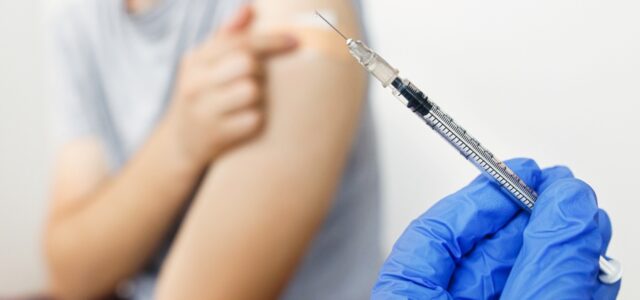
Potential barriers to accepting a Lyme disease vaccine
Public acceptance of a Lyme disease vaccine may face several challenges. In this episode of the Inside Lyme Podcast, Dr. Daniel Cameron discusses research examining potential barriers to the public’s acceptance and utilization of a future Lyme disease vaccine.
The study,
“Understanding consumer and clinician perceptions of a potential Lyme disease vaccine,”
was published by Devchand and colleagues in the journal Health Education Research.
It has been more than two decades since the LYMErix vaccine for Lyme disease was withdrawn from the market by its manufacturer, GlaxoSmithKline Pharmaceuticals, after poor sales.
Why has it taken so long for another Lyme disease vaccine to become available? Several factors have been suggested, including complex recommendations for vaccine use, lack of approval for children (the group at highest risk), unvalidated claims linking the vaccine to Lyme arthritis, and a broader rise in anti-vaccination sentiment.
CLICK HERE TO WATCH A VIDEO DISCUSSING POTENTIAL BARRIERS TO A LYME DISEASE VACCINE
The investigators conducted nine online focus groups involving consumers and completed 30 in-depth interviews with clinicians.
The LYMErix vaccine prevented Lyme disease rash but was estimated to be only 50% effective at preventing chronic manifestations of Lyme disease.
“Individuals who strongly disagreed with the importance of vaccines in general were excluded from the study to minimize skewed opinions that may not reflect the opinions of the general population,” the authors wrote.
Although the investigators acknowledged that their findings may not be generalizable, participants identified several potential barriers to accepting a Lyme disease vaccine.
Clinician concerns about a Lyme disease vaccine
- “A quarter of the clinicians argued that a Lyme disease vaccine would be less important than other routine vaccines because Lyme disease can be prevented through other measures, cannot be transmitted person-to-person, is not widespread throughout the United States, and has a lower disease burden than other vaccine-preventable diseases.”
- “The most commonly presumed barriers to vaccine uptake were patient concerns about cost and safety and anti-vaccine sentiment.”
- “Five clinicians expressed concern that a vaccine might promote a false sense of security against Lyme disease and other vector-borne diseases.”
Consumer concerns about a Lyme disease vaccine
- “Four consumers expressed concerns about side effects, with most others assuming it would have minimal risks. Three consumers suggested that potential side effects may make a vaccine more risky than other preventive behaviors.”
- “Four consumers shared that they prefer to avoid vaccines in general. Two consumers also mentioned that anti-vaccine sentiment in their communities might be a barrier for vaccine acceptance more broadly.”
- “Two consumers mentioned that the vaccine could create a false sense of security if it did not provide complete protection against Lyme disease.”
Interestingly, one in three consumers remained undecided about receiving a Lyme disease vaccine for themselves or for a family member.
Survey Limitations
Participants were not asked to review the safety or efficacy data for the LYMErix vaccine or for any future Lyme disease vaccine. According to the LYMErix package insert, the vaccine was effective at preventing rash but only about 50% effective at preventing chronic manifestations of Lyme disease.
It is also unclear whether participants reviewed what the authors referred to as “unvalidated claims” linking the vaccine to Lyme arthritis. Additionally, the investigators excluded individuals who strongly opposed vaccines, which may limit how broadly the results can be interpreted.
Finally, the survey did not clarify whether participants were informed that a Lyme disease vaccine would not protect against tick-borne co-infections.
The following questions are addressed in this podcast episode:
- What was the LYMErix vaccine based on?
- What were the benefits and limitations of the LYMErix vaccine?
- What was your clinical experience with the LYMErix vaccine?
- Why might a Lyme disease vaccine be helpful?
- What new Lyme disease vaccines are currently being developed?
- Do you agree with the participants’ concerns about a Lyme disease vaccine?
- Is there a vaccine for tick-borne co-infections?
- Should individuals strongly opposed to vaccines have been included in the survey?
Thanks for listening to another Inside Lyme Podcast. The information provided is general educational information and not intended as specific medical advice for any individual patient.
Inside Lyme Podcast Series
This Inside Lyme case series will be discussed on my
Facebook
page and made available on podcast and
YouTube.
As always, your likes, comments, and shares help spread the word about this series and our work. If you can, please leave a review on
iTunes
or wherever else you listen to podcasts.
References:
-
Devchand R, Koehler L, Hook S, et al.
Understanding consumer and clinician perceptions of a potential Lyme disease vaccine.
Health Educ Res. 2021. doi:10.1093/her/cyab032
Dr. Daniel Cameron, MD, MPH
Lyme disease clinician with over 30 years of experience and past president of ILADS.
Symptoms • Testing • Coinfections • Recovery • Pediatric • Prevention

Good topic, good information! Thanks for sharing. When the LymeRix vaccine originally came to market and people began having mild to serious side effects, in order to assit them, learn more and be able to help those involved in the lawsuits, I collected articles and data and made the documents available to the public. As newer articles have been published they have been added. The menu on the upper left of this site has information which may be of interest. EDUCATE BEORE YOU VACCINATE! http://www.LymeVaccine.org
I was a Lymerix participant in the 1995 dbl blinded study. I nearly died & went to study docs.. Tratt & Steere & they angrily denied the symptoms I was experiencing! Bias was present (I could write a book) & I called the original pharmaceutical co.(Smith Kline Beecham) & they shared my original serology results.. which showed dormant, late stage LD! I learned medicine is a business! Sad…