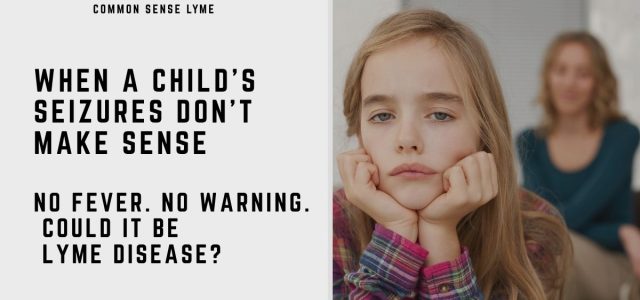
Can Lyme Disease Trigger Seizures in Children? A 4-Year-Old’s Story
Can Lyme disease cause seizures in children?
In rare but serious cases, the answer is yes.
Lyme disease seizures in children can occur when infection affects the brain and nervous system, triggering inflammation that disrupts normal neurologic function.
In this case, a 4-year-old boy developed life-threatening seizures—without warning, without fever, and without a clear cause.
His story highlights how Lyme disease can present in unexpected and severe ways—and how easily the diagnosis can be missed.
Neurologic complications like seizures represent one of the more severe patterns described in the broader Lyme disease symptoms guide.
The Case: A 4-Year-Old With Status Epilepticus
In a recent case report published by Khurtsilava and colleagues, researchers describe a 4-year-old boy admitted to a clinic in Tbilisi, Georgia after exhibiting generalized tonic-clonic seizures. One dose of diazepam didn’t stop them.
In the two days before admission, the child had developed increased fatigue, refused to walk, fell twice, and lost consciousness three times. The morning of his presentation, he woke up lethargic—then the seizures began.
Clinicians diagnosed status epilepticus and intubated him. They prescribed IV midazolam to control the seizures. But EEG testing revealed no epileptic patterns. No apparent cause could be identified.
The medical team prescribed ceftriaxone and acyclovir, but discontinued the antiviral after testing came back negative for herpes simplex virus. They were searching—but still hadn’t found the answer.
When unexplained seizures occur in children from Lyme-endemic regions, clinicians should consider tick-borne infection in the differential diagnosis—even if classic Lyme symptoms are absent.
When Lyme Disease Was Finally Considered
Lyme disease seizures in children are not a classic presentation. Nervous system Lyme disease more commonly causes facial nerve palsy or subacute meningitis in pediatric patients. Seizures are rarely reported.
However, when infection affects the central nervous system, inflammation can occasionally provoke seizures.
Despite the atypical presentation, the medical team continued investigating. “Despite non-classical manifestations, Lyme disease was considered,” the authors state. The child tested positive, and treatment with doxycycline began.
Only then did his parents recall something important: four months earlier, they had noticed a rash. It had resolved on its own. No one connected it to his current crisis.
This is how Lyme disease is missed in children. Most children do not recall a tick bite. Rashes fade. Symptoms appear months later in forms that do not match the textbook.
Post-Treatment: The Symptoms Didn’t End There
One month after treatment, the child exhibited mood changes and sleep disorders with night terrors. His mother reported anxiety and the presence of imaginary friends.
Four months after diagnosis, severe behavioral problems persisted—frequent tantrums, screaming, and hallucinations. The child required psychiatric care.
These symptoms gradually improved over six months, with only mild mood swings remaining.
This pattern—neurologic symptoms followed by prolonged behavioral and cognitive effects—raises important questions about recovery after neuroborreliosis.
What This Case Teaches Us
This case highlights several critical lessons.
- Lyme disease belongs in the differential diagnosis when unexplained neurologic symptoms occur in children—even when the presentation is atypical.
- Uncommon presentations are easily missed because they do not match textbook expectations.
- Delayed diagnosis can lead to severe complications, including life-threatening seizures.
- Recovery may extend beyond infection treatment, with lingering behavioral and cognitive symptoms.
Frequently Asked Questions
Can Lyme disease cause seizures in children?
Yes, though it is rare. Lyme disease seizures in children have been documented in case reports. When a child presents with unexplained seizures and no clear cause is found, Lyme disease should be considered.
Why are Lyme disease seizures often missed?
Because seizures are not a classic Lyme symptom. Clinicians typically expect rash, joint pain, or facial palsy. When symptoms do not fit the expected pattern, Lyme disease may not be considered.
Can Lyme disease cause status epilepticus?
In rare cases, Lyme neuroborreliosis can provoke severe seizures, including status epilepticus. Prompt diagnosis and treatment are essential.
Can children have lasting symptoms after Lyme treatment?
Yes. Behavioral and cognitive symptoms can persist for months after treatment, even when the infection has been treated.
Clinical Takeaway
Lyme disease can cause severe neurologic complications in children—including seizures—especially when diagnosis is delayed.
When seizures occur without a clear cause, Lyme disease should remain in the differential diagnosis—even in the absence of classic symptoms.
Early recognition can be life-saving.
Dr. Daniel Cameron, MD, MPH
Lyme disease clinician with over 30 years of experience and past president of ILADS.
Symptoms • Testing • Coinfections • Recovery • Pediatric • Prevention