Why Am I So Sensitive to Light and Sound?
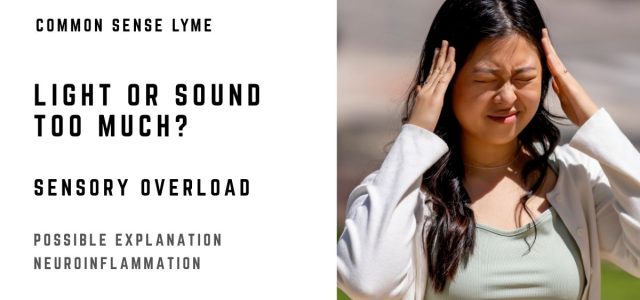
Light and sound sensitivity can feel overwhelming.
Lyme disease may affect sensory processing pathways.
Neuroinflammation and autonomic dysfunction may play a role.
For some Lyme disease patients, light sensitivity in Lyme disease and sound sensitivity are among the earliest and most disruptive neurologic symptoms.
The brightness of kitchen lights may feel blinding, and the sound of a spoon dropping can trigger a jolt of discomfort. Patients often dim screens, avoid crowded places, or reach for sunglasses indoors.
These experiences are common, medically explainable, and consistent with neurologic pathways involved in sensory hypersensitivity seen in Lyme disease, migraine, dysautonomia, and other post-infectious conditions.
Learn more about neurologic Lyme disease and how infection may affect the nervous system.
Why Sensitivity to Light and Sound Happens in Lyme Disease
Lyme disease can disrupt multiple systems involved in how the brain processes light, sound, and other sensory signals.
When neuroinflammation or autonomic instability alters the brain’s sensory filtering systems, normal sensory input begins to feel amplified or intrusive.
The environment itself has not changed — but the brain’s sensory thresholds have.
This heightened sensory response is recognized across neurology in conditions such as migraine disorders, dysautonomia, concussion recovery, small-fiber neuropathy, and post-infectious syndromes.
Lyme disease may activate many of these same mechanisms, causing previously tolerable light and sound to feel uncomfortable or overwhelming.
Light Sensitivity and Neuroinflammation
Lyme-related inflammation can affect the brain, meninges, and cranial nerves — structures involved in visual processing.
When these pathways become irritated, the brain may interpret even mild brightness as excessive. Light that should feel normal can suddenly feel piercing, sharp, or blinding.
Patients often describe kitchen lights that feel unbearable, screens that feel too intense, or sunlight that feels “like needles.”
These reactions reflect neurologic inflammation, not psychological sensitivity.
Photophobia in Lyme disease is a physiologic response involving altered visual processing pathways.
This heightened sensitivity to light, known medically as photophobia, is a recognized neurologic symptom and does not necessarily indicate eye disease.
Published reports have described persistent severe photophobia as a presenting manifestation of Lyme disease, highlighting that light sensitivity may occur even when the diagnosis is initially unclear.
Sound Sensitivity and Central Nervous System Reactivity
Lyme disease can also disrupt how the brain processes auditory input.
When sensory pathways become inflamed or hyperactivated, ordinary sounds may feel amplified, sharp, or startling. Some patients jump at noises they once ignored or feel overstimulated in restaurants, grocery stores, or crowded environments.
This type of auditory hypersensitivity mirrors mechanisms seen in migraine physiology, small-fiber neuropathy, and post-infectious autonomic dysfunction.
In some patients, this sound sensitivity, known as hyperacusis, reflects increased central nervous system reactivity rather than damage to the ears themselves.
Auditory symptoms have also been described in Lyme disease, including sensorineural hearing loss and vestibular involvement, supporting the concept that infection may affect multiple sensory pathways.
Why the Nervous System Feels Overstimulated
Light and sound sensitivity in Lyme disease is not simply psychological.
It reflects physiologic changes in the brain’s sensory thresholds. When inflammation disrupts neural filtering systems, the nervous system sends exaggerated responses to ordinary sensory input.
This is why patients often say the world feels “turned up too high.” Visual and auditory signals that were once manageable may now feel overstimulating because the nervous system is on high alert.
Some patients also report increased sensitivity to smells, touch, textures, or motion, suggesting broader sensory processing changes rather than isolated eye or ear problems.
Why Symptoms Fluctuate Day to Day
Patients often notice dramatic swings in how well they tolerate light and sound.
Some days feel manageable, while on other days even mild sensory input becomes difficult to tolerate.
These fluctuations may reflect shifts in:
- Inflammation levels
- Autonomic nervous system stability
- Sleep quality
- Hormonal changes
- Barometric pressure
- Overall stress load
- Migraine activity
As these physiologic factors rise and fall, sensory thresholds may shift with them.
This variability is neurologic, not emotional, and is a recognized feature of infection-related sensory instability.
These Sensory Symptoms Are Medically Recognized
Sensory hypersensitivity, neuroinflammation, autonomic dysfunction, and central sensitization are well-established neurologic mechanisms.
Lyme disease may activate these same pathways, which helps explain why light and sound sensitivity are so common.
Tests such as MRIs and EEGs often appear normal because they do not measure the pathways responsible for sensory hypersensitivity.
Normal imaging does not mean the symptoms are imagined.
Standard MRI and EEG studies often fail to detect abnormalities involving sensory processing pathways, autonomic dysfunction, or small-fiber neuropathy.
Investigators at Johns Hopkins found that patients with post-treatment Lyme disease had significantly higher rates of contrast sensitivity impairment than controls, and these abnormalities were associated with neurologic findings and cognitive impairment.
It may simply mean the testing is not capturing the affected neurologic pathways.
Frequently Asked Questions
Why does light hurt my eyes in Lyme disease?
Light sensitivity in Lyme disease may occur when neuroinflammation affects visual processing pathways. The brain interprets normal brightness as excessive, causing discomfort even when eye examinations appear normal.
Is sound sensitivity part of Lyme disease?
Yes. Lyme-related inflammation and autonomic dysfunction may make the brain hypersensitive to auditory input, causing ordinary sounds to feel amplified or startling.
Why do symptoms fluctuate from day to day?
Sensory thresholds may shift based on inflammation levels, autonomic stability, sleep quality, stress load, and migraine activity. These physiologic changes help explain why some days feel more tolerable than others.
Can anxiety make light and sound sensitivity worse?
Stress and anxiety may amplify sensory symptoms, but light and sound hypersensitivity are also recognized neurologic features of migraine, dysautonomia, post-infectious illness, and Lyme disease.
Will light and sound sensitivity improve?
Many patients gradually improve as neurologic inflammation stabilizes and the nervous system recovers, although recovery timelines vary.
Clinical Takeaway
If light feels too bright or sound feels too loud, your nervous system may be reacting to neurologic and autonomic instability associated with Lyme disease.
These symptoms are medically explainable, often fluctuate over time, and may gradually improve as the nervous system stabilizes.
Recognizing sensory hypersensitivity as part of a broader neurologic and autonomic pattern may improve both patient validation and clinical understanding.
Related Articles
Ocular Lyme Disease
Visual Snow Syndrome
Brain Fog in Lyme Disease
Small Fiber Neuropathy and Lyme Disease
POTS and Lyme Disease
References
- Denuelle M, et al. A PET study of photophobia during spontaneous migraine attacks. Neurology. 2010;75(22):1996-2002.
- Wang FM, Zaidman GW, Onel KB, Kelleher E. Lyme disease presenting as persistent severe photophobia. J AAPOS. 2021;25(1):52-54.
- Peeters N, van der Kolk BYM, Thijsen SFT, Colnot DR. Lyme disease associated with sudden sensorineural hearing loss: case report and literature review. Otol Neurotol. 2013;34(5):832-837.
- Rebman AW, Yang T, Aucott JN, Mihm EA, West SK. Contrast Sensitivity Loss in Patients With Posttreatment Lyme Disease. Transl Vis Sci Technol. 2021;10(3):27.
- Nijs J, et al. Central sensitization in post-infectious illness. Eur J Clin Invest. 2012;42(2):203-212.
Dr. Daniel Cameron, MD, MPH
Lyme disease clinician with over 30 years of experience and past president of ILADS.
Symptoms • Testing • Coinfections • Recovery • Pediatric • Prevention