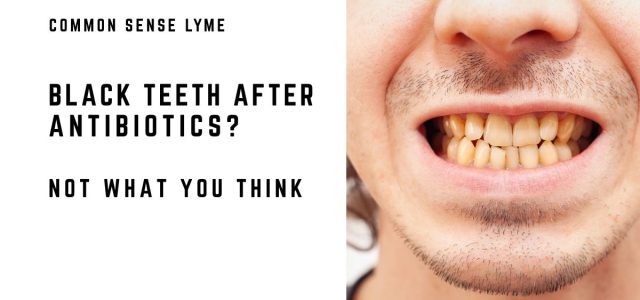
Black Teeth After Antibiotics in Lyme Disease: Causes and Reversible Solutions
Black stains on teeth can look frightening.
But antibiotic-related discoloration is often reversible.
Sometimes the enamel underneath is completely healthy.
A Case That Surprised Both Patient and Clinician
One of my patients recently developed black teeth after taking antibiotics for Lyme disease. The discoloration appeared suddenly and was deeply alarming to her — dark streaks and patches that looked like severe decay or even necrosis.
She feared something irreversible had happened.
But when she visited her dentist, everything changed.
The “blackness” polished off completely. The enamel underneath was healthy. What looked like a dental emergency turned out to be extrinsic staining, not tooth death or permanent enamel damage.
This case highlights something important: in Lyme disease, dramatic changes in the appearance of teeth — especially during treatment — can sometimes have simple and reversible explanations.
Antibiotics, dry mouth, autonomic dysfunction, oral microbiome changes, and neurologic symptoms may all contribute to staining that looks far worse than it truly is.
Why Do Teeth Turn Black After Antibiotics?
Medication-Related Staining
Several medications used during Lyme disease treatment may contribute to dark surface staining.
Doxycycline, amoxicillin-clavulanate, metronidazole, chlorhexidine rinses, herbal tinctures, and even products such as Pepto-Bismol can bind to plaque or tiny irregularities on the enamel surface.
These pigments may create brown or black discoloration that can look alarming but often improves substantially after professional dental cleaning.
Dry Mouth From Autonomic Dysfunction
Lyme disease and co-infections may contribute to autonomic dysfunction, which can reduce saliva production.
When saliva decreases:
- The mouth becomes more acidic
- Plaque accumulates more rapidly
- Pigment-producing bacteria become more visible
This environment can make staining from medications or bacteria appear much more dramatic.
For more on autonomic symptoms, see
Autonomic Dysfunction in Lyme Disease.
Neuropathy and Changes in Brushing Patterns
Neurologic symptoms associated with Lyme disease or post-treatment Lyme disease syndrome may subtly affect oral hygiene habits.
Numbness, tingling, pain, or altered oral sensation can change brushing pressure or consistency, allowing plaque and pigments to accumulate in areas that are harder to feel or reach.
These changes may make staining appear more extensive during illness.
Shifts in the Oral Microbiome
Antibiotics affect not only Lyme-related bacteria but also the balance of organisms in the mouth.
Certain chromogenic (pigment-producing) bacteria may become more prominent during or after antibiotic treatment.
These organisms are well recognized in dentistry for causing dark stains along the gum line or between teeth.
As the oral microbiome stabilizes and plaque is removed, the discoloration often improves.
Effects of Co-Infections
Co-infections such as Bartonella or Babesia may contribute to gum irritation, enamel sensitivity, vascular changes, or inflammatory symptoms.
While these infections do not directly cause black tooth staining, they may make the oral environment more reactive and allow discoloration to appear more pronounced.
True Tooth Necrosis
On rare occasions, a tooth may darken internally rather than on the surface.
Gray, purple, or black discoloration arising from inside the tooth may indicate pulp injury, trauma, or reduced blood flow.
Unlike surface staining, internal necrosis does not polish away and requires prompt dental evaluation.
Clinical Takeaway
Black teeth after antibiotics do not always indicate permanent damage.
In many cases, the discoloration results from reversible external staining rather than decay or tooth death.
Autonomic dysfunction, dry mouth, microbiome shifts, neurologic symptoms, and medications may all contribute to these dramatic color changes during Lyme disease treatment.
True tooth necrosis is uncommon but should be considered if discoloration appears internal or does not improve with cleaning.
For many patients, however, the darkening is temporary, reversible, and far less dangerous than it first appears.
Frequently Asked Questions
Can antibiotics turn teeth black?
Yes. Certain antibiotics and medications can contribute to dark surface staining, particularly when plaque accumulates or dry mouth is present.
Is black staining the same as tooth decay?
No. Surface staining may look severe but can often be removed with professional dental cleaning.
Can Lyme disease cause dry mouth?
Yes. Lyme disease and autonomic dysfunction may reduce saliva production, increasing plaque buildup and staining risk.
Does black discoloration always mean the tooth is dead?
No. Internal tooth necrosis is uncommon. Many dark stains are external and reversible.
Have You Experienced Tooth Discoloration During Lyme Treatment?
Share your story below — your experience may help reassure someone facing the same frightening symptoms.
Resources:
- Frontiers in Neurology. Dysautonomia following Lyme disease: a key component of post-treatment Lyme disease syndrome? 2024.
- BMC Oral Health. Chromogenic bacterial staining of teeth: a scoping review. 2025.
- Dr. Daniel Cameron: Lyme Science Blog. Dental surgery triggers full body pain in patient with severe post-treatment Lyme disease syndrome
- Dr. Daniel Cameron: Lyme Science Blog. Sjögren’s syndrome secondary to Lyme disease
Dr. Daniel Cameron, MD, MPH
Lyme disease clinician with over 30 years of experience and past president of ILADS.
Symptoms • Testing • Coinfections • Recovery • Pediatric • Prevention

Dr. Cameron, Thank you for your post on tooth discoloration with a Lyme/co Rx. My teeth turned dark brown when I took Rifampin last year. I was very relieved when it came off with dental cleanings. I had my teeth cleaned every three months to keep up my confidence during that long course.
Thank you as always for your informative posts.
Can chronic Lyme cause some hairs to go black.Am 83 and my pale grey hair has randomly gone black,root to tip,by 30 per cent.The rest is turning pale honey blond.All this over 10 months. Also it is thicker and healthier.I feel like a zebra! Thankyou,all the best to you.
I have seen changes in skin, hair and nails don’t have not focused on hair changes. I know my hair is getting gray.