“`html
Autonomic Dysfunction in Lyme Disease: Symptoms, Causes, and Treatment
Autonomic dysfunction may affect heart rate, blood pressure, digestion, and temperature control
Lyme disease has been associated with dysautonomia in some patients
Recognizing the pattern may guide evaluation, treatment, and recovery
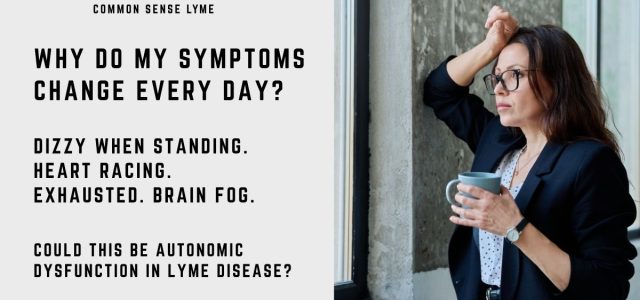
Not all patients with Lyme disease present with joint pain or a rash. Some develop symptoms that do not fit cleanly into one category, including heart-rate changes, dizziness, temperature intolerance, blood-pressure changes, gastrointestinal problems, or exercise intolerance.
Autonomic dysfunction in Lyme disease, also called dysautonomia, may contribute to prolonged or variable symptoms in a subset of patients. Recognizing this pattern may help explain why symptoms involve several organ systems, fluctuate over time, or persist despite normal routine laboratory findings.
For a broader overview, see the Lyme Disease Symptoms Guide.
What the Autonomic Nervous System Regulates
The autonomic nervous system regulates involuntary physiologic processes, including heart rate, blood pressure, digestion, sweating, bladder function, temperature control, sleep-wake cycling, and the body’s response to physical or emotional stress.
Because it affects multiple organs simultaneously, autonomic dysfunction can produce symptoms that appear unrelated but may share an underlying regulatory mechanism.
Symptoms may include:
- Dizziness or lightheadedness upon standing
- Palpitations or abnormal heart-rate responses
- Fatigue and exercise intolerance
- Brain fog or weakness
- Nausea or gastrointestinal motility changes
- Abnormal sweating
- Bladder symptoms
- Intolerance to heat or cold
- Shortness of breath or shakiness
- Near-fainting or sensory sensitivity
Symptoms may worsen with standing, heat, exertion, dehydration, large meals, poor sleep, or stress. These patterns may overlap with dizziness in Lyme disease and with the fluctuating symptoms discussed in Why Do Lyme Disease Symptoms Come and Go?
Can You Have Autonomic Symptoms Without Meeting POTS Criteria After Lyme Disease?
Yes. POTS is one specific form of autonomic dysfunction defined partly by an abnormal increase in heart rate after standing. It does not encompass every symptom or abnormality involving the autonomic nervous system.
A 2025 study examined autonomic symptoms and standing-test results in patients who met the researchers’ definition of post-treatment Lyme disease.4
In one cohort of 37 patients, researchers used the COMPASS-31 questionnaire to assess symptoms involving several autonomic domains:
- Orthostatic symptoms
- Vasomotor or blood-vessel regulation
- Sweating and secretomotor function
- Gastrointestinal function
- Bladder function
- Pupillary function
These patients reported a greater overall autonomic symptom burden than healthy controls. Their vasomotor, bladder, and pupillary symptom burden was similar to that reported by patients with POTS.4
A separate cohort of 210 patients completed a 10-minute active stand test. Only 9 patients—or 4.3%—demonstrated orthostatic tachycardia. The prevalence was not significantly different from that found among healthy controls.4
The symptom questionnaire and active stand test were performed in two different patient cohorts. The study therefore cannot determine how many patients with a high symptom burden had a normal standing test.
Nevertheless, the findings reinforce an important distinction: a broad autonomic symptom burden and orthostatic tachycardia are not interchangeable. A patient may experience problems involving digestion, sweating, temperature regulation, bladder function, circulation, or visual adjustment without meeting the heart-rate criteria for POTS.
A separate 2025 clinical review similarly emphasized that patients may have autonomic dysfunction or orthostatic intolerance without qualifying for POTS, orthostatic hypotension, or another defined autonomic disorder. The review listed Lyme disease and co-infections among infections associated with dysautonomia, while noting that standard standing or tilt-table criteria may not identify every autonomic presentation.5
The study was limited to patients meeting the researchers’ post-treatment Lyme disease definition. It did not establish how frequently these findings occur in acute Lyme disease, untreated illness, persistent infection, or other Lyme disease presentations.
Can Lyme Disease Affect Blood Pressure?
Autonomic dysfunction may interfere with normal blood-pressure regulation. Some patients experience lightheadedness associated with orthostatic hypotension, while others report fluctuating or elevated blood pressure.
Orthostatic hypotension produces a sustained decrease in blood pressure after standing. In contrast, hyperadrenergic forms of POTS in Lyme disease may be associated with an increase in blood pressure while upright. A patient may also have substantial orthostatic symptoms without meeting the diagnostic criteria for either condition.
A Study Found Frequent Blood-Pressure Abnormalities in Lyme Disease
A 2025 cross-sectional study compared autonomic nervous system function among patients with Lyme disease, Long COVID, and ME/CFS. The Lyme disease group included 237 patients with symptoms lasting longer than 6 months and positive two-tier Lyme serology.6
Among the patients classified as having Lyme disease, 14.8% had an abnormal blood-pressure response to standing and another 38.6% had a borderline result. The authors combined these categories and reported orthostatic hypotension in 53.4% of the Lyme disease group.6
However, most of that percentage consisted of borderline rather than definitively abnormal results. The finding should therefore not be interpreted as proving that more than half of all patients with Lyme disease have orthostatic hypotension.
During beat-to-beat monitoring, the Lyme disease group also demonstrated a smaller increase in diastolic blood pressure during tilt testing than the Long COVID and ME/CFS groups. The investigators interpreted the overall pattern as suggestive of impaired adrenergic regulation—the sympathetic response that helps maintain blood pressure while a person is upright.6
Clinical Insight: Dysautonomia does not always present as POTS. Measuring both heart rate and blood pressure after standing may identify abnormalities that heart-rate monitoring alone would miss.
The study does not establish that Lyme disease caused these abnormalities or that autonomic testing can diagnose Lyme disease. It was conducted in a specialized autonomic laboratory, did not include healthy controls, and the groups were not matched by age or sex. In addition, not every participant completed every diagnostic test.
Persistent low, high, or fluctuating blood pressure should prompt evaluation for medication effects, dehydration, cardiac disease, endocrine disorders, autonomic dysfunction, and other possible causes rather than being attributed automatically to Lyme disease.
Possible Mechanisms of Autonomic Dysfunction
Several pathways have been proposed to explain the association between Lyme disease and autonomic symptoms. These include infection-related inflammation, immune dysregulation, small fiber nerve involvement, altered vascular regulation, and impaired sympathetic or parasympathetic signaling.1
Small fiber nerves help regulate pain, sweating, blood-vessel constriction, heart rate, and digestion. A small case series identified evidence of small fiber neuropathy and autonomic dysfunction in patients with post-treatment Lyme disease syndrome, supporting a potential biologic basis in at least a subset of patients.2
These proposed mechanisms remain under investigation. No single mechanism has been established for every patient, and autonomic symptoms should not automatically be attributed to Lyme disease without considering other causes.
Why Autonomic Dysfunction Is Often Missed
Autonomic dysfunction may be overlooked because symptoms span several organ systems. Patients may undergo separate cardiac, gastrointestinal, neurologic, or psychiatric evaluations without the complete pattern being recognized.
Routine blood work, imaging, electromyography, and nerve-conduction studies may also remain normal because they do not directly measure every aspect of autonomic function.
Symptoms may be attributed solely to anxiety, fatigue, or deconditioning. Although these factors may contribute in some patients, they should not prevent an appropriate evaluation when the clinical pattern suggests autonomic instability.
How Autonomic Dysfunction Is Evaluated
Evaluation begins with a detailed symptom history and measurements of heart rate and blood pressure while lying down and after standing. A clinician may use a 10-minute active stand test or tilt-table testing to evaluate for orthostatic tachycardia, orthostatic hypotension, or other abnormal hemodynamic responses.
Depending on the presentation, additional testing may include autonomic reflex testing, sweat testing, skin biopsy for small fiber neuropathy, cardiac monitoring, gastrointestinal motility studies, or laboratory testing for other medical conditions.
A standing test primarily evaluates changes in heart rate and blood pressure after moving upright. It does not directly assess every function controlled by the autonomic nervous system. A normal test does not establish the cause of a patient’s symptoms or exclude every form of autonomic dysfunction.
Evaluation should also consider medication effects, anemia, dehydration, thyroid disease, diabetes, cardiac rhythm disorders, autoimmune disease, and other neurologic or cardiovascular conditions.
When Dysautonomia or POTS Does Not Explain the Entire Illness
In my clinical practice, I see patients whose autonomic symptoms were not recognized early. Others were diagnosed with POTS or dysautonomia, but the evaluation stopped there—even though the autonomic disorder did not explain their complete clinical picture.
POTS describes a particular pattern of heart-rate regulation with standing. It does not identify why that pattern developed. Lyme disease, Babesia, other infections, autoimmune conditions, medication effects, deconditioning, and additional medical disorders may need to be considered according to the patient’s history and exposure risks.
Babesia can be overlooked when a patient presents with fatigue, exercise intolerance, dizziness, sweating, temperature intolerance, shortness of breath, or a racing heart. These symptoms overlap with dysautonomia and POTS, and Lyme disease testing does not determine whether a patient has Babesia.
Some of my patients have improved following individualized antimicrobial treatment, including retreatment for Lyme disease or treatment directed at a clinically suspected or documented co-infection. Others require treatment focused primarily on autonomic regulation, and some benefit from both approaches.
Improvement following antimicrobial treatment does not, by itself, establish which infection or physiologic mechanism was responsible. Nevertheless, identifying dysautonomia should not automatically end the diagnostic process. It should lead to a broader assessment of what may be contributing to the autonomic disorder.
How Is Autonomic Dysfunction in Lyme Disease Treated?
Treatment depends on the patient’s autonomic pattern, symptom severity, and whether Lyme disease, a co-infection, medication effects, dehydration, cardiac disease, or another condition remains clinically relevant.
Supportive measures may include:
- Adequate fluid intake
- Increased dietary salt when medically appropriate
- Compression garments
- Smaller meals
- Heat avoidance
- Carefully paced physical activity
Patients with high blood pressure, heart failure, kidney disease, or other medical restrictions should not increase salt without consulting their clinician.
Physical activity may need to begin with recumbent or seated exercises when prolonged standing is poorly tolerated. Exercise should be individualized because pushing through severe post-exertional symptoms can produce a substantial setback in some patients.
Some patients require medications directed at orthostatic intolerance, tachycardia, low blood pressure, or gastrointestinal dysmotility. Depending on the autonomic pattern, a clinician may consider beta-blockers, fludrocortisone, midodrine, pyridostigmine, or other targeted therapies.
When active Lyme disease or a clinically significant co-infection remains a concern, antimicrobial treatment should be considered separately from symptomatic treatment of dysautonomia. Treating an infection does not eliminate the need to evaluate persistent dizziness, tachycardia, fainting, or blood-pressure instability for other causes.
How Autonomic Regulation Influences Recovery
Improvement in the underlying illness may precede improvement in autonomic regulation. As infectious, inflammatory, and physiologic burdens decrease, autonomic stability may gradually improve, although timelines vary considerably.
Progress may be reflected by fewer severe setbacks, more predictable energy, better tolerance of standing and activity, more consistent sleep, improved gastrointestinal function, and greater resilience to physical or emotional stress.
Recovery is often measured by increasing stability rather than the sudden elimination of every symptom. For broader recovery trajectories, see the Lyme Disease Recovery Guide.
Frequently Asked Questions
What is autonomic dysfunction in Lyme disease?
Autonomic dysfunction refers to instability in the nervous system pathways that regulate heart rate, blood pressure, digestion, sweating, bladder function, sleep, and temperature. Lyme disease has been associated with autonomic symptoms in some patients, although the prevalence and mechanisms remain under investigation.
Can you have autonomic symptoms without meeting POTS criteria after Lyme disease?
Yes. POTS is one specific form of autonomic dysfunction defined partly by an abnormal increase in heart rate after standing. Patients may have gastrointestinal, temperature, sweating, bladder, circulatory, or other autonomic symptoms without meeting the diagnostic criteria for POTS.
Can Lyme disease cause low blood pressure when standing?
Lyme disease has been associated with autonomic dysfunction and abnormal blood-pressure regulation in some patients. One study found borderline or abnormal blood-pressure responses to standing in more than half of its Lyme disease group, although only 14.8% had results classified as abnormal. The study identified an association but did not prove that Lyme disease caused the blood-pressure changes. Medication effects, dehydration, cardiac disease, endocrine disorders, and other causes should also be evaluated.
Can autonomic dysfunction occur with normal test results?
Yes. Routine blood tests, imaging, electromyography, and nerve-conduction studies do not directly measure every aspect of autonomic function. A normal standing test also does not evaluate all autonomic functions.
Can Babesia produce symptoms resembling dysautonomia or POTS?
Babesia may produce fatigue, sweating, exercise intolerance, shortness of breath, dizziness, and a rapid heart rate. Because these symptoms overlap with dysautonomia and POTS, Babesia may warrant consideration when the exposure history and broader presentation are consistent with a tick-borne infection.
Can autonomic dysfunction improve with treatment?
Autonomic dysfunction can improve, but recovery varies. Treatment may include fluids, salt when medically appropriate, compression garments, paced activity, prescription medications, treatment of an underlying infection or co-infection when clinically indicated, and management of other contributing conditions.
Clinical Takeaway
Autonomic dysfunction does not explain every persistent Lyme disease symptom, and POTS does not identify the underlying cause of a patient’s illness. Recognizing autonomic instability should support a structured evaluation rather than premature diagnostic closure.
The 2025 comparative study suggests that impaired blood-pressure regulation may be an important autonomic pattern in some patients with Lyme disease. Measuring blood pressure as well as heart rate after standing may identify abnormalities that would be missed by focusing only on POTS.
Some patients require treatment directed primarily at autonomic regulation. Others may also require reassessment for Lyme disease, Babesia, another co-infection, or a noninfectious medical condition. Treatment must be individualized according to the complete clinical presentation.
Recognizing autonomic dysfunction—and continuing to investigate what may be driving it—can be an important step toward more stable and durable recovery.
Related Articles
Brain Fog and Lyme Disease
Delayed Lyme Disease Diagnosis
Causes of Long-Term Lyme Disease Symptoms
References
- Adler, B. L., Chung, T., Rowe, P. C., & Aucott, J. N. Dysautonomia following Lyme disease: A key component of post-treatment Lyme disease syndrome? Frontiers in Neurology. 2024;15:1344862.
- Novak, P., Felsenstein, D., Mao, C., Octavien, N. R., & Zubcevik, N. Association of small fiber neuropathy and post-treatment Lyme disease syndrome. PLOS ONE. 2019;14(2):e0212222.
- Raj, S. R. Postural tachycardia syndrome (POTS). Circulation. 2013;127(23):2336–2342.
- Adler, B. L., Rebman, A. W., Chung, T., et al. Autonomic symptoms in post-treatment Lyme disease: Insights from the COMPASS-31 and the 10-minute active stand test. Mayo Clinic Proceedings: Innovations, Quality & Outcomes. 2025;9(6):100674.
- Blitshteyn, S. Dysautonomia: A common comorbidity of systemic disease. Immunological Research. 2025;73(1):105.
- Milovanovic, B., Markovic, N., Petrovic, M., Zugic, V., Ostojic, M., & Bojic, M. Cross-sectional study evaluating the role of autonomic nervous system functional diagnostics in differentiating post-infectious syndromes: Post-COVID syndrome, chronic fatigue syndrome, and Lyme disease. Biomedicines. 2025;13(2):356.
This article is for informational purposes only and is not intended to provide medical advice, diagnosis, or treatment.
“`
Dr. Daniel Cameron, MD, MPH
Lyme disease clinician with over 30 years of experience and past president of ILADS.
Symptoms • Testing • Coinfections • Recovery • Pediatric • Prevention

Dr. Cameron,
I am a 63 YO retired and disabled US Air Force 23 year Veteran. I believe I may have become infected decades ago and am currently about 6 weeks into a wholly holistic treatment plan as I have a clueless Twin Ports VA clinic in Superior Wisconsin as my Primary Care team. I just recently in the last year became aware of the Borrelia bacteria and now I am reading your latest articles about Babesia, or Bartonella and my heart is sinking. I have had every single symptom on the charts in the last 20 years. My VA doctors have no clue, no diagnosis, and there primary objective seems to be to remove me from getting any Opioid medications. I have known all along that something was wrong inside of me but even intensive blood testing showed nothing. I have so much more to share but this would become a novel. Please make contact with me so I can get someone on my side against the Minneapolis VA medical system. I am on my 7th or eighth provider since I moved back to my Hometown in Nov 2016 to get sober from alcohol and own my first house. I stopped alcohol 12 Feb 2017 for good after multiple rehabs failed over my career and beyond. Thanking our Creator for leading me to your articles and additional information I need in this war for my physical body and mind.
Sincerely,
Richard A Celusta, MSgt USAF Retired
(320) 761-7726
I am glad our Creator has gotten you this far. I grew up in Minnesota but now practice in New York. You should call my office with your question.
Where is your office?
New York.
I find both articles on the autonomic nervous system and how to treat patients who have had treatment for Lyme previously pertinent to my situation. I was an avid hiker after retirement from 33 years of critical care nursing. I got my first EM rash after moving back to East TN. After a 2020 COVID episode I developed symptoms that caused me to suspect Lyme. My tests came back as TBRF. This last year I was bitten by multiple Lone Star ticks and developed Alpha-gal syndrome. I have been following a strict diet, aware of my triggers and my IgE was coming down. Unfortunately, I received yet another tick bite that became infected while working in the yard. I am two weeks past the bite and my AG symptoms have become worse than previously. Would you recommend antibiotic treatment, as the wound has healed with antibiotic creams, or would the drugs cause me further symptoms? I am pretty sure I have developed the POTS symptoms since this latest bite, as my heart rate fluctuates from 50 to 130 by just getting up from bed or going up to the second floor. Heat intolerance as I used to hike in this, but no more! My BP is hard to manage with the AG reactions and then swings to HTN. Headaches and neck pain that wakes me from sound sleep. It is hard to believe that my run in with black bears and rattle snakes have not harmed me, but these little creatures have me off trail due to extreme fatigue.
I have had to individualize treatments. I hope you find an answer
Thanks Dr. Cameron for taking time to reply. Would you happen to know of a Lyme literate MD within 200 miles of Knoxville, TN? Again, thank you for all this information.
Sorry
Every family photo I am in, since the age of 5, I have my hands covering my eyes because I was so sensitive to sunshine and bright lights. That would be 1960. I didn’t get any treatment until 2013. 50 plus years of hell. 50 years of going to doctors almost monthly telling them I didn’t feel well. Why was I given this cross to bear? Then I see a child with glasses with super thick lenses and braces on both legs and 2 crutches forcing themselves foward with big smiles on their faces and I cry because I was the one who should have found a cure for them. I should have been the one to say “give me those glasses, you don’t need them anymore” All lost because of a tick bite.
Thank you for sharing this. Many people with complex illness spend years searching for answers before getting treatment. I’m glad you were finally able to receive care.
Do you use IV or po lyme meds for long term lyme with neuro symptoms including peripheral neuropathy, vision,severe fatigue, and many more disseminated for maybe 30 years, or bartonella, tested positive for both
i have had to make an individualized assessment along with my collegues