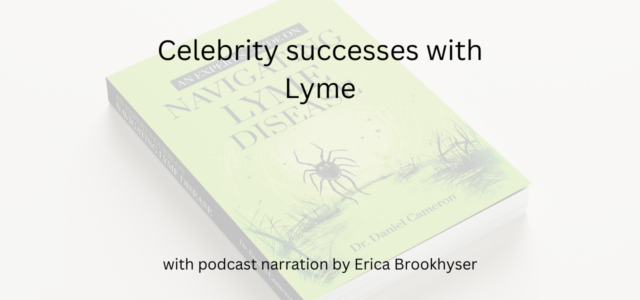
Celebrities With Lyme Disease: Their Struggles and Successes
Celebrities have helped raise awareness of Lyme disease
Many have publicly described their symptoms and recovery journeys
Their stories highlight both the struggles and the possibility of improvement
Welcome to another selection from my book, An Expert’s Guide on Navigating Lyme Disease. The book highlights findings from my first 600 Lyme disease Science Blogs. In this episode, I discuss the struggles and successes of celebrities and other individuals living with Lyme disease.
Celebrities With Lyme Disease
A number of celebrities have publicly discussed their experiences with Lyme disease. Their stories have helped bring attention to the physical, neurologic, cognitive, and emotional challenges that may accompany the illness. These experiences also illustrate how Lyme disease symptoms can affect daily life, work, relationships, and public performance.
A People magazine article highlighted the experiences of the following celebrities:
- Ryan Sutter
- Kelley Flanagan
- Debbie Gibson
- Kelly Dodd and Rick Leventhal
- Amy Schumer
- Ramona Singer
- Justin Bieber
- Avril Lavigne
- Shania Twain
- Alec Baldwin
- Yolanda Hadid
- Anwar Hadid
- Bella Hadid
- Ben Stiller
- Kelly Osbourne
- Ally Hilfiger
These public figures have described different experiences with Lyme disease, including delayed diagnosis, neurologic symptoms, persistent symptoms, treatment, and recovery.
Read more about celebrities who have discussed Lyme disease in People magazine.
Why Do So Many Celebrities Talk About Lyme Disease?
Celebrities may appear unusually prominent in discussions about Lyme disease because their health experiences receive extensive media coverage. When a public figure discusses a diagnosis, the story may reach millions of people through television, magazines, interviews, and social media.
This visibility does not necessarily mean that Lyme disease is more common among celebrities than in the general population. Instead, their public platforms make their experiences more noticeable.
Celebrity accounts can increase awareness of fatigue, pain, cognitive difficulties, facial weakness, dizziness, and changes in the ability to work or perform. They may also draw attention to the challenges of Lyme disease testing and the prolonged search for answers experienced by some patients.
Public stories can encourage people with unexplained symptoms to seek an appropriate medical evaluation. However, celebrity experiences cannot determine whether another person has Lyme disease and should not replace individualized clinical assessment.
Celebrities with Lyme Disease: Personal Stories
Ally Hilfiger’s journey from illness to health
In her memoir Bite Me: How Lyme Disease Stole My Childhood, Made Me Crazy, and Almost Killed Me, Ally Hilfiger, daughter of fashion designer Tommy Hilfiger, recounts her years-long struggle with unexplained illness before receiving a diagnosis of Lyme disease.
Hilfiger describes experiencing joint pain, night sweats, nausea, memory loss, brain fog, and other symptoms beginning in childhood. Her prolonged search for answers illustrates the challenges some patients face when symptoms are difficult to explain and diagnosis is delayed.
Angeli VanLaanen returned to skiing and made the Olympic team
Professional halfpipe skier Angeli VanLaanen stepped away from competition in 2009 while seeking treatment for Lyme disease, which she has said went undiagnosed for many years.
She later returned to elite competition, won the final U.S. Olympic selection event in women’s ski halfpipe, and represented the United States at the 2014 Winter Olympics. VanLaanen also released the documentary LymeLight, describing her experience with Lyme disease and recovery.
Books About Living With Lyme Disease
Out of the Woods: Healing from Lyme Disease for Body, Mind, and Spirit
Classical homeopath and health-care columnist Katina Makris recounts developing a debilitating illness that was eventually diagnosed as Lyme disease after several years. She describes the impact of the illness on her career, family, and quality of life before beginning her recovery.
Out of the Woods combines her personal story with practical reflections intended to offer encouragement to others living with Lyme disease.
Learn more about Out of the Woods.
Lyme Rage: A Mother’s Struggle to Save Her Daughter From Lyme Disease
Lyme Rage tells the story of a family whose 9-year-old daughter developed progressive symptoms that initially defied diagnosis. As her condition worsened and she eventually lost the ability to walk, her parents continued searching for answers.
The book describes their efforts to obtain appropriate medical care and their daughter’s gradual recovery after treatment.
Conquering Lyme Disease: Science Bridges the Great Divide
Dr. Brian Fallon and Dr. Jennifer Sotsky review advances in Lyme disease research, diagnosis, treatment, and biotechnology while examining areas of agreement and ongoing debate within the medical community.
The authors discuss how continued scientific progress may improve the diagnosis and management of Lyme disease and other tick-borne illnesses.
Learn more about Conquering Lyme Disease.
The Deep Places: A Memoir of Illness and Discovery
Ross Douthat’s memoir chronicles his prolonged illness, search for answers, and gradual recovery while reflecting on the uncertainty that often accompanies chronic medical conditions.
Learn more about The Deep Places.
Other Individuals Share Their Lyme Disease Stories
Two individuals describe their experiences with Lyme disease
Sophie: At 10 years old, Sophie developed headaches, blurred vision, difficulty concentrating, and eventually lost the ability to walk. She was later diagnosed with Lyme disease and became confined to a wheelchair before beginning her recovery.
Ira: Ira, an attorney, described severe cognitive difficulties that affected his ability to sign his name and perform everyday tasks. Despite negative Lyme disease tests, he continued searching for an explanation for his symptoms.
Frequently Asked Questions
Which celebrities have publicly discussed Lyme disease?
Public figures who have shared their experiences with Lyme disease include Justin Bieber, Bella Hadid, Yolanda Hadid, Anwar Hadid, Ben Stiller, Avril Lavigne, Shania Twain, Alec Baldwin, Debbie Gibson, Kelly Osbourne, Ally Hilfiger, Amy Schumer, Ryan Sutter, Kelley Flanagan, Kelly Dodd, Rick Leventhal, and Ramona Singer.
Does Justin Bieber have Lyme disease?
Justin Bieber has publicly stated that he was diagnosed with Lyme disease and has discussed his experience in interviews and on social media.
Did Bella Hadid have Lyme disease?
Bella Hadid has publicly shared that she has been treated for Lyme disease and has spoken openly about its impact on her health and career.
Why do so many celebrities have Lyme disease?
There is no evidence that celebrities develop Lyme disease more frequently than the general population. Their diagnoses receive greater public attention because of media coverage and social media, increasing public awareness of the illness.
Which famous singers have Lyme disease?
Public figures who have discussed Lyme disease include singers Avril Lavigne, Shania Twain, Debbie Gibson, Justin Bieber, and Kelly Osbourne.
Can celebrities help raise awareness of Lyme disease?
Yes. Public figures who share their diagnosis can increase awareness of Lyme disease symptoms, diagnosis, and recovery. However, celebrity experiences should complement—not replace—scientific evidence and individualized medical care.
Clinical Takeaway
Stories shared by celebrities, athletes, authors, and families have helped increase public awareness of Lyme disease and the challenges many patients face while seeking answers. Their experiences also highlight the importance of recognizing persistent symptoms and obtaining an appropriate medical evaluation.
Although celebrity stories cannot replace scientific evidence, they have encouraged greater public understanding of Lyme disease and the need for continued advances in diagnosis, treatment, and research.
Related Articles
Persistent Lyme Disease Overview
Lyme Disease Misdiagnosis
Lyme Disease Test Accuracy
Recovery From Lyme Disease
References
- Celebrities Who Have Shared Their Lyme Disease Stories. People.
- Zaccardi N. Angeli VanLaanen Overcomes Lyme Disease to Make Olympic Team. NBC Sports.
- Makris K. Out of the Woods: Healing from Lyme Disease for Body, Mind, and Spirit.
- Hilfiger A. Bite Me: How Lyme Disease Stole My Childhood, Made Me Crazy, and Almost Killed Me.
- Lyme Rage: A Mother’s Struggle to Save Her Daughter From Lyme Disease.
- Fallon BA, Sotsky J. Conquering Lyme Disease: Science Bridges the Great Divide.
- Douthat R. The Deep Places: A Memoir of Illness and Discovery.
Dr. Daniel Cameron, MD, MPH
Lyme disease clinician with over 30 years of experience and past president of ILADS.
Symptoms • Testing • Coinfections • Recovery • Pediatric • Prevention

First, and I applaud ILADS, Chronic Lyme is not curable once it gets into the organs, and other tissue and breaks the brain-blood barrier. At that point, all you can do is manage it. Just like you manage HVS, HIV, and other bacteria and viruses that hide in the nervous system and spinal fluid. Sadly, pharmaceuticals. They cannot get to the areas the borrelia hides or break down the biofilm, etc.
I have often had patients who had cleared their symptoms. Nevertheless, they worry about the future.