Is Lyme Disease Curable?
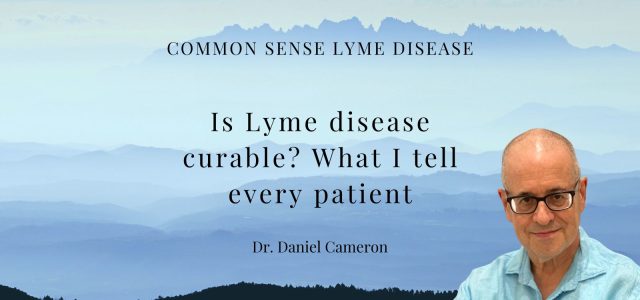
Is Lyme disease curable? This is one of the first questions patients ask me, and they deserve an honest answer: it’s not as simple as yes or no.
Some people recover fully. Others do not. And unlike many common infections, there is no test that confirms Lyme disease has been completely eradicated.
Early Lyme Disease: Some Patients Do Well — But Not All
When Lyme disease is identified early, some patients respond well to a 2- to 4-week course of antibiotics, such as doxycycline or amoxicillin. This general approach is summarized by the Centers for Disease Control and Prevention.
However, even in early Lyme disease, outcomes are not uniform. Complications can still occur, including Lyme arthritis, carditis, or neurologic symptoms, particularly when diagnosis is delayed or symptoms are already advanced at the time treatment begins.
Importantly, not all early Lyme disease is curable. Some patients experience lingering symptoms after treatment, while others relapse months later despite initially feeling well. This is one reason I emphasize early recognition and prevention strategies.
There Is No Test That Confirms a Cure
Unlike infections such as strep throat or syphilis, there is no laboratory test that proves Lyme disease has been cured.
Antibodies to Borrelia burgdorferi can remain elevated for years, even after treatment. PCR testing is unreliable for routine follow-up and cannot confirm eradication of infection.
As a result, a patient may feel better yet still have residual disease activity, or symptoms may return after a period of apparent recovery—especially if co-infections were missed during the initial evaluation. I explore this in depth in my overview of common co-infections, including Babesia and Bartonella: Lyme Disease Co-Infections: Babesia and Bartonella
This uncertainty is why ongoing monitoring, clinical judgment, and open dialogue matter—even when symptoms initially resolve.
What About Chronic Lyme Disease or PTLDS?
Some patients are told they have Post-Treatment Lyme Disease Syndrome (PTLDS), a term used when symptoms persist despite standard antibiotic therapy.
There is ongoing debate about what drives these persistent symptoms. Proposed mechanisms include immune dysregulation, nerve injury, inflammatory changes, or persistent infection.
In my clinical experience, a subset of these patients improves with further evaluation and individualized treatment, particularly when previously unrecognized co-infections, immune dysfunction, or ongoing inflammation are identified. Broader issues surrounding persistent illness and delayed care are discussed in my post on the chronic Lyme education gap: The Chronic Lyme Disease Education Gap
For additional perspectives on treatment approaches, see guidance from the International Lyme and Associated Diseases Society.
So, Is Lyme Disease Curable?
This is how I answer the question in clinical practice: Some early cases can be cured, especially with prompt diagnosis and treatment. But even early cases can relapse or develop complications. There is no test that proves Lyme disease has been cured, and some patients relapse after appearing symptom-free. Long-term symptoms deserve careful reassessment, not dismissal.
Clinical Takeaway
Is Lyme disease curable? The honest answer is: sometimes, but not always. Early diagnosis and prompt treatment give patients the best chance at full recovery, but even early cases can relapse or develop complications. Unlike many infections, there is no laboratory test that confirms cure—antibodies remain elevated for years, and PCR testing cannot reliably confirm eradication. Some patients recover fully after standard treatment. Others develop persistent symptoms consistent with Post-Treatment Lyme Disease Syndrome (PTLDS), which may reflect immune dysregulation, neurologic injury, or persistent infection. When symptoms persist beyond treatment, careful reassessment is warranted rather than dismissal. Recovery often requires ongoing monitoring, clinical judgment, and individualized care—especially when co-infections, immune dysfunction, or inflammatory changes are involved. If you’re asking “am I cured?” after Lyme treatment, know that healing is a process, not just an endpoint. Even when symptoms improve, vigilance matters. Work with a physician who understands the complexity of Lyme disease and who will monitor your recovery long after initial treatment ends.
Related Reading
Lyme Disease Recovery, PTLDS, and Long-Term Hope
What Is Post-Treatment Lyme Disease Syndrome?
Lyme Disease Co-Infections: Babesia and Bartonella
Frequently Asked Questions About Lyme Disease Cure
Can Lyme disease be cured with antibiotics?
Some patients—particularly those treated early—recover fully with antibiotics. However, antibiotics do not guarantee a cure for everyone, and some patients experience persistent or recurrent symptoms.
Can Lyme disease come back after treatment?
Yes. Some patients relapse after a period of improvement. This may be related to delayed diagnosis, complications, or missed co-infections.
Is chronic Lyme disease curable?
There is no single answer. Some patients with chronic or persistent symptoms improve with further evaluation and treatment, while others require long-term management and support.
Why can’t doctors test to see if Lyme disease is cured?
Because antibody tests remain positive long after treatment, and PCR testing cannot reliably confirm eradication. Clinical assessment remains the most important tool.
Does PTLDS mean the infection is gone?
Not necessarily. PTLDS is a descriptive term, not a definitive explanation. Persistent symptoms should be evaluated carefully rather than automatically attributed to non-infectious causes.
Dr. Daniel Cameron, MD, MPH
Lyme disease clinician with over 30 years of experience and past president of ILADS.
Symptoms • Testing • Coinfections • Recovery • Pediatric • Prevention