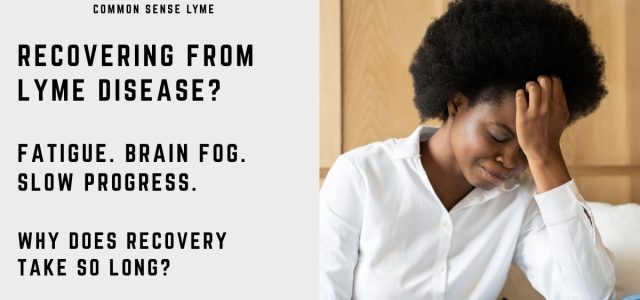
Lyme Disease Recovery: Why Symptoms Can Last and What to Expect
Lyme disease recovery varies widely depending on when the illness is diagnosed, how it is treated, and whether coinfections are present.
Even after completing antibiotics, some patients continue to experience symptoms for months or longer. For a broader overview, see the Lyme disease recovery guide.
Some patients are later described as having post-treatment Lyme disease syndrome (PTLDS)—a term used in research to describe persistent symptoms following treatment. PTLDS represents one framework for understanding ongoing symptoms but does not define a single cause.
How Timing Affects Lyme Disease Recovery
When Lyme disease is diagnosed and treated early, most patients recover fully.
A standard course of antibiotics—typically doxycycline, amoxicillin, or cefuroxime—is most effective during the early localized stage, when symptoms may include a rash, fever, fatigue, and muscle aches.
In my experience, patients treated during this phase often recover within weeks and return to normal life without lasting symptoms.
When Lyme disease has disseminated—spreading to the joints, nervous system, or heart—treatment still works, but symptoms may linger for months and may require additional follow-up.
In late Lyme disease, particularly when illness has gone untreated for months or years, recovery is slower and symptoms may become chronic or intermittent. Even at this stage, improvement is possible with appropriate care.
What Symptoms Can Persist After Lyme Disease?
Persistent symptoms may last for months or longer after treatment ends.
Common symptoms include fatigue, brain fog, cognitive slowing, joint or muscle pain, sleep disruption, and reduced functional capacity.
These symptoms overlap with what many patients describe as persistent Lyme disease.
Coinfections such as Babesia or Bartonella may also contribute to symptoms that do not respond to standard Lyme antibiotics, making evaluation for tick-borne coinfections important when recovery stalls.
Why Lyme Disease Recovery Can Be Slow
Recovery is often gradual and nonlinear.
Many patients improve over time, but progress frequently includes setbacks, symptom flares, or periods of instability. This does not necessarily mean the illness is worsening.
Persistent symptoms may reflect ongoing biologic disruption rather than infection alone.
Potential mechanisms include immune system changes, neuroinflammation, autonomic dysfunction, and other post-infectious processes.
For a deeper discussion, see persistent Lyme disease mechanisms.
Complications That Can Slow Recovery
Some patients face additional complications, especially when treatment is delayed or incomplete.
Lyme arthritis can cause persistent joint inflammation—often affecting the knees—and symptoms may continue after antibiotics. Physical therapy, anti-inflammatory medications, or DMARDs may be necessary in selected cases.
Neurologic Lyme disease may involve nerve pain, cognitive dysfunction, or facial paralysis. Recovery may require rehabilitation and supportive therapies.
Lyme carditis can lead to heart block, palpitations, and fainting. Severe cases occasionally require temporary pacing during treatment.
Even in these advanced stages, meaningful improvement remains possible.
What to Expect During Recovery
Recovery from Lyme disease is rarely linear.
Patients commonly experience periods of improvement followed by setbacks, increased symptoms after exertion, and fluctuating cognitive or physical capacity.
Patients often ask whether worsening symptoms represent a flare or relapse. This distinction is discussed in the Lyme flare versus relapse guide.
For guidance on pacing and activity, see exercise during Lyme disease recovery.
I have worked with patients who felt hopeless for months or even years, only to return to work, school, hobbies, and full lives. Understanding recovery patterns can reduce uncertainty and help guide realistic expectations.
Persistent Symptoms and Treatment Decisions
Patients with ongoing symptoms require careful reassessment.
Potential explanations include lingering tissue injury, autonomic dysfunction, neuroinflammation, coinfections, or unrelated medical conditions.
Recent guidelines emphasize a systematic evaluation and individualized care rather than attributing every symptom to a single mechanism.
In my clinical experience, some patients with persistent symptoms benefit from additional treatment directed at Lyme disease and associated coinfections.
This approach is consistent with individualized care principles emphasized by ILADS, where treatment decisions are guided by the patient’s clinical presentation and response over time.
Frequently Asked Questions
Can you fully recover from Lyme disease?
Many patients recover fully, especially when treatment begins early. Patients with disseminated or late Lyme disease may take longer but can still achieve meaningful improvement.
Why do Lyme disease symptoms persist after treatment?
Persistent symptoms may reflect immune changes, neuroinflammation, autonomic dysfunction, or undiagnosed coinfections. PTLDS is one framework for understanding these symptoms but does not identify a single cause.
How long does Lyme disease recovery take?
Recovery timelines vary widely. Early-treated patients may recover within weeks, while others experience symptoms for months or longer.
What slows down Lyme disease recovery?
Delayed diagnosis, untreated coinfections, neuroinflammation, and autonomic dysfunction can all prolong recovery.
Are setbacks during recovery normal?
Yes. Periods of symptom flares or instability are common and do not necessarily mean the illness is worsening.
Clinical Takeaway
Lyme disease recovery is often prolonged and nonlinear.
Early diagnosis generally leads to faster and more complete recovery, while delayed or disseminated disease may require additional time and careful management.
Persistent symptoms may reflect infectious, neurologic, autonomic, inflammatory, or post-infectious mechanisms.
Recent PTLDS guidelines emphasize multidisciplinary care and rehabilitation. However, in my clinical experience, selected patients may improve with additional treatment directed at Lyme disease and associated coinfections.
Recovery should be evaluated based on patterns over time rather than a single label or a single explanation.
Related Articles
Persistent Lyme Disease Symptoms
What Is Chronic Lyme Disease?
Lyme Disease as a Cause of Chronic Illness
Post-Treatment Lyme Disease Syndrome (PTLDS)
Lyme Disease Fatigue
References
-
- Arias P, Gocko X, Roblot F, Hansmann Y, Baux E, Eldin C, et al. Guidelines for Lyme borreliosis: post-treatment Lyme disease syndrome (PTLDS). Infect Dis Now. 2025;55(8S):105205.
- Geebelen L, Lernout T, Devleesschauwer B, et al. Non-specific symptoms and post-treatment Lyme disease syndrome in patients with Lyme borreliosis: a prospective cohort study in Belgium (2016–2020). BMC Infect Dis. 2022;22:756.
- Wong KH, Shapiro ED, Soffer GK. A review of post-treatment Lyme disease syndrome and chronic Lyme disease for the practicing immunologist. Clin Rev Allergy Immunol. 2022;62(1):264-271.
- Talbot NC, Spillers NJ, Luther P, Flanagan C, Soileau LG, Ahmadzadeh S, et al. Lyme disease and post-treatment Lyme disease syndrome: current and developing treatment options. Cureus. 2023;15(8):e43112.
Dr. Daniel Cameron, MD, MPH
Lyme disease clinician with over 30 years of experience and past president of ILADS.
Symptoms • Testing • Coinfections • Recovery • Pediatric • Prevention