Persistent Lyme Disease Mechanisms
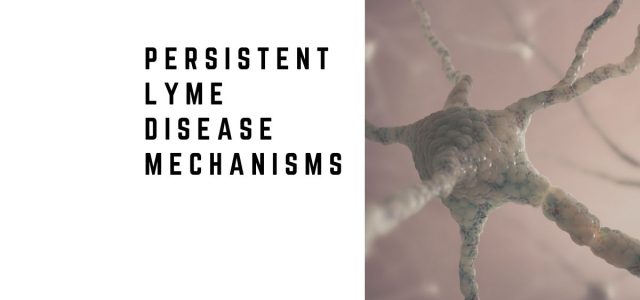
Persistent Lyme disease mechanisms help explain why symptoms may continue after treatment and why recovery often fluctuates. Rather than reflecting a single cause, ongoing symptoms often arise from interacting biologic processes that evolve over time.
Persistent symptoms in Lyme disease are rarely explained by a single cause. Instead, they typically reflect overlapping processes involving immune signaling, inflammation, nervous system regulation, and in some cases persistent microbial or antigenic effects.
These mechanisms do not operate in isolation—they interact. Understanding these interactions helps explain why symptoms may improve, worsen, or shift over time rather than follow a steady, predictable course.
This page explains the biologic mechanisms that may contribute to ongoing symptoms. For the broader clinical overview that connects symptoms, mechanisms, and recovery patterns, see our Persistent Lyme Disease Overview.
Persistent Lyme Disease Mechanisms: What This Page Covers
- Persistent infection
- Immune dysfunction and neuroinflammation
- Autonomic dysfunction
- Post-treatment Lyme disease syndrome (PTLDS)
This page serves as the central framework for understanding why symptoms persist and how different biologic mechanisms interact over time.
The key question is not simply whether symptoms persist—but whether they are improving, stabilizing, or progressing. This distinction helps guide next steps in care.
These mechanisms help explain patterns described in the Symptoms Guide, the broader clinical framing in Persistent Lyme Disease Overview, and fluctuations discussed in the Recovery hub.
This framework also reflects a broader challenge in medicine: complex conditions often cannot be explained by a single mechanism. This concept is explored further in Why Lyme Disease Tests the Limits of Medicine.
What Patients Often Ask
- Why am I still sick after treatment?
Persistent symptoms may reflect ongoing biologic changes rather than active infection alone. - Does this mean Lyme disease is still active?
Not necessarily. Symptoms may continue even after the infection has been treated. - Will I recover?
Many patients improve over time, though recovery is often gradual and nonlinear. - What should I do next?
Careful reassessment, symptom monitoring, and a structured recovery approach are essential.
What This Section Does Not Claim
- Not all persistent symptoms reflect ongoing infection.
- Not all persistent symptoms are purely post-infectious.
- Mechanisms may overlap and evolve over time.
- Individual patients vary significantly.
Responsible clinical evaluation requires avoiding both automatic dismissal and automatic assumption.
Persistent Infection as One Proposed Mechanism
Persistent infection has been proposed as a potential contributor in a subset of patients.
If present, persistent infection may contribute to downstream inflammatory signaling, immune variability, and regulatory instability.
Learn more in Persistent Lyme Disease.
Immune Dysregulation and Inflammatory Signaling
Persistent immune activation following infection represents another proposed mechanism.
Immune dysregulation does not necessarily imply ongoing infection. It may reflect post-infectious immune remodeling.
Explore this further in immune dysfunction and neuroinflammation in Lyme disease.
Nervous System Sensitization
Changes in central and peripheral nervous system signaling may contribute to persistent pain, cognitive variability, and stress intolerance.
Autonomic and Physiologic Regulation
Variability in autonomic function may contribute to dizziness, palpitations, and exercise intolerance.
These patterns often extend beyond formal diagnoses such as POTS and may present as broader physiologic instability.
For deeper clinical discussion, see Autonomic Dysfunction in Lyme Disease.
Co-Infections and Overlapping Conditions
Unrecognized co-infections—including Babesia and Bartonella—may contribute to persistent symptom patterns.
How Persistent Lyme Disease Mechanisms Interact
- Immune dysregulation may influence autonomic instability.
- Autonomic variability may amplify nervous system sensitization.
- Regulatory instability may worsen fatigue.
Understanding these interactions helps explain symptom fluctuation and variability over time.
When symptoms persist or fluctuate, patients often ask whether this represents a temporary flare or a more sustained relapse. This distinction is explored in our Lyme flare vs relapse guide.
Clinical Perspective
Persistent Lyme disease mechanisms likely reflect a combination of biologic processes rather than a single explanation.
Complex illness demands disciplined reasoning and ongoing reassessment over time.
For the broader clinical overview, see Persistent Lyme Disease Overview.
For symptom patterns, see Persistent Lyme Disease Symptoms.
For research definitions, see PTLDS.
For diagnostic interpretation, see Testing & Diagnosis.
For timelines and recovery, see Lyme Disease Recovery.
Reviewed and authored by Daniel Cameron, MD, MPH
Dr. Daniel Cameron, MD, MPH
Lyme disease clinician with over 30 years of experience and past president of ILADS.
Symptoms • Testing • Coinfections • Recovery • Pediatric • Prevention