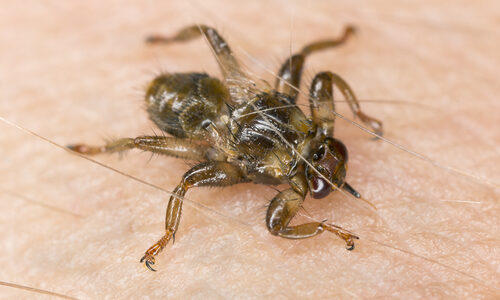
Do Deer Keds Transmit Lyme Disease? Revisiting Earlier Assumptions
Deer keds are often mistaken for flying ticks
Researchers have detected pathogen DNA in deer keds
Current evidence does not establish human transmission
Editor’s Update: Earlier versions of this article discussed whether deer keds might play a role in transmitting Lyme-related pathogens. Since then, I have revisited the evidence. Although deer keds remain biologically interesting and pathogen DNA has been detected in some studies, I have not found convincing evidence demonstrating human transmission of Lyme disease or anaplasmosis.
Science evolves. When new information or better interpretation changes our understanding, I believe it is important to revisit earlier assumptions openly.
Deer keds—often called “ticks with wings”—continue attracting attention because they bite humans, swarm outdoors, and can resemble ticks. But resemblance alone does not prove disease transmission.
What Are Deer Keds?
Deer keds belong to the family Hippoboscidae and genus Lipoptena. They are parasitic flies that primarily feed on deer and other mammals.
People frequently confuse deer keds with ticks because they flatten against the skin after landing and may shed their wings after finding a host.
People commonly describe deer keds as:
- Ticks with wings
- Flying ticks
- Deer louse flies
- Winged ticks
Do Deer Keds Bite Humans?
Yes. Deer keds can land on and bite humans.
Reported reactions include:
- Localized itching
- Skin irritation
- Persistent bite reactions
- Inflammatory skin lesions
These reactions understandably raise concerns about whether deer keds can also transmit infection.
Do Deer Keds Carry Lyme Disease?
This question remains controversial.
Investigators have identified pathogen DNA in deer keds, including organisms associated with tick-borne diseases. However, identifying DNA in an insect does not automatically prove the insect transmits disease to humans.
Important unanswered questions remain:
- Can deer keds maintain viable organisms?
- Can infected deer keds transmit pathogens while feeding?
- Does pathogen detection translate into human disease risk?
At present, evidence supporting human transmission remains limited.
Why Detection Does Not Equal Transmission
Finding pathogen DNA in an insect is scientifically interesting—but detection alone is not enough to establish vector competence.
For an insect to be considered a confirmed vector, researchers generally need evidence that it can acquire, maintain, and successfully transmit infection.
Current evidence has not established deer keds as proven vectors of Lyme disease or anaplasmosis in humans.
That distinction matters because detection studies often generate headlines before transmission studies are completed.
What About Deer Flies?
Deer flies and deer keds are different insects.
Deer flies belong to the family Tabanidae, while deer keds belong to Hippoboscidae.
Confusing the two can create unnecessary confusion regarding disease transmission and risk.
Patients frequently remember insect exposure imperfectly, making exposure history important when evaluating unexplained symptoms after outdoor activities.
Clinical Perspective
Patients frequently ask whether unusual insect exposures could explain persistent symptoms after spending time outdoors.
While deer keds remain an interesting area of research, current evidence does not support viewing them as established Lyme vectors.
Clinicians should evaluate symptoms, exposure history, geography, and timing carefully while avoiding conclusions that go beyond available evidence.
Frequently Asked Questions
What is a deer ked?
A deer ked is a parasitic fly that primarily feeds on deer but may also bite humans.
Do deer keds transmit Lyme disease?
Current evidence does not establish deer keds as proven vectors of Lyme disease in humans.
Are deer keds dangerous to humans?
Most reported effects involve nuisance bites, itching, and skin irritation rather than proven disease transmission.
Why are deer keds called ticks with wings?
People often call them ticks with wings because they resemble flattened ticks after landing and shedding their wings.
Are deer keds the same as deer flies?
No. Deer keds and deer flies are different insects from different families.
Clinical Takeaway
Current evidence does not establish deer keds as proven vectors of Lyme disease or anaplasmosis in humans.
Research remains limited, and distinguishing pathogen detection from confirmed transmission remains important when interpreting emerging studies.
Related Articles
Prevention of Lyme disease
Bad signs after a tick bite
Tick-borne coinfections
How long does it take for a tick to transmit Babesia?
References
- Buss M, Case L, Kearney B, Coleman C, Henning JD. Detection of Lyme disease and anaplasmosis pathogens via PCR in Pennsylvania deer ked. J Vector Ecol. 2016;41(2):292-294.
Dr. Daniel Cameron, MD, MPH
Lyme disease clinician with over 30 years of experience and past president of ILADS.
Symptoms • Testing • Coinfections • Recovery • Pediatric • Prevention


My daughter got bit by deer flies 4 times last week and had the typical bullseye around the site. I didn’t think much about it until this week she started to complain about joint pain, headache, and fever. So I looked it up and found your article. Could it be related? Could be a fluke. I am going to find a doctor that does lymes testing just to make sure. I do know there is so much we don’t understand and just brush things under the catogory of stress instead of treating what is really there.
The rash may reflect a reaction to the deer fly bites. It is important to have your daughter be evaluated even if you are not sure if the deer flies are related. The CDC pays most attention to rashes over 2 inches in diameter. Smaller rashes may reflect irritation from a bite. The doctor may have to treat given the tests are not all that reliable early in the disease.
or related bartonellae to humans by the bite of an infected deer ked and fa suggest that a potential role of bartonellae in the etiology of deer ked dermatitis should be investigated further.