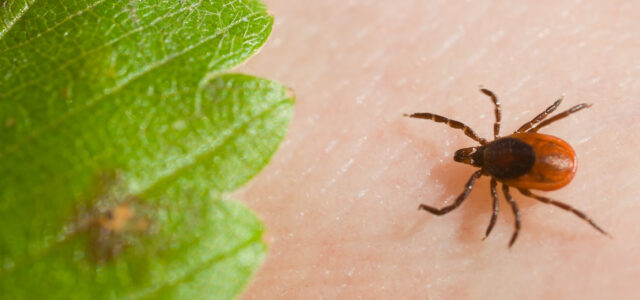
Tick-Borne Diseases in Minnesota: 7 Pathogens Identified in Black-Legged Ticks
Researchers identified seven infectious agents in Minnesota ticks.
Lyme disease remained the most common pathogen detected.
The findings highlight the growing presence of tick-borne diseases in Minnesota.
The authors of a recent study published in Ticks and Tick-borne Diseases examined the pathogens in 1,240 host-seeking Ixodes scapularis (black-legged) nymphal ticks from Minnesota.
The investigators identified seven infectious agents including:
- Borrelia burgdorferi sensu stricto (bacteria causing Lyme disease)
- Borrelia mayonii
- Borrelia miyamotoi
- Anaplasma phagocytophilum
- Ehrlichia muris eauclairensis
- Babesia microti
- Powassan virus
B. burgdorferi s.s., A. phagocytophilum, and B. microti were the most common pathogens. “Borrelia burgdorferi s.s. was the most prevalent and geographically widespread, found in 25.24% of all nymphs tested,” writes Johnson and colleagues. [1]
The other two were widespread but had a lower incidence rate with A. phagocytophilum and B. microti at 6.29% and 4.68%, respectively.
This study did not address the impact on residents but according to a case report by Sharma from the Mayo Clinic, “Minnesota had 1,176 confirmed Lyme [disease] cases in 2015 (20.7 cases/100,000).” [2]
“Over the last 20 years, the median incidence has risen from 464 cases (1996–2005) to 1121 (2006–2015),” Sharma states.
[bctt tweet=”7 tick-borne pathogens have been identified in my home state of Minnesota.” username=”DrDanielCameron”]
Meanwhile, the Centers for Disease Control and Prevention (CDC) has advised clinicians to consider Lyme disease in emerging states such as Minnesota, according to a recently published article in Morbidity and Mortality Weekly Report (MMWR).
Read more about the CDC guidance on Lyme disease in emerging states.
References:
- Johnson TL, Graham CB, Maes SE, et al. Prevalence and distribution of seven human pathogens in host-seeking Ixodes scapularis (Acari: Ixodidae) nymphs in Minnesota, USA. Ticks Tick Borne Dis. 2018.
- Sharma U. Disseminated Lyme disease presenting as multiple non-target cellulitic-appearing skin lesions and oral pseudomembrane. BMJ Case Rep. 2018;2018.
Dr. Daniel Cameron, MD, MPH
Lyme disease clinician with over 30 years of experience and past president of ILADS.
Symptoms • Testing • Coinfections • Recovery • Pediatric • Prevention