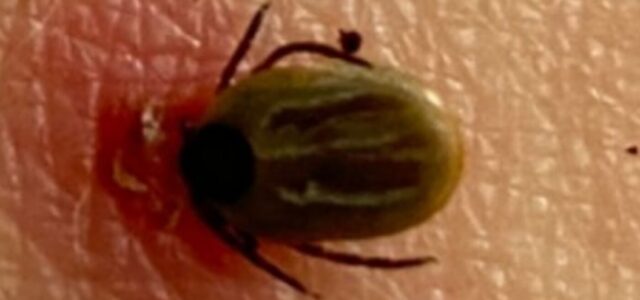
Triple Tick Infection: Lyme, Babesia, Anaplasma
Welcome to another Inside Lyme Podcast. One of the best ways to understand Lyme disease is through reviewing real clinical cases. In this episode, I discuss a 74-year-old woman who developed severe illness after a tick exposure and was diagnosed with three tick-borne infections: Lyme disease, Babesia, and Anaplasmosis.
Ticks can transmit multiple tick-borne infections during a single bite. These overlapping infections—often called Lyme disease coinfections—can complicate diagnosis and lead to more severe illness.
Multiple Tick-Borne Infections From a Single Tick Bite
This case was originally described by Kumar and colleagues in the journal Cureus in 2019.
The patient was a 74-year-old woman with several underlying health conditions, including chronic obstructive pulmonary disease (COPD) and hypertension. She was also a smoker.
She presented critically ill, requiring mechanical ventilation and treatment for shock.
During her evaluation, physicians discovered she was infected with three tick-borne pathogens:
Despite the severity of her illness, the patient ultimately recovered following treatment.
Why Coinfections Can Make Lyme Disease More Severe
Ticks frequently carry more than one pathogen. When Lyme disease occurs alongside infections such as Babesia or Anaplasma, patients may experience more severe symptoms.
Each organism affects the body differently. Babesia infects red blood cells, while Anaplasma infects white blood cells. Lyme disease, caused by Borrelia burgdorferi, can affect multiple organ systems including the nervous system, joints, and heart.
These overlapping infections can make diagnosis more difficult and may explain why some patients become critically ill.
Cases like this highlight why clinicians should consider Lyme disease coinfections when evaluating patients with severe or unexplained illness following tick exposure.
Clinical Takeaway
Coinfections such as Babesia and Anaplasma can complicate Lyme disease cases and contribute to more severe illness. Recognizing multiple tick-borne infections early can be critical for diagnosis and treatment.
After decades treating Lyme disease, I have seen that coinfections are common and may explain why some patients become much sicker than expected after a tick bite.
Reference
- Kumar A, et al. Severe tick-borne coinfection with Babesia, Anaplasma, and Borrelia burgdorferi. Cureus. 2019.
Disclaimer: The information discussed in this podcast is general in nature and is not intended as medical advice for any individual patient. If you require specific medical advice, please seek care from a qualified healthcare professional.
Dr. Daniel Cameron, MD, MPH
Lyme disease clinician with over 30 years of experience and past president of ILADS.
Symptoms • Testing • Coinfections • Recovery • Pediatric • Prevention