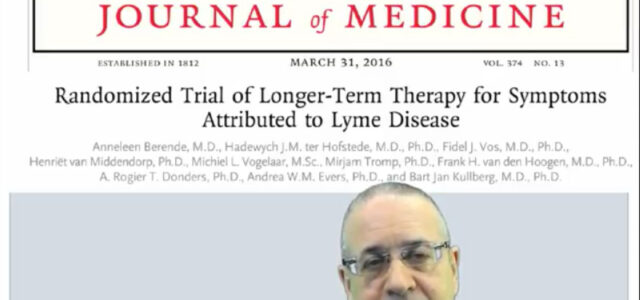
Netherlands Trial: Does It Really Support Short-Term Lyme Disease Therapy?
A randomized trial published in the New England Journal of Medicine evaluated whether longer-term antibiotic treatment improves outcomes in patients with persistent symptoms attributed to Lyme disease. :contentReference[oaicite:0]{index=0}
The authors concluded that longer-term therapy did not provide additional benefit compared to shorter-term treatment.
Who Was Studied?
The trial included 281 patients with a mean age of 43–48 years.
However, this was not an early Lyme disease population:
- Average duration of symptoms: 2.7 years
- Median of 2 prior antibiotic treatments
- Average of 30 days of treatment before enrollment
Patients presented with symptoms including musculoskeletal pain, fatigue, neurocognitive complaints, and sensory disturbances.
Key Finding—But What Does It Mean?
The study has been interpreted as showing that 2 weeks of treatment is as effective as 14 weeks.
However, a closer look suggests a different interpretation:
Neither short-term nor longer-term therapy restored patients to normal health.
Quality of Life Remained Poor
Patient outcomes were measured using the SF-36 Physical Component Score (PCS).
- Lyme patients: PCS 31–32
- Diabetes: PCS ~42
- Cancer: PCS ~41
- General population: PCS ~50
This indicates that patients in the study remained significantly impaired, regardless of treatment duration.
Why Outcomes May Have Been Limited
Several factors may have influenced the results:
- Delayed retreatment after an average of 2.7 years of symptoms
- Enrollment of patients who had already failed prior therapy
- Poor baseline quality of life
- No evaluation for coinfections such as Babesia
These factors suggest that the study population may not reflect patients treated earlier in the course of illness.
What This Means for Treatment
The trial highlights the challenges of treating patients with long-standing symptoms.
It may not answer the question of how best to treat patients earlier in their disease course—or how to prevent progression to persistent illness.
In clinical practice, considerations may include:
- Earlier recognition and treatment
- Timely reassessment if symptoms persist
- Evaluation for coinfections
- Individualized treatment strategies based on response
Clinical Perspective
The Netherlands trial provides important data but may be best understood in the context of the population studied.
When patients with years of symptoms and prior treatment failures are enrolled, outcomes may be limited regardless of treatment duration.
These findings underscore the importance of early diagnosis and individualized care.
Patients may benefit from understanding persistent symptoms, reviewing treatment variability, and considering coinfections when recovery is incomplete.
Key Takeaway
The Netherlands trial does not show that short-term therapy is sufficient—it shows that patients with long-standing Lyme symptoms remained impaired despite both short- and long-term treatment.
Dr. Daniel Cameron, MD, MPH
Lyme disease clinician with over 30 years of experience and past president of ILADS.
Symptoms • Testing • Coinfections • Recovery • Pediatric • Prevention