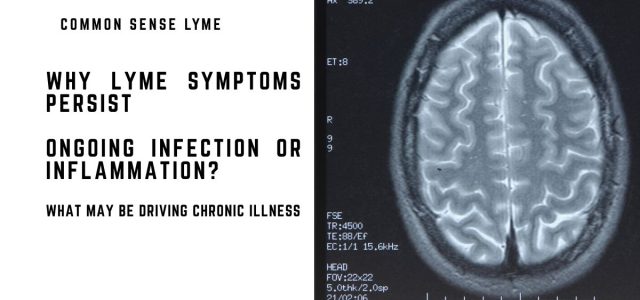
Persistent Lyme Disease Mechanisms
Symptoms may continue after treatment
Multiple biologic mechanisms may overlap
Understanding these patterns may explain symptom variability
Persistent Lyme disease mechanisms help explain why symptoms may continue after treatment and why recovery often fluctuates.
Rather than having a single explanation, persistent symptoms may reflect overlapping processes involving immune signaling, inflammation, nervous system regulation, coinfections, and, in some cases, persistent microbial or antigenic effects.
These mechanisms do not necessarily operate in isolation. They may overlap, evolve, and amplify one another over time.
This page provides a central framework for understanding why symptoms may persist, return, fluctuate, or recur after Lyme disease.
Common Patterns Patients Experience
These patterns are often what bring patients back for evaluation. The key question is whether symptoms are improving, stabilizing, recurring, or progressing.
Lyme Disease Mechanisms That May Contribute to Persistent Symptoms
- Persistent infection
- Lyme persister cells
- Biofilms in Lyme disease
- Immune dysfunction and neuroinflammation
- Autonomic dysfunction
- Post-treatment Lyme disease syndrome
- Tick-borne coinfections
Persistent symptoms after Lyme disease do not always point to one explanation. In many patients, symptoms may reflect overlapping processes such as immune dysregulation, inflammation, nervous system changes, coinfections, and possible persistent microbial effects.
What This Page Does Not Claim
- Not all persistent symptoms reflect ongoing infection.
- Not all persistent symptoms are purely post-infectious.
- Mechanisms may overlap and evolve over time.
- Individual patients vary significantly.
Responsible clinical evaluation requires avoiding both automatic dismissal and automatic assumption.
Persistent Infection as One Proposed Mechanism
Persistent infection has been proposed as a potential contributor in a subset of patients.
If present, persistent infection may contribute to downstream inflammatory signaling, immune variability, and regulatory instability.
Learn more in Persistent Lyme Disease.
Lyme Persister Cells
Laboratory studies suggest that some forms of Borrelia burgdorferi may tolerate antibiotics under certain conditions.
These forms, often called Lyme persister cells, are one proposed mechanism for treatment variability.
The clinical relevance of persister cells in human disease remains under study.
Biofilms in Lyme Disease
In laboratory studies, Borrelia has been observed forming biofilm-like aggregates.
These structures may affect how bacteria interact with antibiotics and the immune system under certain conditions.
Learn more about biofilms in Lyme disease.
Immune Dysregulation and Inflammatory Signaling
Persistent immune signaling following infection represents another proposed mechanism.
Immune dysregulation does not necessarily prove ongoing infection. It may reflect post-infectious immune remodeling, persistent antigenic stimulation, or other inflammatory pathways.
Explore this further in immune dysfunction and neuroinflammation in Lyme disease.
Nervous System Sensitization
Changes in central and peripheral nervous system signaling may contribute to persistent pain, cognitive variability, and stress intolerance.
Nervous system sensitization may help explain why symptoms can feel disproportionate to routine stressors, exertion, or minor illness.
Autonomic and Physiologic Regulation
Variability in autonomic function may contribute to dizziness, palpitations, temperature intolerance, and exercise intolerance.
These patterns may extend beyond formal diagnoses such as POTS and may present as broader physiologic instability.
For a deeper clinical discussion, see Autonomic Dysfunction in Lyme Disease.
Coinfections and Overlapping Conditions
Unrecognized coinfections—including Babesia and Bartonella—may contribute to persistent symptom patterns.
Coinfections can change the clinical picture and may require different treatment considerations.
How Persistent Lyme Disease Mechanisms Interact
- Persistent infection may drive inflammatory signaling.
- Immune dysregulation may influence autonomic instability.
- Autonomic variability may amplify nervous system sensitization.
- Coinfections may worsen fatigue, sweats, pain, or neurologic symptoms.
- Regulatory instability may contribute to symptom fluctuation.
Key principle: Persistent Lyme symptoms may be better understood as the result of interacting biologic systems rather than one isolated mechanism.
Understanding these interactions helps explain why symptoms may persist, relapse, fluctuate, or shift over time.
Frequently Asked Questions
Why do Lyme symptoms persist after treatment?
Persistent symptoms may reflect overlapping mechanisms including immune dysregulation, autonomic dysfunction, inflammatory signaling, coinfections, nervous system sensitization, or possible persistent microbial effects.
Can Lyme disease symptoms come back after improving?
Yes. Some patients improve and later experience symptom recurrence, fluctuation, or relapse-like patterns that require reassessment.
Does persistent Lyme disease always mean active infection?
No. Persistent symptoms do not automatically prove ongoing infection. Symptoms may involve several overlapping biologic mechanisms.
Why do Lyme symptoms fluctuate so much?
Symptoms may fluctuate as inflammatory, neurologic, autonomic, and immune systems change over time.
What mechanisms may explain ongoing Lyme disease symptoms?
Possible mechanisms include persistent infection, persister cells, biofilm-like forms, immune dysregulation, neuroinflammation, autonomic dysfunction, nervous system sensitization, and coinfections.
Clinical Takeaway
Persistent Lyme disease mechanisms likely reflect interacting biologic processes rather than a single explanation.
Symptoms that persist, fluctuate, or recur may involve overlapping pathways including immune signaling, nervous system regulation, inflammation, autonomic instability, coinfections, and possible persistent microbial or antigenic effects.
Complex illness demands disciplined reasoning, ongoing reassessment, and attention to symptom patterns over time rather than reliance on a single explanatory model.
Related Articles
Lyme Disease Recovery
Neurologic Lyme Disease
Lyme Test Accuracy
Why Lyme Tests Medicine
References
- Rebman AW, Aucott JN. Post-treatment Lyme disease as a model for persistent symptoms in Lyme disease. Front Med. 2020;7:57.
- Aucott JN, Rebman AW, Crowder LA, Kortte KB. Post-treatment Lyme disease syndrome symptomatology and the impact on life functioning: is there something here? Qual Life Res. 2013;22(1):75–84.
- Sharma B, Brown AV, Matluck NE, Hu LT, Lewis K. Borrelia burgdorferi, the causative agent of Lyme disease, forms drug-tolerant persister cells. Antimicrob Agents Chemother. 2015;59(8):4616–4624.
- Sapi E, Bastian SL, Mpoy CM, et al. Characterization of biofilm formation by Borrelia burgdorferi in vitro. PLoS One. 2012;7(10):e48277.
- Adler BL, Russell JW, Hac NE, et al. Dysautonomia following Lyme disease: a key component of post-treatment Lyme disease syndrome? Front Neurol. 2024;15:1344925.
Dr. Daniel Cameron, MD, MPH
Lyme disease clinician with over 30 years of experience and past president of ILADS.
Symptoms • Testing • Coinfections • Recovery • Pediatric • Prevention