Lyme Disease Fatigue: Persistent Exhaustion and Pain After Treatment
Persistent symptoms may follow Lyme disease treatment.
Fatigue, pain, and cognitive dysfunction can overlap.
PTLDS remains controversial.
Lyme disease fatigue after treatment can become one of the most disruptive long-term complications of infection.
While many patients recover fully after antibiotics, others continue to experience exhaustion, pain, sleep disruption, and cognitive symptoms long after standard treatment has ended.
One published case involving Lyme carditis and Post-Treatment Lyme Disease Syndrome (PTLDS) highlights how persistent symptoms may continue even after the infection appears successfully treated. [1]
The case also illustrates how early Lyme disease may initially resemble viral illnesses such as mononucleosis, delaying recognition and treatment. :contentReference[oaicite:0]{index=0}
Initial Symptoms Resembled a Viral Illness
Novak and colleagues described the case in Case Reports in Infectious Diseases. [1]
The patient had repeated tick exposure and a history of prior tick bites. However, she did not recall a recent tick attachment before becoming ill. [1]
Doctors initially suspected a viral illness, possibly mononucleosis.
Her symptoms included:
- Neck pain and stiffness
- Myalgia
- Fever
- Fatigue
- Dehydration
As her condition worsened, she required hospitalization for further evaluation.
The Rash Was Misinterpreted
The patient later developed a nonpainful red rash on her hip.
Initially, the rash was interpreted as a drug reaction rather than erythema migrans associated with Lyme disease.
Over time, the rash expanded and additional lesions appeared on her leg and stomach. [1]
She was treated with Keflex, but the rash did not improve.
Heart Block Eventually Led to the Diagnosis
Six weeks after her initial presentation, the patient returned with worsening symptoms including:
- Shortness of breath with exertion
- Chest heaviness
- Anxiety
- Profound fatigue
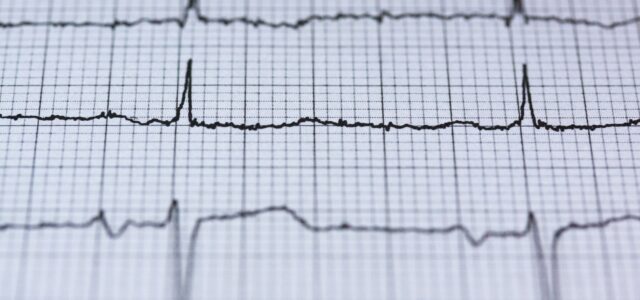
She was found to have a pulse rate of only 31 beats per minute along with second-degree AV block with 2:1 conduction. [1]
Lyme disease testing later returned positive by ELISA and Western blot.
The AV block resolved within three days of intravenous ceftriaxone treatment, and she was discharged on a three-week course of doxycycline. [1]
Persistent Symptoms Continued After Treatment
Although the Lyme carditis improved, the patient remained ill.
Persistent symptoms included:
- Severe fatigue and insomnia
- Difficulty concentrating and word-finding problems
- Bursitis and joint pain
- Cold hands and feet
- Shooting pains in the arms
- Numbness involving the hands and feet
At one point, the patient reportedly stated she felt “like a 90-year-old woman.” [1]
She remained unable to work for several months.
The Patient Was Diagnosed With PTLDS
The patient was ultimately diagnosed with Post-Treatment Lyme Disease Syndrome (PTLDS).
The Infectious Diseases Society of America (IDSA) definition of PTLDS requires that symptoms significantly impair daily functioning. [2]
According to the report, her symptoms persisted for more than 18 months after treatment. [1]
Although she eventually returned to work full time, she continued reporting ongoing fatigue and pain that interfered with daily life. [1]
Questions Raised by Persistent Lyme Symptoms
This case continues to raise difficult questions regarding persistent symptoms after Lyme disease treatment.
Possible explanations discussed in the medical literature include:
- Residual inflammation
- Immune dysregulation
- Persistent infection
- Coinfections
- Nervous system injury triggered during infection
Not all physicians agree on the underlying mechanisms responsible for persistent symptoms.
However, cases like this demonstrate that ongoing fatigue, pain, and cognitive dysfunction can remain clinically significant long after initial treatment.
Learn more about Post-Treatment Lyme Disease Syndrome, Lyme carditis, neurologic Lyme disease, and Lyme coinfections.
Frequently Asked Questions
Can fatigue continue after Lyme disease treatment?
Yes. Some patients continue experiencing fatigue, pain, insomnia, and cognitive symptoms despite standard antibiotic treatment.
What is PTLDS?
Post-Treatment Lyme Disease Syndrome (PTLDS) refers to persistent symptoms that continue after recommended Lyme disease treatment.
Can Lyme carditis improve while other symptoms persist?
Yes. Cardiac abnormalities such as heart block may resolve while neurologic, cognitive, or musculoskeletal symptoms continue.
Can Lyme disease resemble mononucleosis?
Yes. Early Lyme disease may initially resemble viral illnesses such as mononucleosis with fever, fatigue, muscle pain, and malaise.
Why do some Lyme patients remain ill?
The exact cause remains debated and may involve inflammation, immune dysfunction, persistent infection, coinfections, or nervous system injury.
Clinical Takeaway
Lyme disease fatigue after treatment may persist despite resolution of objective findings such as heart block or rash.
Patients with PTLDS may continue experiencing fatigue, cognitive dysfunction, pain, insomnia, and neurologic symptoms for extended periods.
These cases continue to highlight the complexity of persistent Lyme disease symptoms and the need for individualized clinical evaluation.
Related Articles
Persister Cells Still a Problem for Lyme Disease Patients
“Doctor Says You Are Cured, But You Still Feel the Pain”
Could Dormancy Allow Lyme Disease to Survive Antibiotics?
Post-Treatment Lyme Disease Syndrome
Lyme Carditis
References
- Novak C, Harrison A, Aucott J. Early Disseminated Lyme Disease with Carditis Complicated by Posttreatment Lyme Disease Syndrome. Case Rep Infect Dis. 2017;2017:5847156.
- Wormser GP, Dattwyler RJ, Shapiro ED, et al. The clinical assessment, treatment, and prevention of Lyme disease, human granulocytic anaplasmosis, and babesiosis: clinical practice guidelines by the Infectious Diseases Society of America. Clin Infect Dis. 2006;43(9):1089-1134.
- Cameron DJ, Johnson LB, Maloney EL. Evidence assessments and guideline recommendations in Lyme disease: the clinical management of known tick bites, erythema migrans rashes and persistent disease. Expert Rev Anti Infect Ther. 2014:1-33.
Dr. Daniel Cameron, MD, MPH
Lyme disease clinician with over 30 years of experience and past president of ILADS.
Symptoms • Testing • Coinfections • Recovery • Pediatric • Prevention

this happened to me – and the pain was so severe i could not walk or stand.
this continued for over 2 years – i am immune compromised with no igg, iga, or igm and doctors insisted on going by test results which i am so immune compromised from chemo that my immune system can not respond to these tests
after being on and off antibiotics i finally went on Ceftin with Benadryl since I had a severe allergic reaction to the medicine but I can now walk without pain for the first time in over 2 years
you have to keep treating the underlying infections aggressively with antibiotics and keep trying different ones until you find one that works
good luck
I am happy your persistence paid off.
I’ve had Lyme, Tularemia, Brucella, Bartonella & Babesia for 4 years, and I’ve been on several antibiotics during that time. Currently, I only have Lyme + Babesia. My Lyme provider feels that I will recover from the Babesia within several months. I’m taking Atovaquone for this. Do you agree?
Doctors are divided on treatment approaches. I find atavaquone helpful for my more complicated patients.
Same here. 8/10 bands positive with severe knee swelling pain. Chronic fatigue and body/joint pain continues after a few rounds of antibiotic treatment. 5 years later my knees are so bad, my right has been replaced and my left gets replaced in June 2025. I still suffer with persistent fatigue, joint/body pain, dizziness, ringing in my ears, word finding.
I am post treatment going on 2 years. I still have pain, “flare-ups”, etc. The big question is…are there still active Lyme bacteria or is it damage from the Lyme? I know it’s a chasing your tail kind of thing but for piece of mind as well as treatment options can be confusing. I have been living within the limits and restrictions…again (just not as severe). Thank you, Dr Cameron for saving my life!!! I guess I just want to be back to 100%.
I am happy to hear to have improved. Keep your goal of 100% alive.
My sister was continues to suffer with fatigue, headaches, chronic pain, spastic gait and a strange constant mouth sucking after Lyme Disease and all the co infections that go along with it. She has been dealing with this for over 27 years even with antibiotic and holistic treatments. I was just wondering if you have heard of other people who exhibit constant, loud mouth sucking behavior as a result of these diseases?
I have not run into the problem. I typically include other specialists e.g. neurologist and ENT to rule out other issues.
Is it possible for Lyme or coinfections to cause degeneration of the spine, such as Mild Spondylosis, bulging disc covers, narrowing of spine, and fluid leakage? My teen has had this per MRI, and has all signs of arthritic Lyme and possibly Bartonella or coinfection (stiff neck, muscle weakness and pain, severe spine pain top to bottom, joint pain and knee ankle toe swelling, had flulike sx and ear infection initially, but toe swelling and foot pain right side preceded all of this). He is: negative flu, strept, blood cultures and also normal MRI brain. No spinal tap done. Negative iGg Lyme (inaccurate type of lab used).
Wouldn’t we know after 3 most if this had been Meningitis (fungal even)? I hate to get spinal tap since fevers are gone for month already, but don’t know how to play it safe, yet am keeping Lyme as great imitator front and center.
Any thoughts? Sorry such long post. He needs cane all the time, or wheelchair or bed. Not even 16 yrs old. Spine Dr, neuro and Rheum dismissed as Fibromyalgia, which I know alot about, and it’s different than that.
It is common to come up with a list of findings. It is not always clear that they all add up to one problem. You should include Lyme disease in your evaluation. Note: the spinal tap is often not helpful in chronic neurologic manifestation of Lyme disease. https://www.ncbi.nlm.nih.gov/pubmed/2172819
Dr. Cameron, I am a 66 yr old female living my entire life in Ok. and Ark. (Ozark Mts.). Being a country girl, and working in wildlife rehabilitation, ticks have been a daily part of my life…all of my life. Perfect health and highly productive until age 50, at on- set of “mysterious” illness. (ie: after a normal day, felt beyond exhaustion at bedtime, thinking I should take a few days off) . Woke at 4am with 104 temp, hugely swollen neck glands and over all body pain. Immediate trip to E.R. That began my journey (June 2002). Then in Aug. 2017 after 4 states, numerous docs and specialists, much uncalled for humiliation from medical community, (I.D. docs would not even allow me an appt.), I finally found a T.B.D. Specialist in Missouri. I was elated to FINALLY have a diagnosis….”Chronic Late Stage Lyme Disease with multiple co-infections. My hopes were quickly dashed when I then discovered the “government-political-insurance companies monetary cover-up issues with a federal court case pending in Texarkana, Tx. (June, 2019)..and much to my horror realized that a “cure” for me was not in my future. I now live at home with palliative care assistance. I suffer greatly daily and continue to fight this disease the only way I know how…..AWARENESS!..I will tell anyone who will listen, pass out printed info on everything from the history of “Plum Island” to today’s most current advances. Of course, my own personal journey was motivation enough but when I read and researched that our children…our babies are now being diagnosed with this wretched disease…I could not do nothing…so awareness it is! Thank you for your dedication and out pouring of researched info. I have often said, as a person who has unwillingly incubated this deadly disease for almost 18 yrs now, some medical entity, research team,..etc. should be able to glean massive amounts of info from my live body, still struggling to survive but can find no takers! ha! Thank God I still have my since of humor. I am open for unleashing every iota of info I personally have. I remain available….respectively, Itski. God bless all the courageous professionals and sufferers on the front lines of this battle….Let’s win the war!!!!
I appreciate your courage.
Hi There.
I am treated for lyme, had the afzelli strain of bacteria who cause scin problems and less other bad symtoms like nerves, but it can do,
I had a ACA on lower leg left, and get after tests and a skin biopt doxycyline for 30 days. Things get better the ACA is gone and have normal skin exept when heat or other stresses it does colouring.
Now I am 5 months from antibiotics and I think it is coming back, the ACA is still gone but have some muscle pain who feels like I have done sport, it is not bad and I am not sick, no fever and normal heart action, I do bycicle a lot, tyreness is still be with me, special because it is spring I have always tireness, soms quite severe.
I have a reash on the frond head an a couloring on nose, bayve a new ACA there?.
I do not be on hospital doctor specialised in lyme, I have no bad symtoms, I am active. I have also no bad nerve problems, I do feel some things but very very mild and can be of other reasons. I am diagnosted with biogene aminen, who can be cause, I did read together with lyme it can turn problematic.
It is time to do research, this bacteria is quite dangerous, not deadly but people get out of running.