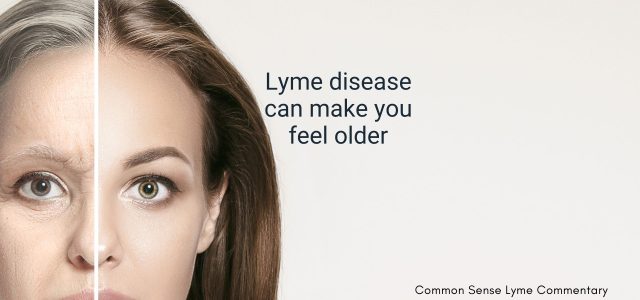
Lyme Disease Can Make You Feel Older Than You Are
Lyme disease can make your body feel decades older.
Even when tests look normal.
Lyme disease aging symptoms can create a disconnect between how old you are—and how your body feels.
“I’m 36, but I feel 76.” :contentReference[oaicite:0]{index=0}
That’s how one patient described her experience before being diagnosed with Lyme disease.
Her legs felt heavy. Her memory was unreliable. Her energy was gone.
She had been told it was anxiety—or early menopause.
It wasn’t aging. It was Lyme disease.
This pattern is more common than many realize. Patients are often told their symptoms are due to stress, burnout, or simply getting older—when in fact, an underlying illness is driving the change.
For a similar case, see She Was Told It Was Aging — It Was Lyme All Along.
Why These Symptoms Are Often Dismissed
Fatigue, brain fog, joint stiffness, and cognitive slowing are frequently attributed to aging or stress.
But when these symptoms appear suddenly—or progress quickly—they deserve a closer look.
This pattern reflects a broader issue of medical dismissal, where symptoms are minimized when routine testing is inconclusive.
Clinical pattern: symptoms persist, but the search for answers stops.
The result is delayed diagnosis, prolonged suffering, and loss of trust.
Why Lyme Disease Can Feel Like Premature Aging
Lyme disease can affect multiple systems in the body.
Through inflammation, nervous system involvement, and immune dysregulation, patients may experience symptoms that resemble accelerated aging.
These include:
- Brain fog and memory difficulty
- Exhaustion after minimal activity
- Dizziness or POTS-like symptoms
- Joint pain and stiffness
Clinical insight: the body may function as if it is much older than it is.
This is not true biological aging—but the lived experience can feel identical.
The “Age Disconnect” Patients Describe
Many patients describe a mismatch between their chronological age and how they feel physically and mentally.
Outwardly, everything appears normal.
Internally, function is impaired.
This disconnect may reflect:
- Ongoing infection or immune activation
- Co-infections such as Babesia or Bartonella
- Autonomic nervous system dysfunction
When someone says, “I don’t feel like myself anymore,” that signal matters.
Children Can Experience This Too
This phenomenon is not limited to adults.
Children may show the same pattern—though they describe it differently.
Parents often notice:
- Loss of energy or playfulness
- Withdrawal from activities
- Fatigue affecting school performance
- Mood changes or irritability
Clinical pattern: children slow down in ways that don’t match their age.
With appropriate treatment, children often recover more quickly than adults.
Who Is Most Affected?
I see this most often in:
- Patients with delayed or missed diagnoses
- Those misdiagnosed with anxiety, depression, or fibromyalgia
- Individuals with persistent symptoms after treatment
- Children with unexplained fatigue or behavioral changes
Key point: these symptoms are often reversible—not “normal aging.”
Can That “Aging” Feeling Improve?
In many cases, yes.
When Lyme disease and co-infections are identified and treated—and when autonomic and immune dysfunction are addressed—patients often regain energy, clarity, and function.
This is part of the broader path toward Lyme disease recovery.
Goal: restore function—not just reduce symptoms.
Final Thought: Listen to the Signal
If you feel like you’re aging too fast—physically or mentally—it may not be age alone.
Even when tests are normal, persistent symptoms deserve attention.
That internal sense that “something isn’t right” is often the earliest clue.
Key question: Could these symptoms reflect an underlying illness rather than aging?
Recovery Is Possible
One patient described feeling like “a ghost of her former self.”
After treatment for Lyme disease and Babesia, her energy and clarity gradually returned.
Progress—not perfection—is the goal.
Reclaiming function means reclaiming life.
Frequently Asked Questions
Can Lyme disease really make you feel older?
Yes. Lyme disease can affect the nervous system, immune system, and joints, creating symptoms that resemble premature aging.
Is this permanent?
Not necessarily. Many patients improve with appropriate diagnosis and treatment.
Can children recover?
Often, yes. Children frequently recover more quickly once the underlying cause is addressed.
What if my tests are normal?
Normal tests do not rule out Lyme-related illness. Persistent symptoms should be reevaluated.
Related Reading
Dr. Daniel Cameron, MD, MPH
Lyme disease clinician with over 30 years of experience and past president of ILADS.
Symptoms • Testing • Coinfections • Recovery • Pediatric • Prevention