Contact us at 914-666-4665

Dr. Daniel Cameron

Board-certified physician with 38+ years specializing in Lyme disease and tick-borne illnesses. Past President of ILADS (International Lyme and Associated Diseases Society) and first author of ILADS treatment guidelines. Dr. Cameron operates a solo practice focused on patient advocacy and evidence-based Lyme disease treatment. He is the author of 1,100+ articles spanning diagnosis, treatment, co-infections, and recovery from tick-borne illnesses. His work challenges conventional approaches that often leave patients undiagnosed or undertreated, emphasizing clinical judgment over rigid adherence to testing criteria that frequently produce false negatives.

Dr. Daniel Cameron
Why Lyme Disease Tests the Limits of Medicine

Why Lyme Disease Tests the Limits of Medicine | Diagnosis, Controversy & Testing Challenges

Why Lyme Disease Tests the Limits of Medicine (And Why It’s So Hard to Diagnose) Lyme disease tests the limits of modern medicine because diagnosing Lyme disease can be complex and its biology and recovery rarely follow simple or uniform patterns. Lyme disease tests the limits of modern medicine because it exposes the tension between […]


Why Lyme Disease Tests the Limits of Medicine | Diagnosis, Controversy & Testing Challenges Read More »

WHY AM I STILL SICK AFTER LYME TREATMENT

Post-Treatment Lyme Disease Syndrome (PTLDS): Why Symptoms Persist After Treatment

Post-Treatment Lyme Disease Syndrome (PTLDS): Why Symptoms Persist After Treatment Post-Treatment Lyme Disease Syndrome (PTLDS) is a recognized research and clinical term used to describe persistent, function-limiting symptoms after standard antibiotic treatment for physician-documented Lyme disease. Patients may experience ongoing fatigue, musculoskeletal pain, sleep disruption, and cognitive difficulties that significantly affect daily life. Post-treatment Lyme

Post-Treatment Lyme Disease Syndrome (PTLDS): Why Symptoms Persist After Treatment Read More »

BITTEN BY A TICK (1)

Only a Minority of Children With Lyme Disease Recall a Tick Bite

Only a Minority of Children With Lyme Disease Recall a Tick Bite Children and Lyme Disease: Why Most Never See a Tick Bite Many parents believe that Lyme disease cannot occur unless a tick bite is seen or a rash appears. However, research shows that most children diagnosed with Lyme disease never recall a tick

Only a Minority of Children With Lyme Disease Recall a Tick Bite Read More »

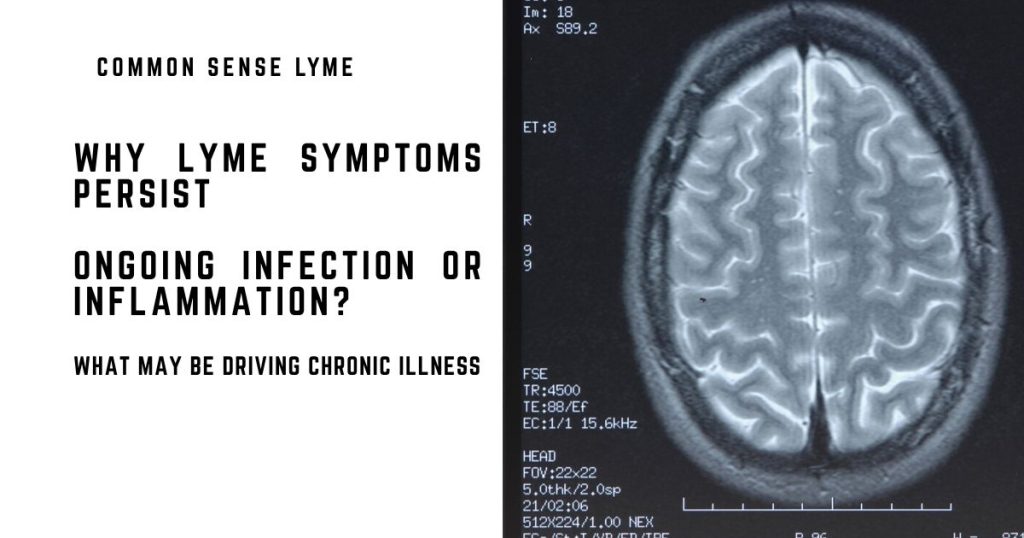
WHY LYME SYMPTOMS PERSIST

Persistent Lyme Disease Mechanisms

Persistent Lyme Disease Mechanisms Persistent Lyme disease mechanisms help explain why symptoms may continue after treatment and why recovery often fluctuates. Rather than reflecting a single cause, ongoing symptoms often arise from interacting biologic processes that evolve over time. Persistent symptoms in Lyme disease are rarely explained by a single cause. Instead, they typically reflect

Persistent Lyme Disease Mechanisms Read More »

Chronic Lyme Disease Misconceptions

Chronic Lyme Disease Misconceptions

Chronic Lyme Disease Misconceptions: Why Symptoms Are Missed and Dismissed How Outdated Science Continues to Harm Patients Quick Answer: Chronic Lyme disease misconceptions include the belief that Lyme is always cured with short-course antibiotics, that negative tests rule it out, and that persistent symptoms are psychological rather than biological. Chronic Lyme disease symptoms are often

Chronic Lyme Disease Misconceptions Read More »

Medical Abandonment in Chronic Illness: An Ethical Analysis

Medical Abandonment in Chronic Illness: An Ethical Analysis

Medical Abandonment in Chronic Illness: An Ethical Analysis I’ve had patients sit in my office and ask, “Why doesn’t anyone believe me?” The answer isn’t simple — but it starts with understanding why Lyme disease is so controversial in the first place. Few medical conditions spark as much debate. Disagreements over how Lyme disease is

Medical Abandonment in Chronic Illness: An Ethical Analysis Read More »

Targeted Screening Could Save Lyme Patients from Years of Misdiagnosis

Could Targeted Lyme Screening Prevent Years of Misdiagnosis?

Could Targeted Lyme Screening Prevent Years of Misdiagnosis? Targeted Lyme screening may help prevent years of misdiagnosis in patients with fatigue, brain fog, and joint pain. Instead of testing everyone, this approach focuses on identifying high-risk patients with compatible symptoms and exposure history. What is targeted Lyme screening? Targeted Lyme screening refers to evaluating patients

Could Targeted Lyme Screening Prevent Years of Misdiagnosis? Read More »

How to Kill Ticks on Clothing: Why the Dryer Matters More Than the Washer

How to Kill Ticks on Clothing: Why the Dryer Matters More Than the Washer You just got back from a beautiful hike or a long afternoon working in the yard. You toss your clothes in the wash, assuming that will kill ticks on clothing and leave nature behind. But here’s the surprising truth: a trip

How to Kill Ticks on Clothing: Why the Dryer Matters More Than the Washer Read More »

Growing Pains or Lyme Disease?

Growing Pains or Lyme Disease? How to Tell the Difference

Growing Pains or Lyme Disease? How to Tell the Difference Growing pains or Lyme disease is a common question when children develop leg or joint pain. A nine-year-old complains of knee pain at bedtime. A twelve-year-old wakes up crying with leg aches. A teenager limps after soccer practice. When children report pain, “growing pains” is

Growing Pains or Lyme Disease? How to Tell the Difference Read More »

Lyme Disease Rage

When Doctors Say Nothing Is Wrong: Pediatric Lyme Disease and Missed Diagnoses

When Doctors Say Nothing Is Wrong: Pediatric Lyme Disease and Missed Diagnoses A mother brings her daughter to multiple physicians over several months. The child has fatigue, headaches, and joint pain. Each visit ends the same way: “The tests are normal. There’s nothing wrong.” But the symptoms persist—and worsen. Situations like this raise a difficult

When Doctors Say Nothing Is Wrong: Pediatric Lyme Disease and Missed Diagnoses Read More »