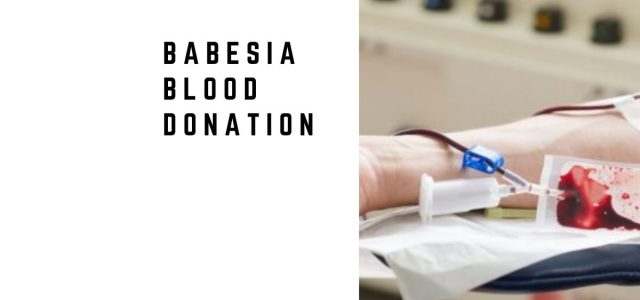
What Diseases Do Blood Banks Test For? A Babesia Diagnosis Story
Blood donation screening can detect hidden infections
Babesia may be discovered outside routine medical care
Blood bank testing sometimes changes the diagnostic path
What diseases do blood banks test for? Most people assume blood donation screening only protects recipients. But for one patient, the diseases tested in donated blood revealed an infection his doctors had missed: Babesia.
He never imagined that his story would become an example of Babesia diagnosed by a blood bank, yet that’s exactly what happened. What began as a simple act of generosity—rolling up his sleeve to donate blood—would become the turning point in a months-long medical mystery.
A week after his donation, a letter arrived with the words no one expects to see: Your donation has tested positive for Babesia. In that moment, he realized the blood bank had identified what his doctors had missed all summer.
Missed Clues: Early Symptoms Pointed Toward Babesia
The earliest signs of illness crept in quietly. With the arrival of warmer weather, he began experiencing brief episodes of unsteady breathing and momentary dizziness, where the world seemed to tilt before quickly settling again.
These brief spells didn’t seem urgent, but they became the first hints of Babesia — a tick-borne infection which would later be identified through a blood bank he had visited. Learn more about Babesia infection and how symptoms may overlap with other tick-borne illnesses.
At his first clinic appointment, he explained these unusual sensations. The clinician suggested stress reduction, hydration, and less caffeine. He tried, but nothing changed.
He had no idea that early Babesia can whisper rather than shout — subtle breathlessness, fleeting dizziness, and mild autonomic instability.
When the Narrative Shifted — but Testing Still Didn’t Happen
As summer unfolded, his symptoms began to evolve in ways that made daily life feel unfamiliar. Nights brought sweats, sudden awakenings, and a kind of exhaustion that seeped into the next day. His thoughts sometimes looped, his mood flattened, and the world felt heavier in a way he couldn’t explain.
He returned to the doctor, hoping someone would finally connect the dots. Instead, he was told his symptoms might be emotional, perhaps early anxiety or depression. A therapy referral was offered. No one mentioned tick-borne testing. No one considered that this could be the same Babesia that would later be diagnosed by a blood bank.
What he didn’t know was that infection-related inflammation can reshape both energy and mood, confusing even seasoned clinicians.
When the Blood Bank Provided an Answer
The answer to his chronic medical issues arrived only when he donated blood again. The system designed to protect others unexpectedly protected him.
This time, a lab technician running routine donor screening detected the parasite. Blood donation centers increasingly use nucleic acid testing (NAT) for Babesia screening in endemic regions, which can identify some infections that may be missed when Babesia testing is not initially considered.
Suddenly everything made sense: the air hunger, the dizziness, the mood shifts, the sleepless nights, the exhaustion. It wasn’t stress. It wasn’t overwork. It wasn’t “in his head.” It was Babesia all along.
He felt relief at finally having an answer—and frustration that it took a blood bank, not medical care, to name the problem.
What Diseases Do Blood Banks Test For?
Blood banks screen donated blood for multiple infectious diseases to reduce transfusion risk. Depending on the donation center and geographic region, screening commonly includes HIV, hepatitis B, hepatitis C, syphilis, West Nile virus, and Babesia testing in areas where Babesia transmission is a concern.
These screening programs are designed to protect recipients, but occasionally they identify infections that were missed during routine medical evaluation.
Diseases Tested in Donated Blood: Why Screening Matters
Blood banks now use nucleic acid testing to screen for Babesia microti. This level of screening is revealing how often Babesia infections go unnoticed.
While many people who carry the parasite never show symptoms, advanced screening may detect silent infections before blood transfusion.
This has brought new attention to Babesia as an underrecognized threat and has shown that routine clinical care may miss cases when Babesia testing is not initially considered.
Patients frequently ask whether Lyme disease blood donation is allowed or whether blood banks test for Lyme disease. Routine blood donation screening generally does not include Lyme disease testing, which makes Babesia screening particularly important in endemic regions.
How Reliable Are Babesia Blood Tests?
No single Babesia blood test is perfect. Blood smears may miss low-level infection, PCR testing may be limited by intermittent parasitemia, and antibody testing may not distinguish active from past infection.
Testing reliability often depends on parasite burden, timing of illness, and whether Babesia is specifically considered during evaluation.
Clinicians sometimes combine blood smears, PCR testing, and antibody testing when suspicion remains high.
- Blood smear: Useful for higher parasite burdens but less sensitive with low parasitemia.
- PCR or nucleic acid testing: More sensitive than smear in many settings but may still miss intermittent infection.
- Antibody testing: Helpful as supportive evidence but cannot reliably distinguish old from active infection.
Looking back, this patient’s symptoms made sense. His body had been signaling trouble, just in subtle and inconsistent ways. Babesia doesn’t always cause high fevers or obvious illness. Sometimes it appears gradually, with small clues that only stand out once someone knows what to look for.
Learn more about Lyme disease coinfections and overlapping tick-borne infections.
Frequently Asked Questions
What diseases do blood banks test for?
Blood banks commonly screen donated blood for infections such as HIV, hepatitis B, hepatitis C, syphilis, West Nile virus, and in some regions Babesia.
Do blood banks test for Babesia?
Yes. Many blood donation centers now use nucleic acid testing for Babesia screening in areas where transmission risk is higher.
How reliable are Babesia blood tests?
Babesia blood tests vary in reliability depending on parasite burden, timing, and test type. Clinicians often combine multiple testing approaches.
Can donating blood reveal an infection?
Occasionally. Screening programs sometimes identify infections that were previously undiagnosed.
Do blood banks test for Lyme disease?
Routine blood donation screening generally does not include Lyme disease testing.
Clinical Takeaway
Blood donation screening programs are designed to protect recipients, but occasionally they identify infections that routine medical evaluation missed.
Babesia can present subtly, and screening programs may sometimes uncover infections when symptoms alone fail to trigger testing.
Related Articles
Babesia Symptoms and Treatment
Babesia Night Sweats
Could a Blood Transfusion Transmit Lyme Disease?
Blood Donor Infects Premature Infants With Babesia
References
- Centers for Disease Control and Prevention. Babesiosis.
- Vannier E, Krause PJ. Human babesiosis. International Journal for Parasitology. 2019.
Additional Resources
Dr. Daniel Cameron, MD, MPH
Lyme disease clinician with over 30 years of experience and past president of ILADS.
Symptoms • Testing • Coinfections • Recovery • Pediatric • Prevention