diagnosing Borrelia miyamotoi
AI, Lyme Science Blog
Jan 29

Diagnosing Borrelia Miyamotoi: Blood Smear Not Reliable

Comments: 6
Like
Visited 418 Times, 2 Visits today

Why Blood Smears Fail to Detect Borrelia miyamotoi

Diagnosing Borrelia miyamotoi can be challenging. Some doctors have suggested that a blood smear should be used to confirm the diagnosis of BMD. But as Telford and colleagues demonstrate, a blood smear may not be so reliable for diagnosing Borrelia miyamotoi.

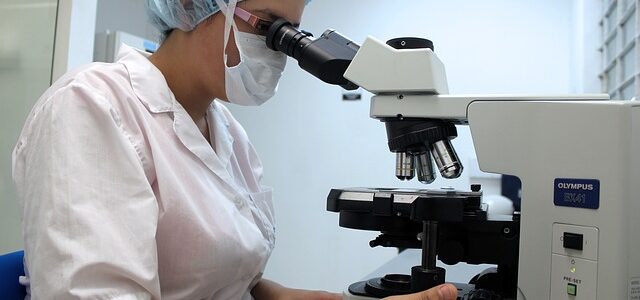
Blood smear examination is a standard diagnostic tool for detecting blood-borne parasites like malaria and Babesia. The technique involves examining a thin layer of blood under a microscope to visualize organisms inside or between red blood cells. Given that B. miyamotoi is a spirochete that circulates in blood, it seemed reasonable to assume blood smears might detect it.

This assumption proved incorrect.


Study Design and Methodology

In an effort to determine whether blood smears can detect B. miyamotoi in the blood of acute BMD patients, researchers examined sera from 20 patients, who were positive for BMD by PCR testing.

The study design was rigorous. All 20 patients had confirmed B. miyamotoi infection documented by PCR—the gold standard for detecting bacterial DNA in blood. These were not suspected cases; these were proven infections.

The authors “looked for evidence of BMD using standard malariological thick smears from anticoagulated blood samples.” Thick smears are specifically designed to concentrate blood components and increase the sensitivity of detecting low-density parasitemia. If any blood smear method would work, thick smears should.


Blood Smear Results: Sensitivity Near Zero

After examining 100 thick smear fields in 20 patient samples, the authors could not find evidence of BMD in any of the patients.

This is a striking finding. Twenty patients with PCR-confirmed B. miyamotoi infection. One hundred microscopic fields examined per patient. Zero positive findings.

The researchers didn’t stop there. They extended the examination, looking at 300 thick smear fields in each sample—three times the standard examination.

With this extraordinary level of effort, they were able to find evidence of BMD in 2 of the 20 patient samples. That’s a detection rate of 10%, and only when examining far more fields than would ever be practical in routine clinical practice.


Why Blood Smears Cannot Detect Borrelia miyamotoi

The failure of blood smears to detect B. miyamotoi reflects fundamental biological differences between spirochetes and the parasites blood smears were designed to detect.

Babesia and malaria parasites live inside red blood cells, creating visible intracellular structures that are relatively easy to identify under microscopy. They also typically reach high levels of parasitemia—millions of infected cells per microliter of blood.

In contrast, B. miyamotoi spirochetes circulate freely in blood plasma. They are thin, mobile organisms that don’t produce distinctive intracellular structures. More importantly, spirochetemia in B. miyamotoi infection is typically very low—far lower than the parasitemia seen in malaria or Babesia.

Standard microscopy simply lacks the sensitivity to detect low-density spirochetemia. Even with thick smears designed to concentrate organisms, the detection rate was only 10% when examining 300 fields—far beyond what would be clinically practical.


Recommended Testing for Diagnosing Borrelia miyamotoi

The Centers for Disease Control and Prevention (CDC) continues to recommend using PCR and antibody-based tests to confirm a diagnosis of B. miyamotoi.

PCR testing detects B. miyamotoi DNA directly in blood samples. This molecular approach is far more sensitive than microscopy for detecting low-level spirochetemia. However, PCR sensitivity is not perfect, and timing matters—bacterial DNA may be detectable during acute illness but may disappear as infection progresses or treatment begins.

Antibody-based testing measures the immune response to B. miyamotoi infection. IgM antibodies may appear early in infection, while IgG antibodies develop later. Like PCR, antibody testing has limitations—antibodies may not have developed yet in very early infection, and some patients may not mount robust antibody responses.


Remaining Diagnostic Uncertainty

Even with PCR and antibody testing, diagnosing Borrelia miyamotoi remains challenging due to limitations in available testing methods.

The sensitivity of PCR and antibody tests for BMD in real-world clinical practice remains uncertain. There is still no FDA-approved test specific to B. miyamotoi. Research laboratories and specialized reference labs offer testing, but availability varies, results may be delayed, and insurance coverage is inconsistent.

This creates a situation where clinicians must make diagnostic and treatment decisions based on clinical presentation and exposure history, sometimes without definitive laboratory confirmation. When a patient presents with fever, headache, myalgia, and recent tick exposure—particularly with leukopenia and thrombocytopenia—empiric treatment may be appropriate even when B. miyamotoi testing is negative or unavailable.


Clinical Implications

The authors conclude, “microscopy of blood smears is not sensitive enough for confirming a diagnosis of BMD.”

This conclusion has important practical implications. Clinicians should not rely on blood smears to rule out B. miyamotoi infection. A negative blood smear in a patient with compatible symptoms and tick exposure does not exclude the diagnosis.

Conversely, the extremely low sensitivity of blood smears means that even when spirochetes are visualized, it represents only a tiny fraction of actual infections. Most patients with genuine B. miyamotoi disease will have negative blood smears.

The study reinforces that molecular and serologic testing—despite their limitations—represent the best available diagnostic approaches for B. miyamotoi infection.


Frequently Asked Questions

Can a blood smear diagnose Borrelia miyamotoi?
No. Blood smears have poor sensitivity for diagnosing Borrelia miyamotoi. In this study, standard thick smears failed to detect BMD in any of 20 PCR-positive patients after examining 100 fields. Even after examining 300 fields—far more than standard practice—only 2 of 20 patients (10%) were detected.

What tests are recommended for diagnosing Borrelia miyamotoi?
The CDC recommends PCR and antibody-based tests to confirm B. miyamotoi infection. PCR detects bacterial DNA directly in blood. Antibody tests measure immune response. Both have limitations, but are far more sensitive than blood smears.

Why is diagnosing Borrelia miyamotoi difficult?
There is no FDA-approved test specific to B. miyamotoi. Available PCR and antibody tests have uncertain sensitivity in clinical practice. Symptoms overlap with other tick-borne diseases. Low spirochetemia makes direct detection challenging.

How many patients were detected by blood smear?
Only 2 of 20 PCR-positive patients (10%) were detected by blood smear, and only after examining 300 thick smear fields per patient—far more than standard practice. With standard examination of 100 fields, zero patients were detected.

Why do blood smears work for Babesia but not Borrelia miyamotoi?
Babesia parasites live inside red blood cells, creating visible intracellular structures at high parasitemia levels. B. miyamotoi spirochetes circulate freely in plasma at very low density, making microscopic detection extremely difficult. The organisms and infection patterns are fundamentally different.


Clinical Takeaway

The Telford study definitively demonstrates that blood smear examination lacks adequate sensitivity for diagnosing Borrelia miyamotoi disease. Twenty patients with PCR-confirmed B. miyamotoi infection were evaluated using standard thick blood smears. After examining 100 microscopic fields per patient—the standard examination protocol—zero infections were detected. When researchers extended examination to 300 fields per patient—three times standard practice and far beyond what would be clinically feasible—only 2 of 20 patients (10%) showed visible spirochetes. This extraordinarily low sensitivity reflects fundamental biological differences between spirochetes and the parasites blood smears were designed to detect. Babesia and malaria parasites live inside red blood cells, creating distinctive intracellular structures at high parasitemia levels—millions of infected cells per microliter. In contrast, B. miyamotoi spirochetes circulate freely in plasma at very low density. They’re thin, mobile organisms that don’t produce visible intracellular structures. Standard microscopy simply cannot detect low-density spirochetemia. The clinical implications are clear: blood smears should not be used to rule out B. miyamotoi infection. A negative blood smear in a patient with compatible symptoms and tick exposure does not exclude the diagnosis. Most patients with genuine B. miyamotoi disease will have negative blood smears. The CDC recommends PCR and antibody-based testing instead. PCR detects bacterial DNA directly in blood samples with far greater sensitivity than microscopy. Antibody testing measures immune response to infection. However, even these recommended methods have limitations. PCR sensitivity varies with timing—bacterial DNA may be detectable during acute illness but disappear as infection progresses or treatment begins. Antibody tests may be negative in very early infection before immune response develops. There is still no FDA-approved test specific for B. miyamotoi, creating ongoing diagnostic uncertainty. Clinicians must often make treatment decisions based on clinical presentation and exposure history without definitive laboratory confirmation. When patients present with fever, headache, myalgia, recent tick exposure, leukopenia, and thrombocytopenia, empiric treatment may be appropriate even when B. miyamotoi testing is negative or unavailable. The study reinforces that molecular and serologic testing—despite limitations—represent the best available diagnostic approaches for B. miyamotoi infection.


References

  1. Telford SR 3rd, Goethert HK, Molloy PJ, Berardi V. Blood smears have poor sensitivity for confirming Borrelia miyamotoi disease. J Clin Microbiol. 2019;57(4):e01903-18.

Related Posts

6 thoughts on “Diagnosing Borrelia Miyamotoi: Blood Smear Not Reliable”

  1. Did they wait for how many hours, rechecking the findings hourly?
    Those kind of spirochaetes bore themselves easily into the red blood cells as well as white blood cells. They dive to other tissues as well, particularly to bloodless ones. Like intervertebral discs, other joints, ligaments and tendons. It may take anything from 2-12 hours to see these bacteria coming out of those cells. That is when they can be seen moving in the plasma.

  2. Has anyone had testing for Lyme disease through urine . Ceres Urine Antigen?
    My husband has been blood tested for Lyme, nope doesn’t have it. What he does have is severe abdominal pain that radiates and spends his life with the need to have a bowel movement. He is now on 2 Morphine’s , that do nothing really for the intense undiagnosed pain! He had to retire 3 years ago because he’s so ill. My son found this blog and the urine testing.
    After spending all day in ER and once again checking with CT scans and bloodwork, pancreas, liver, gallbladder etc , all perfect, we need to find his problem. I think it’s Lyme disease. He’s was an avid bow hunter, always in the woods or outdoors, a tick magnet too. Walk out the door and BAM! He didn’t have to be in the woods or grass , just outside. Had the series of 3 vaccines to prevent Lyme disease when it came out in the 90’s. We live in VA, now deemed high in tick and Lyme’s.
    Any help as to where to start?

  3. Dr. Daniel Cameron
    Gillian McAllister

    To Joyce Mahon – Both my husband and myself became ill with what was first diagnosed as Lymes disease. However my husband deteriorated rapidly until he put in the hospital with “diagnosis unknown”. He also most died before an excellent Infectious disease MD did blood slides and other test and discovered he had both Babesiosis & Ehrlichiosis and he was finally treated effectively, literally saving his life. Several years later I became very sick with high fevers and joint pain all over my body. I was taken to the hospital and admitted as a “toxic” patient as they could not diagnosis what I had. It was definitely not Lymes disease. Again it was finally diagnosed by an infectious disease MD as Borrelia Miyamotoi and treated appropriately and recovered. Again I am sick and the ER only checks for Lymes and tells me there is nothing wrong. So I now have an appointment with a top infectious disease specialist this week hoping it will be diagnosed properly. Please know that most ERs and physicians do not not test for these diseases and you must find a specialist who will. I urge you to do so as these diseases can leave lasting damage and potentially can be fatal.
    I live on a dirt road surrounded by woods in NJ with lots of deer and other wildlife and there is little I can do about the ticks even though I use tick spray on myself and have my property sprayed several times each year. Good luck and best wishes. .

Leave a Comment

Your email address will not be published. Required fields are marked *