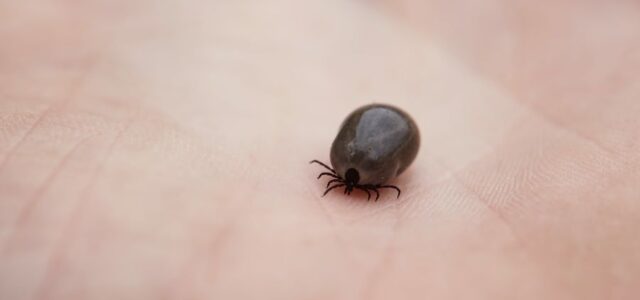
Borrelia miyamotoi Overview
Hard tick relapsing fever spread by blacklegged ticks
Symptoms may overlap with Lyme disease
Specialized testing may be needed for diagnosis
This Borrelia miyamotoi overview covers the symptoms, testing, treatment, transmission, and clinical challenges associated with this emerging tick-borne infection.
Borrelia miyamotoi causes hard tick relapsing fever and is transmitted by the same Ixodes ticks that spread Lyme disease. Symptoms may include fever, fatigue, chills, headache, and muscle or joint pain. Unlike Lyme disease, the infection typically does not produce an erythema migrans or bull’s-eye rash.
Because Borrelia miyamotoi infection can resemble Lyme disease, babesiosis, viral illness, and other tick-borne infections, diagnosis may be delayed or overlooked. Understanding its symptoms, testing limitations, and treatment approaches may help clinicians recognize the infection earlier.
This article is for informational purposes and is not a substitute for individualized medical advice, diagnosis, or treatment.
Clinicians evaluating an unexplained febrile illness after possible blacklegged tick exposure may consider Borrelia miyamotoi, particularly when the presentation does not fit classic Lyme disease. Related infections are discussed in the co-infections hub.
What Is Borrelia miyamotoi Disease?
Borrelia miyamotoi is a relapsing fever spirochete transmitted primarily through hard-bodied Ixodes ticks. It belongs to the relapsing fever group of Borrelia rather than the group responsible for Lyme disease.
The illness is now commonly called hard tick relapsing fever. This distinguishes it from relapsing fever infections transmitted by soft-bodied ticks.
Despite the name, many patients experience only one recognized episode of fever. Recurrent febrile episodes have been documented, but they occur in a minority of reported cases.
What is Borrelia miyamotoi?
What does Borrelia miyamotoi cause?
Could Borrelia miyamotoi infections explain persistent symptoms in Lyme disease patients?
Common Borrelia miyamotoi Symptoms
The most commonly reported symptoms include:
- Fever
- Fatigue
- Chills or shaking
- Headache
- Muscle aches
- Joint pain
- Nausea or vomiting
- General malaise
Laboratory abnormalities may include low white blood cell counts, low platelet counts, and elevated liver enzymes. These findings are not specific to Borrelia miyamotoi and can occur with other tick-borne infections.
Some patients develop recurrent episodes of fever, but the absence of relapsing fever does not exclude the infection. Symptoms overlap with Lyme disease, babesiosis, anaplasmosis, viral infections, and other illnesses.
Can Borrelia miyamotoi Cause Neurologic Symptoms?
Neurologic complications are uncommon but may include meningitis or meningoencephalitis. Reported symptoms have included severe headache, confusion, cognitive changes, dizziness, difficulty walking, hearing problems, and other neurologic abnormalities.
Severe neurologic disease has been reported particularly among older or immunocompromised patients, although it can occur in other individuals.
Does Borrelia miyamotoi Cause a Rash?
Borrelia miyamotoi disease typically does not cause the erythema migrans or bull’s-eye rash associated with Lyme disease. However, other types of rash have occasionally been reported.
Therefore, the absence of a rash does not distinguish the infection from every other tick-borne illness, and the presence of a nonspecific rash does not completely exclude Borrelia miyamotoi.
Borrelia miyamotoi vs. Lyme Disease
Borrelia miyamotoi disease and Lyme disease are different infections, although both can be transmitted by blacklegged ticks.
Lyme disease is most commonly caused in North America by Borrelia burgdorferi. Borrelia miyamotoi belongs to the relapsing fever group of spirochetes. Fever and chills are prominent features of hard tick relapsing fever, while erythema migrans, facial palsy, carditis, and Lyme arthritis are more characteristic manifestations of Lyme disease.
The infections also require different laboratory testing. Routine Lyme antibody testing cannot be relied upon to diagnose Borrelia miyamotoi.
Borrelia miyamotoi Diagnosis and Testing
Testing remains challenging because routine Lyme disease tests may miss Borrelia miyamotoi. Diagnosis may involve PCR testing, specialized antibody testing, exposure history, and clinical suspicion.
PCR testing of blood may be most useful during acute illness, while the organism is circulating in the bloodstream. A negative PCR result does not necessarily exclude infection, particularly when the sample is collected outside this period.
Serologic testing may be negative early in the illness. Antibody tests generally become more sensitive when specimens are collected at least 14 days after symptoms begin. Some available assays can also cross-react with other relapsing fever Borrelia species.
Patients with relapsing fever infections may occasionally have false-positive Lyme antibody results. Test findings must therefore be interpreted together with symptoms, timing, geographic exposure, and the possibility of other tick-borne infections.
C6 peptide test may indicate Borrelia miyamotoi infection
Blood smear not reliable in diagnosing Borrelia miyamotoi disease
Doctors face challenges in diagnosing Borrelia miyamotoi
Don’t count on a relapsing fever to diagnose Borrelia miyamotoi
Where is the FDA test for relapsing fever spirochete Borrelia miyamotoi?
Borrelia miyamotoi Treatment
No randomized controlled trials have established the optimal treatment regimen for hard tick relapsing fever. Published case series have generally used antibiotics that are also effective against Lyme disease.
Current CDC clinical guidance states that a two-week course of oral doxycycline or amoxicillin has been effective for most patients, including young children. Treatment decisions may vary based on age, pregnancy status, medication allergies, illness severity, and whether the nervous system is involved.
Patients with severe illness requiring hospitalization, including meningoencephalitis, may initially be treated with an intravenous antibiotic such as ceftriaxone.
Symptoms often begin improving within several days after appropriate treatment. A Jarisch–Herxheimer reaction—an acute worsening of fever, chills, headache, muscle pain, or other inflammatory symptoms—has been reported in a minority of patients after antibiotics are started.
The best antibiotics to treat Borrelia miyamotoi?
Borrelia miyamotoi Transmission
In the United States, Borrelia miyamotoi is transmitted by blacklegged ticks in the Northeast, Midwest, and mid-Atlantic states and by western blacklegged ticks along the Pacific Coast. These are the same tick species that transmit Lyme disease.
Unlike Borrelia burgdorferi, Borrelia miyamotoi can be passed from an infected female tick to some of her offspring through transovarial transmission. As a result, infected larval ticks may transmit the organism.
Borrelia miyamotoi can be transmitted from mother ticks to offspring
Study finds tiny larval ticks can transmit Borrelia miyamotoi
Larval ticks may be a threat after all—insights from Borrelia miyamotoi research
Move over nymphal ticks: Larval deer ticks may also pose a threat
Case Reports and Research
Case reports and surveillance studies continue to expand understanding of the infection’s geographic distribution, neurologic complications, diagnostic challenges, and clinical presentations.
Borrelia miyamotoi infection: An emerging tick-borne disease in California
Meningoencephalitis due to Borrelia miyamotoi
Borrelia miyamotoi detected in Canada
Review of Borrelia miyamotoi disease
Frequently Asked Questions
What symptoms are associated with Borrelia miyamotoi disease?
Common symptoms include fever, fatigue, chills, headache, muscle aches, joint pain, nausea, and general malaise. Severe cases may involve neurologic complications.
Does Borrelia miyamotoi always cause relapsing fever?
No. Despite its classification as a hard tick relapsing fever infection, many patients experience only one recognized fever episode. Recurrent fever occurs in a minority of reported cases.
Does Borrelia miyamotoi cause a rash?
Borrelia miyamotoi typically does not cause the erythema migrans or bull’s-eye rash associated with Lyme disease. Other types of rash may occasionally occur.
Is Borrelia miyamotoi the same as Lyme disease?
No. They are different infections caused by different groups of Borrelia bacteria, although both can be transmitted by the same blacklegged ticks.
How is Borrelia miyamotoi diagnosed?
Diagnosis may involve PCR testing of blood during acute illness, specialized antibody testing after antibodies have had time to develop, exposure history, and clinical findings.
How is Borrelia miyamotoi treated?
Published cases have generally been treated with antibiotics also used for Lyme disease. Oral doxycycline or amoxicillin has been effective for many patients, while severe neurologic illness may require initial treatment with intravenous ceftriaxone.
Clinical Takeaway
Borrelia miyamotoi disease can resemble Lyme disease and other tick-borne infections while lacking hallmark findings such as an erythema migrans rash. Patients do not need to experience recurrent fever for the infection to be considered.
Testing limitations, overlapping symptoms, and limited clinical awareness may delay recognition. PCR and antibody findings must be interpreted according to the timing of illness and the patient’s exposure history.
Clinicians may consider Borrelia miyamotoi in patients with compatible symptoms and blacklegged tick exposure, particularly when the illness does not fit a classic Lyme disease presentation.
Related Articles
Why Lyme testing can miss infections
Tick-borne diseases overview
Lyme disease symptoms guide
Babesia symptoms, diagnosis, and treatment
References
- Platonov AE, Karan LS, Kolyasnikova NM, et al. Humans infected with relapsing fever spirochete Borrelia miyamotoi, Russia. Emerg Infect Dis. 2011;17(10):1816-1823.
- Molloy PJ, Telford SR 3rd, Chowdri HR, et al. Borrelia miyamotoi disease in the northeastern United States. N Engl J Med. 2015;373(3):240-245.
- McCormick DW, Brown CM, Bjork J, et al. Characteristics of hard tick relapsing fever caused by Borrelia miyamotoi, United States, 2013–2019. Emerg Infect Dis. 2023;29(9):1719-1729.
- Centers for Disease Control and Prevention. Clinical guidance for hard tick relapsing fever. CDC. Updated 2026.
Dr. Daniel Cameron, MD, MPH
Lyme disease clinician with over 30 years of experience and past president of ILADS.
Symptoms • Testing • Coinfections • Recovery • Pediatric • Prevention



Hi Dr Cameron, Im very interested in this article but none of the links are working. Best Regards, Mark
Thanks for reaching out. I fixed the links. I am sorry for the inconvenience. Let me know if you find another.