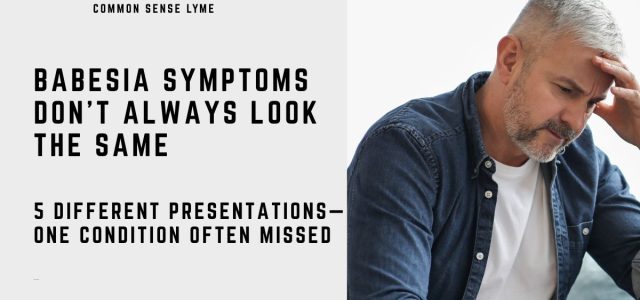
Babesia Symptoms Can Vary: 5 Cases That Show Why It’s Missed
Do Babesia symptoms always look the same?
No—and that variability is one of the biggest reasons the infection is often missed.
Babesia infection can present with a broad range of symptoms, from mild fatigue and fever to severe neurologic or hematologic complications.
Some patients develop classic flu-like illness, while others present with gastrointestinal bleeding, hearing changes, confusion, blurred vision, or persistent recurrent fevers.
This case series involving five patients highlights how differently Babesia may appear from one patient to another.
Babesia Symptoms Can Mimic Sepsis
A 78-year-old woman was admitted with fever, chills, lethargy, fatigue, and marked mental status changes.
“She had a maximum temperature of 100.6° F (38.1° C); sepsis was considered for this patient,” writes Paparone from the Atlantic County Health Department.
Clinicians considered tick-borne illness because of multiple tick bites, abnormal liver tests, anemia, and thrombocythemia.
Peripheral smear confirmed Babesia infection.
The patient’s mentation and lethargy improved rapidly after treatment with doxycycline along with atovaquone and azithromycin.
Babesia May Present With Gastrointestinal Bleeding

A 90-year-old woman presented with rectal bleeding, severe anemia, and thrombocytopenia.
Her bleeding improved with octreotide infusion, but she also experienced fever spikes and tested positive for Babesia on peripheral smear.
Her symptoms resolved following azithromycin and atovaquone treatment.
This case illustrates how Babesia symptoms may appear outside the expected flu-like presentation.
Hearing Changes Complicated One Babesia Case
A 57-year-old man was hospitalized with fever, malaise, and chills.
Initial laboratory abnormalities raised concern for Anaplasma infection.
He received doxycycline, clindamycin, and quinine before testing confirmed Babesia.
His hospital course became complicated by acute hearing deterioration.
Quinine was discontinued, and treatment was changed to azithromycin and atovaquone.
This overlap between tick-borne infections can complicate diagnosis and treatment decisions.
Blurred Vision and Weakness in Babesia Infection
An 81-year-old man developed increasing lethargy, weakness, chills, and blurred vision.
Babesia was identified on peripheral smear.
Anaplasmosis was also suspected because of anemia and thrombocytopenia.
Serologic studies later demonstrated elevated Babesia and Anaplasma antibody titers.
The patient ultimately required changes in therapy because of medication intolerance.
“At discharge on day 10, [he] was switched to clindamycin orally three times a day and quinine orally three times a day because of intolerance to azithromycin,” Paparone wrote.
Severe Babesia in an Immunocompromised Patient
An 85-year-old man with hairy cell leukemia and prior splenectomy presented with recurrent fevers and chills.
More than 10% of his red blood cells were infected with Babesia, indicating severe parasitemia.
Despite treatment with azithromycin and atovaquone, he required prolonged therapy because infection persisted.
“Due to the persistence of parasitemia despite adequate therapy, he was changed to clindamycin,” according to Paparone.
His course was complicated by medication intolerance, including gastric distress and rash.
This case highlights the risk of severe disease in immunocompromised patients.
Why Babesia Symptoms Vary So Widely
Across the five cases, symptoms included:
- Fever and chills
- Fatigue and lethargy
- Mental status changes
- Gastrointestinal bleeding
- Hearing deterioration
- Blurred vision
- Persistent recurrent fevers
This variability contributes to delayed recognition and misdiagnosis.
Patients may not recall a tick bite, and symptoms may resemble viral illness, sepsis, anemia, gastrointestinal disease, or other infections.
Understanding Babesia testing limitations is important when symptoms remain unexplained.
Babesia Symptoms vs Lyme Disease
Babesia symptoms often overlap with Lyme disease because both infections are transmitted by ticks.
Babesia is more commonly associated with fever, night sweats, anemia, chills, and shortness of breath.
Lyme disease may more commonly involve joint pain, facial palsy, cognitive symptoms, and neurologic complaints.
Because coinfection is common, clinicians should also consider Lyme coinfections when symptoms persist or evolve unexpectedly.
Treatment Challenges in Babesia Infection
Standard therapy generally includes azithromycin and atovaquone.
However, treatment may need adjustment because of medication intolerance, hearing complications, persistent parasitemia, or severe disease.
Some severe cases may require exchange transfusion to rapidly reduce parasite burden.
Paparone noted that exchange transfusions may be recommended when parasitemia exceeds 10% or when severe anemia, pulmonary disease, kidney injury, or liver dysfunction develop.
Frequently Asked Questions
Do Babesia symptoms always look the same?
No. Babesia symptoms vary widely and may include fever, fatigue, confusion, bleeding, hearing changes, or recurrent fevers.
Can Babesia cause mental status changes?
Yes. Severe Babesia infection may lead to lethargy, confusion, or changes in sensorium, particularly in elderly patients.
Can Babesia affect hearing?
In this case series, one patient developed hearing deterioration during treatment, leading clinicians to change therapy.
Why is Babesia often misdiagnosed?
Symptoms vary widely and may resemble viral illness, sepsis, anemia, or other tick-borne infections.
Who is at highest risk for severe Babesia infection?
Immunocompromised patients, elderly individuals, and patients without a spleen are at greater risk for severe disease.
Clinical Takeaway
Babesia symptoms can vary dramatically from patient to patient, ranging from mild fatigue to severe systemic illness.
This variability contributes to delayed diagnosis, especially when patients present with atypical symptoms such as gastrointestinal bleeding, hearing changes, confusion, or blurred vision.
I have seen Babesia overlooked in patients whose symptoms initially appeared unrelated to tick-borne illness.
Recognizing the wide spectrum of Babesia presentations may lead to earlier diagnosis, more appropriate treatment, and improved outcomes.
Related Articles
Lyme Disease Misdiagnosis
Lyme Disease Symptoms Guide
Case Report: Delayed Onset Babesia
Geriatric Babesia Cases Are Rising
Babesia and Blood Supply Transmission
References
- Paparone P, Paparone PW. Variable clinical presentations of babesiosis: A case series. Nurse Pract. 2017;42(11):1-7.
Dr. Daniel Cameron, MD, MPH
Lyme disease clinician with over 30 years of experience and past president of ILADS.
Symptoms • Testing • Coinfections • Recovery • Pediatric • Prevention