
Contact us at 914-666-4665

Filter posts by category

Lyme Science Blog

Culture evidence of Lyme disease in antibiotic treated patients living in the Southeast

Can Lyme Disease Be Present Even When Tests Are Negative?

Seronegative Lyme Disease: Can Borrelia Be Cultured? Seronegative Lyme disease may be missed Negative tests do not always exclude Lyme disease Clinical history and symptoms still matter Seronegative Lyme disease remains one of the more challenging clinical scenarios in tick-borne illness. Patients may present with symptoms consistent with Lyme disease despite negative laboratory testing, creating […]

Can Lyme Disease Be Present Even When Tests Are Negative? Read More »

Renewed call for dialogue on Lyme disease

Lyme Disease Dialogue: A Renewed Call for Collaboration

Lyme Disease Dialogue: A Renewed Call for Collaboration Lyme disease dialogue is urgently needed as evidence continues to highlight the complexity of this multisystem illness. “We need more national and international debates on Lyme disease, complemented by a solid research agenda and a focus on cutting edge biological technologies,” writes Borgermans and colleagues. :contentReference[oaicite:0]{index=0} ILADS

Lyme Disease Dialogue: A Renewed Call for Collaboration Read More »

WHY LYME TREATMENT ISN’T WORKING

Babesia and Lyme — it’s worse than you think

Lyme Coinfections: Babesia, Bartonella & More One tick bite may transmit multiple infections simultaneously. Coinfections like Babesia and Bartonella require different treatment than Lyme disease alone. Unrecognized coinfections are a common reason treatment appears to fail. Lyme disease coinfections include Babesia, Bartonella, Anaplasmosis, Ehrlichiosis, and other tick-borne infections that can influence symptoms and recovery. Lyme

Babesia and Lyme — it’s worse than you think Read More »

Treatment options for an anxious, suicidal patient with a history of Lyme disease

Lyme Disease Psychiatric Symptoms: Anxiety, Depression, and Brain Effects

Lyme Disease and Mental Health: Anxiety, Depression, and Brain Fog Lyme disease may contribute to anxiety, depression, and brain fog Neuropsychiatric symptoms can interfere with daily functioning and recovery Persistent symptoms may require a broader clinical evaluation Lyme disease can affect far more than joints and muscles. Some patients experience anxiety, depression, irritability, sleep disruption,

Lyme Disease Psychiatric Symptoms: Anxiety, Depression, and Brain Effects Read More »

Travelers heading south cannot escape the threat of tick-borne diseases

Tick-Borne Diseases in the South: Why Travelers Remain at Risk

Tick-Borne Diseases in the South: Why Travelers Remain at Risk Tick-borne diseases in the South are increasing as tick populations expand into new regions. Although Lyme disease is often associated with the Northeast, multiple tick species in the southern United States carry a range of infections that travelers should be aware of. :contentReference[oaicite:0]{index=0} “The recent

Tick-Borne Diseases in the South: Why Travelers Remain at Risk Read More »

Time for shared decision-making when treating Lyme disease

Lyme Disease Shared Decision Making: Why Patients Must Be Involved

Lyme Disease Shared Decision Making: Why Patients Must Be Involved Lyme disease shared decision making is essential in a condition marked by uncertainty, variation in symptoms, and differing treatment approaches. Medicine is increasingly moving away from a model where physicians make all decisions toward a patient-centered approach that actively involves patients at every stage of

Lyme Disease Shared Decision Making: Why Patients Must Be Involved Read More »

At least 50% of patients with Lyme neuroborreliosis remain ill years after treatment

Lyme Neuroborreliosis Long-Term Symptoms: Many Patients Remain Ill

Lyme Neuroborreliosis Long-Term Symptoms: Many Patients Remain Ill Some patients remain ill after Lyme neuroborreliosis treatment Fatigue, pain, and neurologic symptoms may persist for years Quality of life may remain impaired despite antibiotic therapy There are physicians who continue to question the existence and severity of chronic manifestations of Lyme disease despite a growing number

Lyme Neuroborreliosis Long-Term Symptoms: Many Patients Remain Ill Read More »

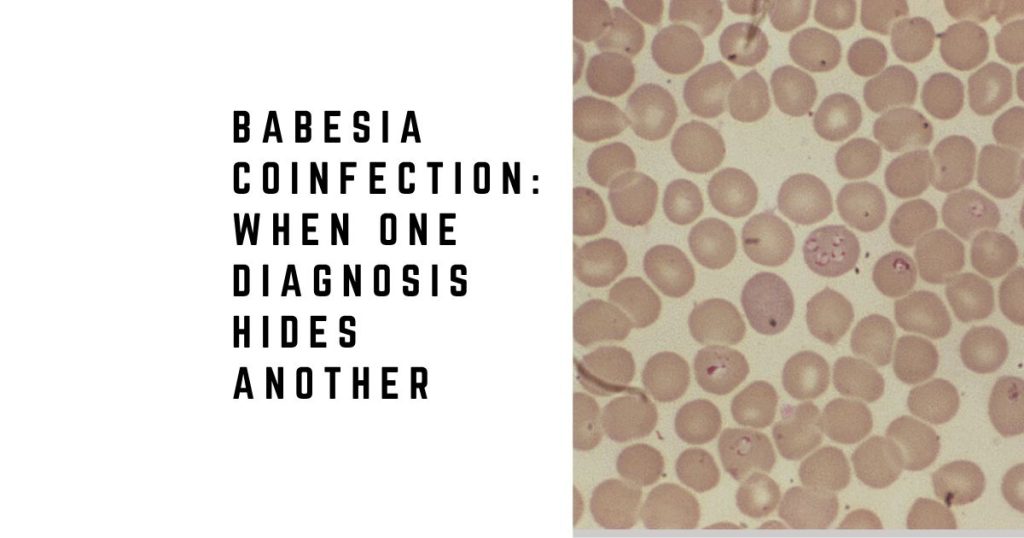
Babesia Coinfection: When One Diagnosis Hides Another

Lyme Disease Diagnosis Almost Missed in Patient With Babesia

Lyme Disease Diagnosis Almost Missed in Patient With Babesia Babesia and Lyme disease can occur together Coinfections may complicate diagnosis and recovery Missed cases may delay treatment and worsen outcomes The importance of clinicians considering other tick-borne diseases, such as Babesia, when evaluating patients with Lyme disease has been addressed in the literature. Surprisingly, however,

Lyme Disease Diagnosis Almost Missed in Patient With Babesia Read More »

Persistent Lyme Infection and ‘Persister’ Cells

Borrelia Persister Cells and Persistent Lyme Disease Borrelia persister cells may survive antibiotic exposure Slow-growing bacterial forms may contribute to persistent symptoms Researchers continue to study antibiotic tolerance in Lyme disease Persistent infection of Borrelia burgdorferi (Bb) has been proven experimentally in Peromyscus mice, laboratory mice, rats, hamsters, gerbils, guinea pigs, dogs and non-human primates.

Persistent Lyme Infection and ‘Persister’ Cells Read More »

Hundreds of doctors treating Lyme disease with extended use and multiple antibiotics

Extended Antibiotic Treatment for Lyme Disease: What Doctors Are Actually Prescribing Many physicians prescribe longer Lyme disease treatment courses. A large insurance study examined real-world antibiotic prescribing patterns. Doctors often relied on clinical judgment beyond standard guidelines. The Infectious Disease Society of America (IDSA) has long insisted that a maximum antibiotic course of 21 days

Hundreds of doctors treating Lyme disease with extended use and multiple antibiotics Read More »