Facial Palsy in Children: Could It Be Lyme Disease?
Facial weakness may be the first sign
Tick bites and rash are often missed
Lyme disease should remain on the differential
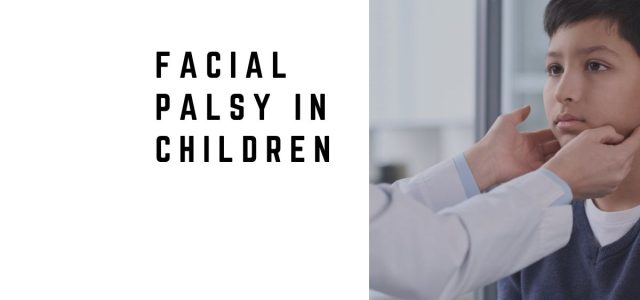
Facial palsy in children may be caused by Lyme disease, particularly in endemic regions during summer and fall. Although Bell’s palsy is common, Lyme-related facial palsy should be considered when a child develops sudden facial weakness after outdoor exposure or after a recent systemic illness.
Because children with Lyme-related facial palsy often do not recall a tick bite or rash, the diagnosis may be missed if clinicians rely too heavily on those features alone.
For a broader overview, see Pediatric Lyme Disease guide.
What Parents May Notice First
Facial palsy in children often appears suddenly. Parents may notice:
- An uneven smile
- Drooping on one side of the face
- Difficulty closing one eye
- Drooling or difficulty holding liquids in the mouth
- Speech sounding slightly slurred
Although these symptoms can be alarming, facial palsy in children is usually not a stroke. However, it should prompt careful medical evaluation to determine the underlying cause.
Bell’s Palsy and Lyme Disease Are Common Causes
Acute unilateral facial weakness in children is usually described as peripheral facial palsy or seventh cranial nerve palsy. In everyday clinical practice, many patients and clinicians refer to this simply as Bell’s palsy.
Strictly speaking, Bell’s palsy refers to facial paralysis with no identifiable cause. Lyme disease is one of several infections that can produce the same clinical picture.
In a large pediatric study from a Lyme-endemic region, 27% of children presenting with acute unilateral facial palsy had Lyme-related facial palsy, while 68% were diagnosed with Bell’s palsy.
This overlap means Lyme disease should remain part of the differential diagnosis whenever a child presents with facial weakness in an endemic area.
When Lyme-Related Facial Palsy Is More Likely
Several clinical clues may help distinguish Lyme-related facial palsy from Bell’s palsy.
- Presentation between late spring and early fall
- Recent fever, malaise, headache, myalgias, or arthralgias
- Outdoor exposure in a tick-endemic region
- Absence of a recent upper respiratory infection
In the study, 93% of children with Lyme-related facial palsy presented between June and November. More than half had a preceding systemic prodrome, compared with only 6% of children with Bell’s palsy.
Tick Bite and Rash Are Often Absent
Many parents expect Lyme disease to begin with a known tick bite or the classic bull’s-eye rash. However, these features are often missing in children with Lyme-related facial palsy.
In the study, only 30% of children with Lyme-related facial palsy had a recent erythema migrans rash, and only a few recalled a tick bite.
The absence of a rash or remembered tick bite does not rule out Lyme disease.
See also Only a Minority of Children With Lyme Disease Recall a Tick Bite.
Facial Palsy May Be the First Sign of Lyme Disease
In some children, facial palsy may be the first recognizable manifestation of Lyme disease. The infection can affect the facial nerve as part of early disseminated Lyme disease.
Children may also develop other neurologic symptoms such as headache, neck stiffness, sensitivity to light, or fatigue if meningitis is present.
In rare cases, Lyme disease can cause bilateral facial palsy, affecting both sides of the face. This pattern is uncommon in idiopathic Bell’s palsy and should prompt evaluation for infectious causes.
Bell’s Palsy, Seventh Nerve Palsy, and Lyme Disease
Because seventh cranial nerve palsy may be described as Bell’s palsy early in its course, distinguishing between idiopathic Bell’s palsy and Lyme-related facial palsy can be challenging at the initial visit.
Laboratory testing, exposure history, seasonality, and associated symptoms may help clarify the diagnosis over time.
The Question of Corticosteroids
Corticosteroids are commonly prescribed for Bell’s palsy because studies in adults suggest they may improve facial nerve recovery.
However, the role of Lyme-related facial palsy remains uncertain. Some adult studies have suggested that corticosteroids given in Lyme-associated facial palsy may be associated with worse long-term facial outcomes.
Evidence in children remains limited, and treatment decisions are often individualized.
When suspicion for Lyme disease is significant, clinicians may evaluate for Lyme disease and consider antibiotic therapy while awaiting test results.
Do Imaging or Lumbar Puncture Help?
In children with isolated peripheral facial palsy, neuroimaging and lumbar puncture usually do not add diagnostic value.
These tests are generally reserved for children with additional neurologic signs, atypical symptoms, or lack of improvement.
Most Children Recover
The overall prognosis for pediatric facial palsy is reassuring. In the study, nearly all children with Bell’s palsy or Lyme-related facial palsy ultimately recovered.
Although facial weakness can be distressing for families, most children improve with appropriate evaluation and care.
When to Suspect Lyme Disease in a Child With Facial Palsy
Lyme disease should be considered when facial palsy occurs in a child who:
- Lives in or recently visited a Lyme-endemic region
- Presents during late spring, summer, or fall
- Had recent fever, headache, or fatigue
- Has no clear alternative explanation
For a broader recognition guide, see When to Suspect Lyme Disease in Children.
Frequently Asked Questions
Can Lyme disease cause facial palsy in children?
Yes. Lyme disease is a recognized infectious cause of facial palsy in endemic regions and should remain on the differential diagnosis.
What is the difference between Bell’s palsy and Lyme-related facial palsy?
Bell’s palsy is idiopathic facial paralysis, while Lyme-related facial palsy is caused by infection and may be accompanied by systemic symptoms or exposure history.
Can a child have Lyme disease without a tick bite or rash?
Yes. Many children with Lyme-related facial palsy do not recall a tick bite and may never notice a rash.
Do children recover from Lyme facial palsy?
Most children recover well, particularly when diagnosed and treated appropriately.
Should every child with facial palsy have imaging?
No. Imaging is generally reserved for atypical cases or additional neurologic findings.
Clinical Takeaway
Facial palsy in children requires careful evaluation because Lyme disease may mimic Bell’s palsy and commonly presents without a remembered tick bite or rash.
In Lyme-endemic areas, facial weakness should prompt consideration of Lyme disease even when the presentation initially appears typical for Bell’s palsy.
Related Articles
These related articles explore pediatric Lyme disease, neurologic symptoms, and diagnostic clues that may help identify Lyme disease earlier.
Neurologic Lyme Disease
Delayed Lyme Disease Diagnosis
Lyme Disease Misdiagnosis
Lyme Disease Symptoms Guide
Recovery From Lyme Disease
References
- Guez-Barber D, Swami SK, Harrison JB, McGuire JL. Differentiating Bell’s palsy from Lyme-related facial palsy. Pediatrics. 2022;149(6):e2021053992.
Dr. Daniel Cameron, MD, MPH
Lyme disease clinician with over 30 years of experience and past president of ILADS.
Symptoms • Testing • Coinfections • Recovery • Pediatric • Prevention