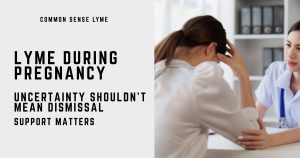
Lyme Disease Symptoms in Women: When They Are Dismissed
Lyme disease symptoms in women can be difficult to recognize
Fatigue, brain fog, pain, and dizziness may overlap with other conditions
Careful evaluation may help prevent diagnostic delays
Author’s Note: Details have been combined and anonymized to protect patient privacy while illustrating patterns I have encountered in clinical practice. This composite story should not be interpreted as establishing a diagnosis or predicting an individual response to treatment.
What are the symptoms of Lyme disease in women? Women may experience fatigue, brain fog, joint or muscle pain, headaches, sleep disturbances, dizziness, palpitations, and other neurologic or autonomic symptoms.
These symptoms are not exclusive to women or specific to Lyme disease. However, they may be attributed to stress, anxiety, depression, perimenopause, or menopause before infectious and other medical explanations have been fully considered.
What Lyme Disease Symptoms in Women Can Look Like
She first came to me after two exhausting years of symptoms that had not been explained by routine evaluations.
Her knees and shoulders ached unpredictably. Her neck was stiff. The fatigue hit her like a wall every afternoon—“bone-deep,” she called it. Brain fog made it hard to follow conversations. She forgot what her children had told her minutes earlier. She stopped driving at night because headlights disoriented her.
She had already seen several providers, including primary care physicians, a neurologist, a rheumatologist, a gynecologist, and a psychologist.
Each evaluation offered a possible explanation, but none adequately explained the complete pattern of symptoms.
“Your labs are normal.”
“It’s probably perimenopause.”
“You’re just stressed.”
“Try an SSRI.”
No one had taken a detailed tick-exposure history. Appropriate Lyme disease testing had not been completed at the time of her initial illness. Tick-borne coinfections and infectious or post-infectious contributors to autonomic dysfunction had not been explored.
This pattern can occur when Lyme disease symptoms in women overlap with conditions more commonly attributed to stress, anxiety, depression, or hormonal changes.
When Symptoms Are Mistaken for Stress or Hormones
Women may normalize discomfort related to menstrual symptoms, caregiving responsibilities, disrupted sleep, demanding careers, and chronic stress. As a result, fatigue, pain, dizziness, or cognitive difficulties may initially be attributed to life circumstances rather than investigated more thoroughly.
When symptoms do not fit neatly into a single diagnosis, explanations may shift toward psychological or hormonal causes:
- Stress: She must be anxious.
- Hormones: It is probably menopause or perimenopause.
- Depression: An antidepressant may resolve the symptoms.
Stress, hormonal changes, and depression can produce genuine physical symptoms and may require treatment. However, their presence should not automatically end the evaluation of persistent, progressive, or multisystem complaints.
This problem is not necessarily the result of one clinician’s decision. It reflects a broader diagnostic challenge that can affect women with complex illnesses.
What Research Shows About Women and Lyme Disease
Emerging research suggests that Lyme disease may not present identically in women and men. Studies have identified differences in erythema migrans characteristics, antibody test positivity, reported symptoms, and longer-term illness experiences.
A 2026 prospective study of 243 adults with early Lyme disease found that men had higher odds of positive two-tier antibody testing and greater objective disease severity than women. The differences were most pronounced when men were compared with premenopausal women. Postmenopausal women more closely resembled men on several measures.
Women in that study reported heart palpitations, vomiting, and light sensitivity more frequently, while men reported sleep difficulty more frequently. These findings do not mean that all women have an atypical presentation or a negative blood test. They suggest that biological sex and menopausal status may influence early Lyme disease presentation and serologic responses.
Research involving patients with persistent symptoms after Lyme disease has also found that women and younger patients report greater illness invalidation from medical professionals. Greater invalidation was associated with greater symptom severity, lower quality of life, and less trust in physicians.
These studies cannot determine what happened during every individual medical encounter. Nevertheless, they support the need for additional research and careful attention to sex- and gender-related differences in Lyme disease.
Lyme Disease and Female Hormones
Fatigue, disturbed sleep, brain fog, dizziness, mood changes, palpitations, and joint pain can overlap with symptoms associated with perimenopause and menopause.
Hormonal changes may contribute to these symptoms and should be evaluated appropriately. Clinicians should also consider Lyme disease and other medical conditions when symptoms are persistent, progressive, associated with tick exposure, or accompanied by neurologic or autonomic features.
The 2026 research does not establish that female hormones cause Lyme disease symptoms or make testing inaccurate. It suggests that menopausal status may be associated with differences in antibody responses and objective measures of early disease severity.
For some women, the overlap between hormonal symptoms and Lyme disease may contribute to diagnostic uncertainty or delay.
Living With Symptoms No One Can Explain
She kept working full-time. She parented two children. She pushed through her symptoms. She wore makeup to appointments. She did not “look sick.”
Ironically, that resilience was sometimes used to underestimate her illness.
If you’re still working, how bad can it be?
Every night, she collapsed onto the couch. She was not merely tired. She was frightened that she was losing her ability to function. She felt guilty for not making dinner, missing soccer games, or asking for help.
Many women continue fulfilling professional and caregiving responsibilities despite worsening symptoms. Continued functioning does not necessarily indicate that an illness is mild.
Documenting changes in work, parenting, exercise, driving, sleep, concentration, and other daily activities may help clinicians understand the degree of functional impairment.
Finally, Someone Reconsidered the Diagnosis
When she reached my clinic, we reviewed her history from the beginning.
- Exposure history: She recalled hiking in the Northeast and a previous tick bite, although she had not noticed an erythema migrans rash.
- Prior testing: Her laboratory results required interpretation in the context of the testing method, duration of illness, exposure history, previous treatment, and alternative diagnoses. No single antibody band or test result established the diagnosis by itself.
- Possible coinfection: Night sweats, head pressure, and episodes of air hunger raised the question of Babesia. These symptoms are not specific to babesiosis, and antibody results may reflect current or previous exposure. Blood smear, PCR, antibody testing, and the complete clinical picture may be considered when evaluating suspected active infection.
- Autonomic symptoms: She had previously been diagnosed with POTS after experiencing palpitations, dizziness, and near-fainting. Published research has explored a possible relationship between Lyme disease, persistent symptoms, and dysautonomia, although important evidence gaps remain.
Her history supported a broader evaluation for Lyme disease, possible tick-borne coinfection, and autonomic dysfunction. Infectious, neurologic, rheumatologic, endocrine, gynecologic, cardiovascular, sleep-related, and psychological explanations also required consideration.
Treatment and Gradual Improvement
Her treatment plan was individualized according to her history, examination, laboratory findings, previous treatment, medication tolerance, and competing diagnoses.
When treatment for a suspected tick-borne infection was clinically appropriate, the potential benefits, limitations, and adverse effects were discussed. Measures addressing POTS and autonomic symptoms were also considered, including hydration, increased salt when medically appropriate, compression garments, gradual activity, and medication selected according to her cardiovascular status.
Recovery was neither immediate nor linear. She experienced setbacks, medication-related difficulties, and periods when the treatment plan had to be reconsidered.
- After several weeks, she reported being able to walk her dog again.
- Over the following months, she could prepare meals more consistently.
- Later, she described gradual improvement in concentration and mental clarity.
“I feel like I’m getting my brain back.”
Her improvement did not prove that every symptom had resulted from one infection or that another patient would respond similarly. It illustrated why persistent multisystem symptoms deserve careful evaluation and follow-up rather than an automatic psychological or hormonal explanation.
Why Delayed Diagnosis Matters
Delayed diagnosis can prolong symptoms, increase disability, complicate recovery, and contribute to emotional distress. Patients may lose confidence in themselves when repeated evaluations do not provide an explanation.
For women balancing careers, caregiving responsibilities, and family obligations, declining function can be especially disruptive even when they continue to appear well during brief medical appointments.
Earlier recognition of possible Lyme disease, associated coinfections, autonomic dysfunction, and alternative diagnoses may reduce the time patients spend searching for explanations. At the same time, symptoms alone should not be assumed to establish Lyme disease because many other conditions can produce similar complaints.
A Clinician’s Checklist
- Listen before labeling. Avoid attributing persistent symptoms solely to stress or hormones without an adequate evaluation.
- Take a detailed exposure history. Ask about outdoor activities, geographic risk, pets, tick bites, and previous rashes or unexplained summer illnesses.
- Interpret testing in context. Consider the timing and type of Lyme disease testing, previous treatment, and the limitations of individual results.
- Consider competing diagnoses. Endocrine, rheumatologic, neurologic, cardiovascular, gynecologic, sleep-related, infectious, and psychological conditions may overlap.
- Evaluate autonomic symptoms. Palpitations, orthostatic dizziness, near-fainting, temperature dysregulation, and gastrointestinal symptoms may require additional assessment.
- Consider coinfections when appropriate. Use exposure history, objective findings, and suitable laboratory methods rather than nonspecific symptoms alone.
- Document functional impairment. Record changes in work, parenting, exercise, driving, sleep, and daily activities.
- Revisit the diagnosis. Remain open to reassessment when symptoms persist, evolve, or fail to respond as expected.
For the Woman Still Searching
If you have been told that “everything is normal,” remember that normal routine laboratory results may not explain every symptom. They also do not automatically establish Lyme disease or another particular diagnosis.
Keep a timeline of symptoms, functional changes, possible tick exposure, prior testing, and treatments. Bring copies of relevant medical records and consider taking a trusted person to appointments if you need help recalling or communicating details.
Persistent symptoms deserve a careful, evidence-informed evaluation that considers both Lyme disease and other possible explanations.
Frequently Asked Questions
What are the symptoms of Lyme disease in women?
Women may experience fatigue, brain fog, headaches, joint or muscle pain, sleep problems, dizziness, palpitations, light sensitivity, and other neurologic or autonomic symptoms. These symptoms are not exclusive to women and are not specific to Lyme disease.
Why is Lyme disease sometimes missed in women?
Symptoms such as fatigue, brain fog, sleep problems, dizziness, palpitations, and pain may overlap with stress, anxiety, depression, perimenopause, menopause, or other medical conditions. Emerging research also suggests that sex and menopausal status may be associated with differences in early presentation and antibody test positivity.
Can Lyme disease symptoms be mistaken for menopause?
Yes. Fatigue, sleep disturbances, cognitive changes, palpitations, mood changes, and joint pain can occur during perimenopause or menopause and may also be reported with Lyme disease. Neither explanation should be assumed without an appropriate evaluation.
Are Lyme disease blood tests less likely to be positive in women?
A 2026 study found lower two-tier antibody positivity among women with early Lyme disease, particularly premenopausal women, compared with men. This finding came from a defined research cohort and does not mean that blood testing is routinely negative in all women.
Can Lyme disease cause POTS symptoms?
Some patients with Lyme disease or persistent symptoms after treatment report autonomic symptoms such as dizziness, palpitations, orthostatic intolerance, and near-fainting. Researchers are investigating this possible relationship, but dysautonomia has not been fully established as a complication of Lyme disease in the medical literature.
Clinical Takeaway
Women with Lyme disease may experience diagnostic delays when fatigue, brain fog, pain, dizziness, palpitations, and sleep disturbances are attributed solely to stress, anxiety, depression, or hormonal changes.
Recent research suggests that biological sex and menopausal status may be associated with differences in early Lyme disease presentation, objective severity, and two-tier antibody positivity. Women with persistent symptoms may also report greater illness invalidation from medical professionals.
These findings should not be used to assume that every unexplained symptom is caused by Lyme disease. They support a careful evaluation that considers exposure history, testing limitations, neurologic and autonomic symptoms, possible coinfections, hormonal factors, and competing diagnoses.
Persistent symptoms should be investigated thoroughly and respectfully, even when routine testing has not provided a complete explanation.
Related Articles
When Lyme Disease Symptoms Are Dismissed
Lyme Disease and Menopause Symptoms
Women With Chronic Lyme Disease May Experience a Different Immune Response
Lyme Disease Test Accuracy
References
- Rebman AW, Yang T, Aucott JN. Sex and menopause-based differences in presentation of early Lyme disease: A prospective cohort study. Clinical and Experimental Medicine. 2026;26(1):139.
- Rebman AW, Yang T, Aucott JN. Invalidation by medical professionals in post-treatment Lyme disease. Scientific Reports. 2024;14:19406.
- Adler BL, Chung T, Rowe PC, Aucott JN. Dysautonomia following Lyme disease: A key component of post-treatment Lyme disease syndrome? Frontiers in Neurology. 2024;15:1344862.
- Fagen JL, Shelton JA, Luché-Thayer J. Medical gaslighting and Lyme disease: The patient experience. Healthcare. 2024;12(1):78.
- Johnson L, Shapiro M, Janicki S, Mankoff J, Stricker RB. Does biological sex matter in Lyme disease? The need for sex-disaggregated data in persistent illness. International Journal of General Medicine. 2023;16:2557–2571.
- Schwarzwalder A, Schneider MF, Lydecker A, Aucott JN. Sex differences in the clinical and serologic presentation of early Lyme disease: Results from a retrospective review. Gender Medicine. 2010;7(4):320–329.
- Johnson L, Wilcox S, Mankoff J, Stricker RB. Severity of chronic Lyme disease compared to other chronic conditions: A quality-of-life survey. PeerJ. 2014;2:e322.
Dr. Daniel Cameron, MD, MPH
Lyme disease clinician with over 30 years of experience and past president of ILADS.
Symptoms • Testing • Coinfections • Recovery • Pediatric • Prevention