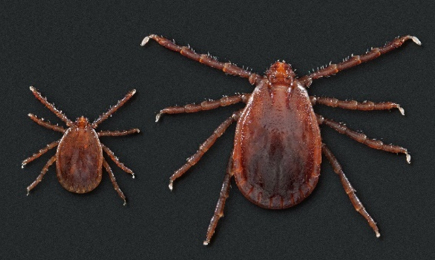
Asian Longhorned Tick in New York: First Human Bite Raises Public Health Questions
The Asian longhorned tick has officially been identified in New York following the first documented human bite in the United States.
This discovery raises an important public health concern: emerging tick species may go unnoticed until human exposure occurs — a pattern already seen with other tick-borne diseases.
The tick species continues to spread across the U.S. It was first identified on sheep in New Jersey in 2017 and has since been reported in at least 11 states, including Arkansas, Connecticut, Kentucky, Maryland, North Carolina, New Jersey, Pennsylvania, Tennessee, West Virginia, Virginia, and now New York.
What Is the Asian Longhorned Tick?
The Asian longhorned tick (H. longicornis) is an invasive species capable of rapid population expansion. Unlike many tick species, the female can reproduce without a male, producing thousands of eggs.
This tick has been associated with multiple pathogens. It may carry Borrelia, the bacteria responsible for Lyme disease, and according to the CDC, it has the potential to transmit viruses such as Heartland and Powassan.
“The full public health and agricultural risk of this tick discovery and spread is unknown,” stated Ben Beard, deputy director of the CDC’s Division of Vector-Borne Diseases.
First Human Bite by Asian Longhorned Tick
Until 2018, there had been no documented human bites in the United States.
On June 4, 2018, “longhorned ticks were identified following a human bite of a 66-year-old man from Yonkers, NY,” writes Wormser in Clinical Infectious Diseases.
The individual did not become ill. However, the discovery led to identification of the species near his home, as well as in a nearby park and trail.
“Ticks were collected in mowed short to mid-length grass near the trail edges, in both full sun and partial shade,” writes Wormser.
Notably, it took a human bite to confirm the presence of this species in New York State.
The first recognized human bite led directly to the discovery of the Asian longhorned tick in New York.
Health Risks Still Unknown
“Whether H. longicornis will pose a health risk for humans in the United States is unclear,” Wormser explains.
There is concern that this species could transmit U.S.-based pathogens, including the Heartland virus. In addition, some evidence suggests that bites may be associated with red meat allergy.
Author’s note: It took a human bite to identify this invasive species in New York. The question remains: how many emerging tick species or pathogens remain undetected until human illness occurs?
This pattern reinforces the importance of early recognition and prevention strategies for tick-borne diseases.
Related Articles:
Infected deer ticks moving into New York City
When should you worry about ticks in your neighborhood?
High prevalence of Babesia microti in Suffolk County, New York
References:
- CDC. Asian longhorned tick spreading rapidly in the U.S. 2018.
- Wormser GP, et al. First recognized human bite by Asian longhorned tick. Clin Infect Dis. 2019.
Dr. Daniel Cameron, MD, MPH
Lyme disease clinician with over 30 years of experience and past president of ILADS.
Symptoms • Testing • Coinfections • Recovery • Pediatric • Prevention