Most Tick Bites Go Unnoticed
A patient once told me, “I check myself carefully — I would have seen a tick.” This is a common belief. But actually, tick bites are very easy to miss.
The ticks that most frequently spread Lyme disease aren’t large or obvious — they’re nymphs, smaller than a poppy seed and almost invisible on skin. They don’t hurt when they bite and can hide anywhere: along the scalp, behind the knees, or under waistbands.
Even adult ticks, though larger, are often overlooked. They’re flatter, darker, and can blend into moles or freckles — especially on the back, scalp, or behind the ear. Like many patients, she couldn’t believe something so small could cause so much damage.
Nymph and Adult Ticks: Tiny but Dangerous
Both nymph ticks and adult ticks can transmit Lyme disease. Nymphs are responsible for most infections because of their size and timing — active in late spring and summer when people are outdoors hiking, gardening, or walking pets.
But adults, active in the fall and early winter, still pose a significant risk. Their bites may be dismissed as small scabs or freckles, particularly when they attach in hidden areas or beneath clothing.
Research suggests that most tick bites go completely unnoticed. In a study of 1,770 children undergoing emergency department evaluation for Lyme disease, only a minority recalled a tick bite — meaning most exposures were never recognized.
Only a minority of children diagnosed with Lyme disease recall a preceding tick bite.
Why Tick Bites Are Easily Missed
Ruling out Lyme disease because a tick wasn’t seen is a mistake. Ticks numb the bite area with anesthetic compounds and use anti-coagulants to stay attached silently.
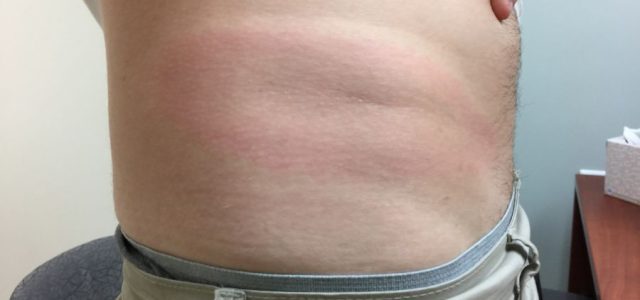
Some patients develop a rash but never find a tick. Others have no rash at all. By the time fatigue, pain, or brain fog appear, the tick is long gone.
That’s why clinicians rely on a combination of history, symptoms, and testing — not just a visible tick — when diagnosing Lyme disease.
Early Signs Even Without a Tick Bite
Even without a visible tick bite, early signs of Lyme disease can include:
- Fatigue or flu-like malaise
- Headache or stiff neck
- Rash (sometimes—but not always—a bull’s-eye)
- Joint or muscle pain
- Brain fog, mood changes, or sleep issues
If these symptoms appear after outdoor activity, Lyme disease should always be considered.
Frequently Asked Questions
Can I have Lyme disease if I never saw a tick?
Yes. Studies show that many Lyme disease patients never noticed the tick that infected them. Nymph ticks are smaller than a poppy seed, and even adult ticks can hide in hair, skin folds, or areas you can’t easily see. Not seeing a tick does not rule out Lyme disease.
Why don’t tick bites hurt?
Ticks inject anesthetic compounds when they bite, numbing the area so you don’t feel them attach. They also release anti-coagulants to help them feed undetected. This is why most people have no idea they’ve been bitten until symptoms appear days or weeks later.
Are nymph ticks more dangerous than adult ticks?
Nymphs cause most Lyme infections because they’re active in late spring and summer when people are outdoors, and they’re nearly impossible to see. However, adult ticks can also transmit Lyme disease and are active in fall and early winter. Both stages are dangerous.
If I didn’t see a tick, will my doctor still diagnose Lyme disease?
Experienced clinicians diagnose Lyme disease based on symptoms, exposure history, and testing—not just a visible tick. However, many doctors still dismiss Lyme when no tick was seen, which delays diagnosis and treatment. Advocate for yourself if symptoms match Lyme disease.
How long does a tick need to be attached to transmit Lyme disease?
Transmission risk increases the longer a tick remains attached. Traditional guidance suggests that risk rises after about a day of attachment, but the exact timing is variable and depends on factors such as the tick stage, feeding status, and whether the tick was previously feeding before attaching.
Prompt tick removal reduces risk, but absence of a long attachment time does not completely eliminate the possibility of infection.
Clinical Takeaway
Most Lyme disease patients never see the tick that infected them. Nymphs are nearly invisible, and even adult ticks blend into skin or hide in areas you can’t easily check.
The absence of a recalled tick bite should never rule out Lyme disease. If your energy, cognition, or joint health changed suddenly after outdoor exposure, timely testing and clinical evaluation may prevent long-term complications—even when no tick was ever found.
Related Reading
References
- Nigrovic LE, Neville DN, Balamuth F, et al. A minority of children diagnosed with Lyme disease recall a preceding tick bite. Ticks Tick Borne Dis. 2019;10(4):694-697.
- Centers for Disease Control and Prevention. Epidemiology of Lyme Disease Diagnoses among Older Adults, United States, 2016–2019. Emerg Infect Dis. 2024;30(9).
- Eisen RJ, Eisen L. The Blacklegged Tick, Ixodes scapularis: An Increasing Public Health Concern. Trends Parasitol. 2018;34(4):295-309.
- Falco RC, Fish D. Prevalence of Ixodes dammini Infestation on Humans in a Lyme Disease Endemic Area of New York State. Am J Epidemiol. 1988;128(5):1146-1152.
Dr. Daniel Cameron, MD, MPH
Lyme disease clinician with over 30 years of experience and past president of ILADS.
Symptoms • Testing • Coinfections • Recovery • Pediatric • Prevention