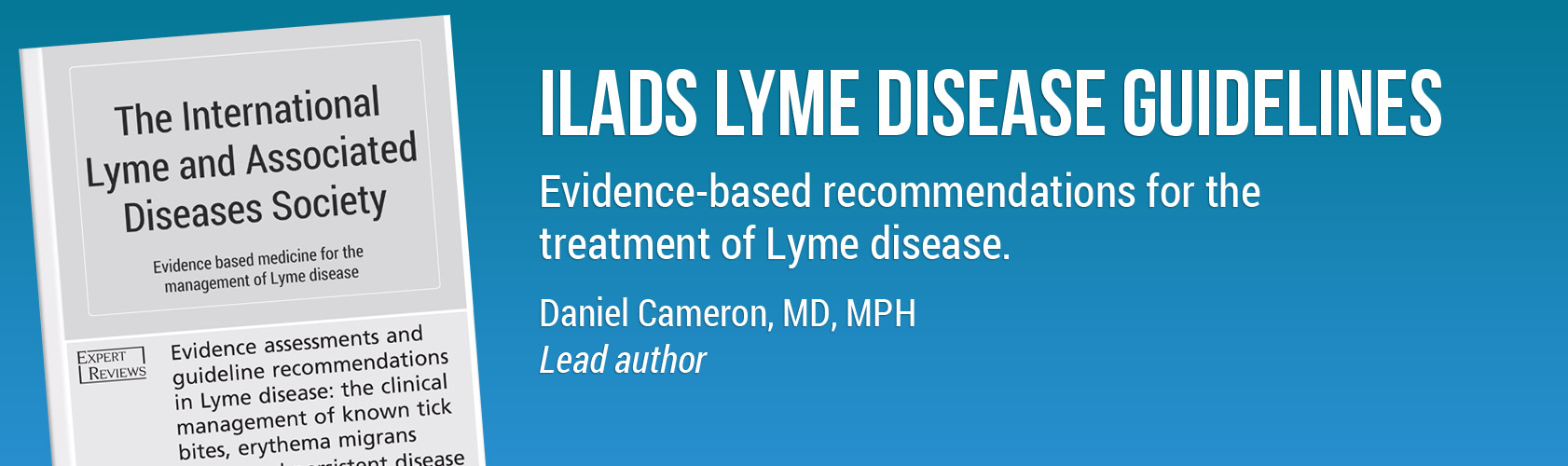
ILADS Lyme Disease Treatment Guidelines: Key Recommendations
Guidance covers tick bites, erythema migrans, and persistent symptoms
ILADS recommends individualized treatment rather than a rigid protocol
Clinical judgment and shared decision-making remain central
The 2014 ILADS Lyme disease treatment guidelines address three common clinical questions: antibiotic prophylaxis following a known tick bite, treatment of an erythema migrans rash, and antibiotic retreatment for patients with persistent manifestations of Lyme disease.
The guidelines were written by Daniel J. Cameron, MD, MPH; Lorraine B. Johnson, JD; and Elizabeth L. Maloney, MD, and published in the peer-reviewed journal Expert Review of Anti-infective Therapy.1
ILADS developed the recommendations using the Grading of Recommendations Assessment, Development and Evaluation, or GRADE, framework. This approach considers the quality of the evidence, potential benefits and harms, patient values and preferences, and the strength of each recommendation.
ILADS Treatment Recommendations at a Glance
The 2014 ILADS guidelines make the following recommendations while emphasizing that treatment must be individualized:
- Known Ixodes tick bite: ILADS recommends against a single 200 mg dose of doxycycline. The preferred regimen is doxycycline 100–200 mg twice daily for 20 days, barring contraindications. Other options may be appropriate based on the individual patient.
- Erythema migrans rash: ILADS recommends 4–6 weeks of doxycycline, amoxicillin, or cefuroxime as initial therapy. A minimum of 21 days of azithromycin may be considered when the first-line agents are unsuitable.
- Persistent manifestations: ILADS recommends reassessing the original diagnosis, prior treatment, alternative causes, symptom severity, quality-of-life impairment, and treatment risks before discussing individualized antibiotic retreatment.
- Reassessment: Patients should be reassessed during and after treatment. The regimen may need to be modified, extended, or discontinued based on the clinical response and the balance of benefits and harms.
These recommendations summarize the published guidelines and are not instructions for self-treatment. Antibiotic selection, dosage, duration, contraindications, and monitoring require evaluation by a qualified healthcare professional.
Key Issues Identified by the ILADS Guidelines
- Lyme disease is a complex illness, and patients may experience both acute and persistent manifestations.
- Persistent manifestations may produce profound impairments in quality of life, although the mechanisms responsible for these symptoms remain incompletely understood.
- The available evidence concerning the treatment of known tick bites, erythema migrans rashes, and persistent disease is limited.
- GRADE analyses classified the evidence addressing these clinical scenarios as very low quality because of limitations in trial design, imprecise findings, inconsistent outcomes, and concerns about whether trial findings apply to a broader patient population.
The guidelines are intended to assist clinicians with evidence-based decision-making. They are not intended to replace clinical judgment or establish one treatment protocol for every patient.
ILADS Recommendation Following a Known Tick Bite
The guidelines concluded that it was not possible to establish a meaningful success rate for preventing Lyme disease with a single 200 mg dose of doxycycline based on the available trial.
The authors cited concerns about the trial’s limited observation period and its reliance on prevention of an erythema migrans rash at the bite site as a surrogate outcome. ILADS therefore recommends against using a single 200 mg dose of doxycycline for a known Ixodes tick bite.
The preferred ILADS regimen is doxycycline 100–200 mg twice daily for 20 days, barring contraindications. The guidelines recognize that other treatment options may be appropriate on an individualized basis.
Before treatment, clinicians should discuss the limitations of the evidence, potential benefits and harms, medication contraindications, and alternative management approaches with the patient.
Patients should continue to watch for an expanding rash, fever, fatigue, headache, facial weakness, joint symptoms, or other signs of a tick-borne illness following a bite. The absence of an erythema migrans rash does not exclude Lyme disease.
ILADS Recommendations for an Erythema Migrans Rash
For an erythema migrans rash, ILADS recommends 4–6 weeks of doxycycline, amoxicillin, or cefuroxime as initial therapy. A minimum of 21 days of azithromycin may be considered when the first-line agents are unsuitable.
The guidelines advise clinicians to consider the duration and severity of symptoms, whether the infection appears disseminated, the possibility of co-infections, immune function, medication tolerance, and the patient’s response to treatment.
Patients should be reassessed at the completion of initial therapy. If the patient has not fully recovered, the clinician should reassess the original diagnosis and consider possible treatment failure, persistent infection, co-infections, immune dysfunction, or another condition that could explain the continuing symptoms.
Treatment Outcomes for Erythema Migrans
The ILADS authors reexamined trials involving patients treated for an erythema migrans rash. Using patient-centered definitions and conservative longitudinal methods, they reported success rates ranging from 52.2% to 84.4% for regimens of 20 or fewer days involving azithromycin, cefuroxime, doxycycline, amoxicillin, or phenoxymethylpenicillin.
These findings raised concern that some patients remained symptomatic or experienced recurrent symptoms following commonly studied treatment courses. The guidelines emphasize monitoring the patient’s clinical response rather than assuming that every patient will have the same outcome after a standardized regimen.
Persistent Symptoms and Antibiotic Retreatment
Persistent manifestations may include fatigue, pain, cognitive difficulties, sleep disturbance, and impaired physical or occupational functioning. These symptoms can substantially affect a patient’s quality of life.
The guidelines reviewed clinical trials of antibiotic retreatment. In one trial involving patients with severe fatigue, 64% of patients in the treatment group experienced a clinically significant and sustained improvement in fatigue.
This finding does not mean that every patient with persistent symptoms will benefit from additional antibiotics. The guidelines recommend reassessing the original diagnosis and considering alternative explanations for the continuing illness before beginning retreatment.
The treatment discussion should also consider prior therapy, symptom severity, quality-of-life impairment, medication tolerance, coexisting conditions, the risks of additional treatment, and the patient’s goals and preferences.
For a broader discussion of ongoing symptoms, see persistent Lyme disease and post-treatment Lyme disease syndrome.
Why Clinical Judgment Is Important
The optimal treatment regimen for every known tick bite, erythema migrans rash, or case of persistent disease has not been established. Patients differ in disease presentation, duration of illness, previous treatment, coexisting conditions, treatment tolerance, and response to therapy.
Because these variables cannot be fully addressed by one restrictive protocol, the guidelines emphasize individualized clinical judgment and ongoing reassessment.
Potential treatment benefits must be weighed against risks, including allergic reactions, gastrointestinal complications, medication interactions, Clostridioides difficile infection, intravenous-line complications when applicable, and other adverse effects.
Shared Decision-Making in Lyme Disease Treatment
The GRADE framework recognizes that patient values and preferences become especially important when the supporting evidence is limited or uncertain.
ILADS recommends that clinicians explain the available evidence, its limitations, the reasonable treatment options, and the potential benefits and harms of each approach. The patient’s goals and preferences should then be strongly considered through a shared decision-making process.
This approach does not guarantee a particular treatment choice. It provides a structured way for the clinician and patient to make an individualized decision when the evidence does not identify one clearly superior option.
Areas Requiring Additional Research
The guidelines called for further research to:
- Better define the biological processes responsible for persistent manifestations
- Identify variables associated with poor treatment outcomes
- Determine which patients may benefit from additional treatment
- Establish more effective regimens for known tick bites and erythema migrans
- Clarify the benefits and risks of retreatment for persistent disease
- Develop reliable patient-centered measures of treatment success
Frequently Asked Questions
What are the ILADS Lyme disease treatment guidelines?
The 2014 ILADS guidelines are evidence-based clinical recommendations addressing known tick bites, erythema migrans rashes, and persistent manifestations of Lyme disease.
What does ILADS recommend following a known tick bite?
ILADS recommends against a single 200 mg dose of doxycycline. For a known Ixodes tick bite, the preferred regimen is doxycycline 100–200 mg twice daily for 20 days, barring contraindications. Treatment must be determined by a qualified healthcare professional.
How long does ILADS recommend treating an erythema migrans rash?
ILADS recommends 4–6 weeks of doxycycline, amoxicillin, or cefuroxime as initial therapy. A minimum of 21 days of azithromycin may be considered when the first-line agents are unsuitable. The patient’s response should be reassessed.
Does ILADS recommend the same treatment for every patient?
No. The guidelines emphasize clinical judgment, individualized care, and reassessment based on the patient’s presentation, treatment response, risks, and preferences.
Does ILADS recommend retreatment for persistent symptoms?
ILADS recommends discussing individualized retreatment after reassessing the original diagnosis, prior treatment, alternative causes, symptom severity, quality-of-life impairment, and the potential benefits and harms of additional antibiotics.
Why did ILADS classify the evidence as very low quality?
The GRADE analyses identified limitations involving trial design, imprecise findings, inconsistent outcomes, and uncertainty about whether the results could be generalized to the broader Lyme disease population.
Do the ILADS guidelines replace a physician’s clinical judgment?
No. The authors state that the guidelines should not be the sole source of guidance, replace clinical judgment, or be used to impose a standardized protocol on every patient.
Clinical Takeaway
The 2014 ILADS guidelines recognize substantial uncertainty in the evidence concerning tick-bite prophylaxis, treatment of erythema migrans, and retreatment of persistent manifestations. They provide specific initial recommendations while emphasizing clinical reassessment and individualized care.
When high-quality evidence is limited, treatment decisions should balance the available research, clinical judgment, potential benefits and harms, and the informed preferences of the patient.
Related Articles
Lyme disease treatment risks
Lyme disease test accuracy
Recovery from Lyme disease
References
- Cameron DJ, Johnson LB, Maloney EL. Evidence assessments and guideline recommendations in Lyme disease: the clinical management of known tick bites, erythema migrans rashes and persistent disease. Expert Rev Anti Infect Ther. 2014;12(9):1103–1135.
This article summarizes the published ILADS guidelines for educational purposes. It is not medical advice and does not replace evaluation and treatment by a qualified healthcare professional.
Dr. Daniel Cameron, MD, MPH
Lyme disease clinician with over 30 years of experience and past president of ILADS.
Symptoms • Testing • Coinfections • Recovery • Pediatric • Prevention