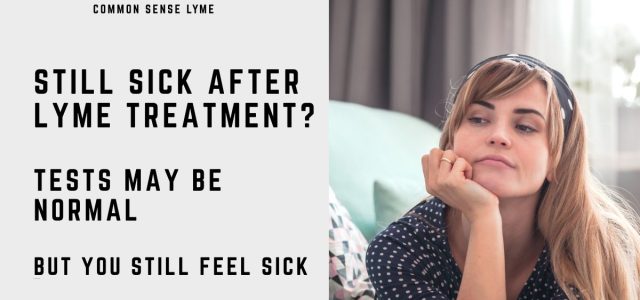
Why Lyme Symptoms Can Persist After Treatment: Causes and Recovery
Persistent symptoms may continue after Lyme treatment
New IFN-α research suggests ongoing immune activation
Testing limitations and co-infections may complicate recovery
Many patients expect their Lyme disease symptoms to resolve after completing antibiotic treatment. While many recover completely, others continue to experience fatigue, brain fog, headaches, joint pain, neuropathy, dizziness, or other symptoms for months—or even years.
Why some patients recover fully while others continue to struggle remains one of the most important unanswered questions in Lyme disease.
As a Lyme disease specialist, I have cared for many patients whose symptoms persisted after treatment despite completing recommended antibiotic therapy. They are often told their symptoms are simply post-treatment Lyme disease syndrome (PTLDS), stress-related, or unrelated to infection.
That explanation may fit some patients, but it does not fully explain what I have observed in clinical practice over many years treating Lyme disease and tick-borne co-infections.
A 2023 study published in Emerging Infectious Diseases provides an important clue. Investigators found that patients with persistent symptoms following Lyme neuroborreliosis had elevated blood levels of interferon-alpha (IFN-α), an immune signaling protein typically produced when the body responds to viral or intracellular infections.
Patients with the highest IFN-α levels also reported the greatest symptom burden, and these elevations persisted for months after antibiotic treatment.
The investigators concluded that persistent IFN-α activation may reflect ongoing immune dysregulation after Lyme neuroborreliosis. However, the study could not determine what continues to stimulate the immune system.
One possibility is that, in some patients, the immune system may still be responding to a persistent tick-borne infection that current testing cannot detect. Other mechanisms—including immune dysregulation, residual bacterial components, autonomic dysfunction, or untreated co-infections such as Babesia or Bartonella—may also contribute.
Persistent Lyme Symptoms After Treatment
Persistent symptoms after Lyme disease treatment vary widely from one patient to another.
Common symptoms include:
- Fatigue
- Brain fog and memory problems
- Headaches
- Joint and muscle pain
- Numbness or tingling
- Dizziness or balance problems
- Sleep disturbance
- Exercise intolerance
- Symptoms that worsen after physical or emotional stress
Some patients improve steadily but never completely recover. Others experience periods of improvement followed by setbacks that may occur after illness, surgery, overexertion, or significant emotional stress.
For some individuals, this clinical picture overlaps with post-treatment Lyme disease syndrome. For others, persistent infection, untreated co-infections, autonomic dysfunction, immune dysregulation, or another medical condition may better explain their symptoms.
When Tests Fall Short
Current Lyme disease tests have important limitations.
Serologic testing measures the immune response rather than detecting the organism directly. Antibodies may remain positive long after infection has resolved, while some patients with persistent symptoms may have negative or indeterminate results.
PCR testing, spinal fluid analysis, and other laboratory methods also have important limitations because Borrelia burgdorferi is often present in low numbers or localized within tissues rather than circulating in the bloodstream.
As a result, laboratory testing may fail to identify ongoing disease activity in every patient.
In my practice, I have seen patients whose persistent symptoms improved only after additional evaluation identified overlooked co-infections such as Babesia or Bartonella requiring different treatment strategies.
Others improved following individualized retreatment despite persistently negative laboratory studies.
These observations do not prove persistent infection in every patient. However, they illustrate why clinical judgment remains essential when evaluating persistent Lyme symptoms.
Why Some Patients May Benefit From Retreatment
Several randomized clinical trials have concluded that prolonged antibiotic therapy offers limited benefit for patients with persistent Lyme symptoms. These studies have contributed to current recommendations against routine retreatment.
However, these trials also had important limitations that should be considered when interpreting their results.
- Many patients entered treatment months or years after becoming ill.
- Antibiotic regimens were relatively short or evaluated only one treatment approach.
- Patients were not routinely evaluated for Babesia, Bartonella, or other tick-borne co-infections.
- There were no reliable biomarkers to determine whether infection had truly been eliminated before treatment ended.
- The studies included clinically diverse patient populations, making it difficult to identify individuals who might benefit from individualized therapy.
Clinical decisions should therefore be individualized because patients differ in the timing of diagnosis, symptom burden, immune response, co-infections, prior treatment, and overall health.
In my practice, some carefully selected patients experience meaningful improvement when treatment is individualized rather than limited to a fixed antibiotic duration. Treatment decisions should always balance potential benefits with possible risks while remaining focused on improving function and quality of life.
What Might Be Causing Persistent Symptoms?
The elevated IFN-α levels reported in the 2023 study suggest that the immune system remains activated in at least some patients after treatment.
Exactly what continues to stimulate that immune response remains unknown.
Several mechanisms have been proposed:
- Persistent Borrelia burgdorferi infection that current diagnostic methods cannot detect.
- Persistent tick-borne co-infections such as Babesia or Bartonella.
- Immune dysregulation that continues after the initial infection.
- Residual bacterial antigens or inflammatory debris that continue stimulating the immune system.
- Autoimmune responses triggered by the original infection.
- Autonomic dysfunction affecting heart rate, blood pressure, temperature regulation, and exercise tolerance.
- Other overlapping medical conditions unrelated to Lyme disease.
These explanations are not mutually exclusive. Different mechanisms may contribute in different patients.
The important point is that persistent symptoms deserve thoughtful evaluation rather than assuming every patient shares the same underlying cause.
Can Lyme Symptoms Return After Treatment?
Yes. Some patients report that symptoms improve and then recur weeks, months, or even years later.
Recurrence may follow physical stress, emotional stress, another illness, surgery, overexertion, or other physiologic challenges. In some patients, recurrent symptoms may reflect persistent immune activation, co-infections, autonomic dysfunction, persistent infection, or another medical condition rather than a new tick bite.
Because there is no single explanation for every patient, recurrent symptoms should prompt a careful clinical evaluation rather than being dismissed or automatically attributed to stress alone.
For Patients Who Are Still Struggling
If you continue to experience Lyme symptoms after treatment, you are not alone.
This new IFN-α research supports what many patients have reported for years—that measurable immune activation may persist after treatment in at least some individuals.
Although the exact cause remains uncertain, these findings reinforce the importance of continuing to investigate persistent symptoms rather than assuming they are insignificant.
Until better diagnostic tools become available, clinicians should:
- Recognize the limitations of current Lyme disease testing.
- Evaluate for overlooked co-infections.
- Consider both infectious and noninfectious mechanisms.
- Individualize treatment decisions based on the patient’s clinical presentation.
- Respect patient experiences rather than relying solely on laboratory results.
Persistent symptoms should encourage careful reassessment—not premature conclusions.
Clinical Perspective
Persistent Lyme symptoms deserve investigation—not dismissal.
Throughout my clinical experience treating patients with Lyme disease and tick-borne co-infections, I have found that persistent symptoms often require looking beyond a single explanation.
My evaluation typically includes:
- Reviewing the original diagnosis and treatment history.
- Assessing for overlooked co-infections such as Babesia or Bartonella.
- Considering persistent infection, immune dysregulation, autonomic dysfunction, and other overlapping medical conditions.
- Individualizing treatment based on the patient’s clinical course rather than laboratory results alone.
Whether persistent symptoms are ultimately driven by unresolved infection, immune dysregulation, co-infections, or a combination of factors, patients deserve thoughtful evaluation rather than assumptions based solely on negative laboratory testing.
Frequently Asked Questions
Can Lyme symptoms persist after antibiotics?
Yes. Some patients continue to experience fatigue, brain fog, pain, headaches, dizziness, or neurologic symptoms after completing antibiotic treatment. The underlying cause may differ from one patient to another.
Can Lyme disease stay with you forever?
Many patients recover completely, but others experience persistent or recurrent symptoms. These symptoms may reflect immune dysregulation, co-infections, persistent infection, autonomic dysfunction, or another medical condition.
Why do Lyme symptoms return after treatment?
Symptoms may recur because of persistent infection, co-infections, immune activation, autonomic dysfunction, residual inflammation, or other physiologic stressors. A careful clinical evaluation is often needed to determine the most likely cause.
Does persistent Lyme always mean active infection?
No. Persistent symptoms do not prove that active infection is present. However, persistent infection remains one possible explanation in selected patients and should be considered alongside other potential mechanisms.
Can co-infections cause persistent Lyme symptoms?
Yes. Babesia, Bartonella, Anaplasma, Ehrlichia, and other tick-borne infections may contribute to persistent or relapsing symptoms and may require different diagnostic and treatment approaches.
Clinical Takeaway
New research demonstrating elevated interferon-alpha after Lyme neuroborreliosis supports the observation that immune activation may persist in some patients after treatment.
Whether that ongoing immune response reflects persistent infection, immune dysregulation, residual bacterial antigens, co-infections, autonomic dysfunction, or multiple overlapping mechanisms remains uncertain.
Persistent Lyme symptoms after treatment should prompt careful clinical evaluation that considers the patient’s history, current symptoms, testing limitations, and possible co-infections rather than relying solely on laboratory results.
Related Articles
These articles explore persistent Lyme disease, treatment challenges, recovery, testing limitations, and tick-borne co-infections.
- Persistent Lyme Disease: Overview
- Persistent Lyme Disease: Proposed Mechanisms
- Post-Treatment Lyme Disease Syndrome (PTLDS)
- Recovery From Lyme Disease
- Why Lyme Disease Tests the Limits of Medicine
- Lyme Disease Co-Infections
References:
- Henningsson AJ, Gyllemark P, Lager M, et al. Association of persistent symptoms after Lyme neuroborreliosis and increased levels of interferon-α in blood. Emerg Infect Dis. 2023;29(6):1094-1102.
- Aucott JN. Posttreatment Lyme Disease Syndrome. Infect Dis Clin North Am. 2015;29(2):309-323.
- Marques A. Persistent Symptoms After Treatment of Lyme Disease. Infect Dis Clin North Am. 2022;36(4):751-764.
Dr. Daniel Cameron, MD, MPH
Lyme disease clinician with over 30 years of experience and past president of ILADS.
Symptoms • Testing • Coinfections • Recovery • Pediatric • Prevention


Thank you for understanding and listening so many don’t!
I’m 80 years old and struggled with debilitating symptoms such as headaches, mental fog, muscle pain, fatigue, neurological pain for over 20 years. I was sent to every specialist like rheumatologist, neurologist, orthopedist, psychiatrist, until in 2015 a GP took a blood test for Lyme and was called by the CDC to tell me it was positive for Lyme and babesia. They questioned me as to where I lived, visited etc. then told me to find an infectious disease doctor to treat but after calling all in Ft Myers Fl no one would treat lime. Months later I found a PA who agreed to treat me and I had a long round of doxycycline and drugs for babesia. I started to feel better but never back to normal. It’s now 2025 and most symptoms seem to be recurring but doctors here in Virginia where I know live blame my symptoms on old age. I’m just waiting to die as I have little quality of life.
I am sorry to hear you are having problems despite early gains. i blogged on this problem at https://danielcameronmd.com/geriatric-babesia-rising-longer-treatment/
Thank you for your vulnerable post. I am fairly new with this Lyme fight, less than a year in. I see how strong you have been to trudge through each day. I am already struggling to want the days to continue as this pain is unbearable at times and quality of life feels defeating. Today is a good day for me and I hope you also. Thank you for making me not feel quite so alone in this.