Lyme Disease Can Make You Feel Older Than You Are
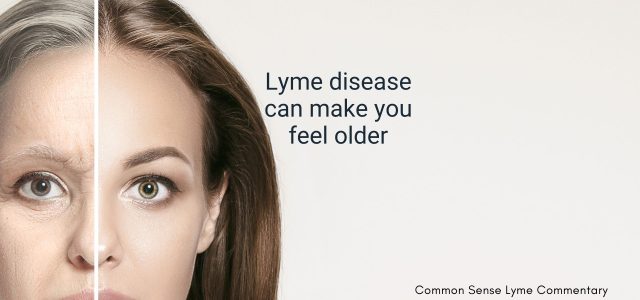
Lyme disease can leave patients feeling decades older than their actual age—through fatigue, brain fog, and joint pain that don’t match where they should be in life.
“I’m 36, but I feel 76. My legs are heavy, my memory’s a mess, and I don’t recognize my own energy anymore.”
That’s how one patient described her experience before being diagnosed with Lyme disease. She had been told it was anxiety—or possibly early menopause. Lyme disease was the missing piece. :contentReference[oaicite:0]{index=0}
Similar stories are common. Patients later discover their symptoms were not “just aging,” but part of an underlying illness, as described in She Was Told It Was Aging — It Was Lyme All Along.
Why These Symptoms Are Often Dismissed
When patients report fatigue, brain fog, joint pain, or cognitive slowing that doesn’t match their age, the explanation is often familiar: stress, aging, or burnout.
This reflects a broader issue of medical dismissal, where persistent symptoms are minimized once testing is normal or initial treatment is complete. Instead of asking why symptoms persist, evaluation may stop.
Over time, this can delay diagnosis and leave patients without clear answers.
Why Lyme Disease Can Feel Like Aging
Fatigue, memory changes, and stiffness are commonly associated with aging. But when these symptoms appear suddenly—or progress rapidly—in younger adults, infection should be considered.
Tick-borne illnesses can affect the nervous system, immune response, and autonomic function. According to the CDC, Lyme disease can involve the joints, heart, and nervous system.
While Lyme disease does not necessarily accelerate biological aging, it can create the lived experience of aging.
Patients often describe:
- Brain fog and word-finding difficulty
- Exhaustion after minimal effort
- Dizziness or POTS-like symptoms
- Joint pain and stiffness
The result is a body that feels older than expected—even when routine labs appear normal.
The Age Disconnect
Many patients describe a mismatch between their chronological age and how their body feels. This disconnect can be especially frustrating when standard testing suggests everything is normal.
In some cases, this reflects ongoing infection, co-infections such as Babesia or Bartonella, or autonomic dysfunction.
Research summarized by the NIH shows that persistent fatigue, pain, and cognitive impairment can significantly impact quality of life after Lyme disease.
When a patient says, “I don’t feel like myself anymore,” that observation is clinically meaningful.
Children Can Show the Same Pattern
This pattern is not limited to adults.
Children with Lyme disease may also show a mismatch between age and energy, though they may not describe it directly.
Parents often notice:
- Fatigue that limits play or school participation
- Joint or muscle pain
- Cognitive slowing or difficulty concentrating
- Mood changes related to reduced activity
When a child withdraws from normal activity, it is reasonable to ask why.
Who Is Most Affected?
This pattern is often seen in:
- Patients with delayed diagnosis
- Those misdiagnosed with anxiety or fibromyalgia
- Patients with persistent symptoms after treatment
- Children with unexplained fatigue or behavioral changes
- Individuals with co-infections or autonomic dysfunction
In many cases, these symptoms reflect a treatable condition rather than normal aging.
Can It Improve?
In many cases, yes.
When Lyme disease and co-infections are addressed—and when immune and autonomic factors are considered—patients often report gradual improvement in energy, clarity, and function.
This is part of the broader process of Lyme disease recovery.
Clinical Perspective
If a patient feels they are aging too quickly—physically or cognitively—it may not be age alone.
Even with normal testing, persistent symptoms deserve continued evaluation.
Understanding Lyme disease symptoms, testing limitations, and co-infections can help guide next steps.
Dr. Daniel Cameron, MD, MPH
Lyme disease clinician with over 30 years of experience and past president of ILADS.
Symptoms • Testing • Coinfections • Recovery • Pediatric • Prevention