Can You Get Lyme Disease Outside Endemic Areas?
Lyme disease outside endemic areas is more common than many patients and clinicians realize. While Lyme disease is traditionally associated with the Northeast and Upper Midwest, cases are increasingly reported in regions once considered low risk.
This raises an important clinical question: Can Lyme disease occur outside endemic areas?
The answer is yes—and misunderstanding this can delay diagnosis.
Why Lyme Disease Is Considered “Endemic”
Public health maps often highlight regions where Lyme disease is most commonly reported. These “endemic” areas include parts of the Northeast, Mid-Atlantic, and Upper Midwest.
However, these maps are based on surveillance data—not necessarily where infections truly occur.
To understand how symptoms may appear regardless of location, see our Lyme disease symptoms guide.
Lyme Disease Outside Endemic Areas Is Increasing
Emerging research shows that Lyme disease is being identified in regions previously considered low risk.
In Florida, for example, reported Lyme disease cases increased significantly over the past decade, with some cases acquired locally rather than through travel.
Environmental changes—including rising temperatures, habitat shifts, and expanding tick populations—are contributing to this trend.
Source: Branstetter et al. Public Health Reports. 2026 — trends in Lyme disease incidence in Florida.
View study
Why Lyme Disease Outside Endemic Areas Is Missed
Lyme disease outside endemic areas is often overlooked for several reasons:
- Clinicians may have a lower index of suspicion
- Patients may not recall a tick bite
- Symptoms may not initially suggest Lyme disease
- Testing may be negative early in infection
These factors contribute to delayed Lyme disease diagnosis, particularly in regions where Lyme is considered uncommon.
Travel vs Local Infection: A Diagnostic Challenge
Another complicating factor is that surveillance systems often record Lyme disease cases based on a patient’s place of residence—not where the infection was acquired.
This makes it difficult to distinguish between:
- Travel-associated infections
- Locally acquired cases
As a result, Lyme disease outside endemic areas may be underestimated.
The Role of Tick Behavior
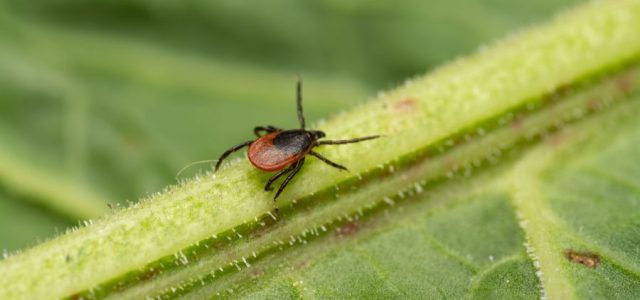
Ticks that transmit Lyme disease are small and often go unnoticed, particularly during their nymph stage.
This means patients may not associate their symptoms with a tick exposure—even when infection has occurred.
Learn more about prevention strategies in our Lyme disease prevention guide.
Clinical Perspective: Patterns Matter More Than Geography
In clinical practice, Lyme disease is not defined by geography alone.
Symptoms that involve multiple systems—especially when they fluctuate or evolve over time—may point toward Lyme disease even in non-endemic areas.
For a deeper look at diagnostic complexity, see Why Lyme Disease Tests the Limits of Medicine.
Why This Matters
Assuming Lyme disease only occurs in endemic areas can delay diagnosis and treatment.
Recognizing that Lyme disease can occur outside traditional regions is an important step toward earlier identification and better outcomes.
Clinical Takeaway
Lyme disease outside endemic areas is real and may be increasing.
Geography alone should not determine whether Lyme disease is considered. Clinical patterns, symptom evolution, and exposure history remain essential to diagnosis.
Did You Know?
Many patients diagnosed with Lyme disease do not recall a tick bite—especially outside endemic areas.
Have you experienced symptoms of Lyme disease outside a typical risk area? Share your experience or questions below.
Dr. Daniel Cameron, MD, MPH
Lyme disease clinician with over 30 years of experience and past president of ILADS.
Symptoms • Testing • Coinfections • Recovery • Pediatric • Prevention