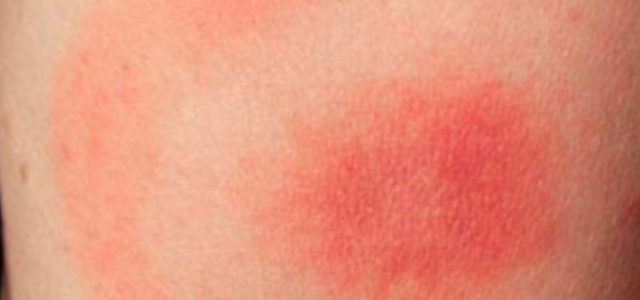
A Case Example of an Atypical Lyme Rash in a Child
Case reports often illustrate how Lyme disease can present in unexpected ways, particularly in children.
I previously discussed a case report by Banadyha and colleagues describing an unusual presentation of erythema migrans in a child. In their article, “Giant Erythema in a Child with Lyme Disease,” the authors describe an 11-year-old girl whose illness evolved with multiple atypical rashes before the classic erythema migrans pattern appeared.¹
The girl was admitted to the hospital with high fever, headaches, abdominal pain, and a progressing rash. Her illness began several days after a small rash appeared on her left foot, which initially resolved with topical treatment.
The following day another rash appeared on her right foot near the ankle and also disappeared after antihistamine treatment.
On the fourth day of illness, maculopapular rashes appeared on the trunk and limbs.
Over the following days the rashes enlarged and the child developed fever, lethargy, headaches, and abdominal pain.
Clinicians initially considered other diagnoses, including toxic erythema. However, as additional rashes appeared, the diagnosis was reconsidered.
The child’s parents did not recall a tick bite, and Lyme disease was not initially suspected because the illness began during a colder season.
“Only on the seventh day of illness did typical erythema migrans lesions appear on the anterolateral surface of the chest.”¹
The authors noted that the diagnostic complexity was increased by the rash’s atypical presentation, which consisted of large homogeneous papular lesions.
After serologic testing returned positive, the patient was diagnosed with early disseminated Lyme disease and treated successfully with doxycycline.
“This clinical case is noteworthy because the rash was extensive, multiple, and migratory.”¹
This case illustrates how the Lyme rash in children may evolve over several days and may not resemble the classic erythema migrans pattern early in the illness.
A fuller discussion of this case is available here:
Giant Erythema in a Child with Lyme Disease.
For a broader discussion of early symptoms in children, see
Early Signs of Lyme Disease in Children.
For additional examples of how Lyme rashes may differ from the classic bull’s-eye appearance, see
Erythema migrans rash doesn’t always have a bull’s-eye appearance.
Dr. Daniel Cameron, MD, MPH
Lyme disease clinician with over 30 years of experience and past president of ILADS.
Symptoms • Testing • Coinfections • Recovery • Pediatric • Prevention