Powassan Virus Encephalitis: Does It Affect Everyone?
Can Powassan virus encephalitis or other neurologic damage affect everyone who becomes infected? The Powassan virus (POWV) can be transmitted in as little as 15 minutes and is spread primarily through the bite of an infected deer tick. There is currently no specific treatment for Powassan virus infection, yet it can cause devastating neurologic complications including encephalitis, meningitis, or even death.
“About 15% of patients who are infected and have symptoms are not going to survive,” Dr. Jennifer Lyons, chief of the Division of Neurological Infections and Inflammatory Diseases at Brigham and Women’s Hospital in Boston told CNN. [2] “Of the survivors, at least 50% will have long-term neurological damage that is not going to resolve.”
Several deaths linked to Powassan virus have received widespread media attention. In 2017, two men from Cape Cod died from the virus. In 2019, a man from upstate New York died, along with a former U.S. senator from North Carolina. A 66-year-old woman also died nearly three years after she was first hospitalized with what doctors later confirmed was encephalitis caused by Powassan virus. [3]
With so much media attention focused on deaths caused by Powassan virus encephalitis, both parents and the public are understandably concerned. However, a study published in the journal Emerging Infectious Diseases provides a more optimistic outlook, suggesting that not all individuals infected with Powassan virus develop neuroinvasive disease.
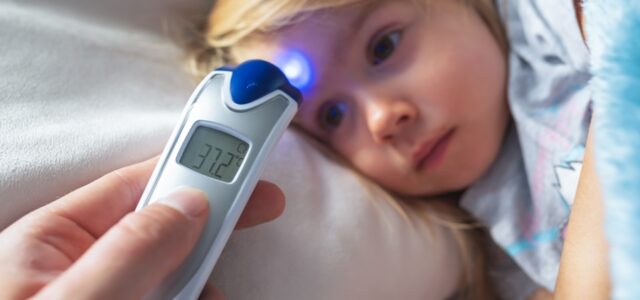
Three children with Lyme disease and Powassan virus
Frost and colleagues from the Marshfield Clinic in northern Wisconsin evaluated serologic evidence of Powassan virus infection in 95 patients who tested positive for Borrelia burgdorferi, the bacterium responsible for Lyme disease. The patients visited the clinic between July and August 2015. [4]
Clinical data were available for 51 of the 95 patients (53.7%) suspected of having a tick-borne illness. Among these patients were three children who had IgM evidence of Powassan virus infection along with IgM and IgG evidence of B. burgdorferi.
Importantly, none of the children — all female — developed neuroinvasive disease such as encephalitis. [4]
- Age 14: Three-day history of urticarial rash. Treated with doxycycline for 14 days.
- Age 4: One-week history of fever (103°F), listlessness, headache, fatigue, and a maculopapular rash. Treated with amoxicillin for 21 days.
- Age 3: One-week history of intermittent fever, fussiness, and erythema migrans rash. After developing a urticarial rash on cefuroxime, treatment was changed to amoxicillin for 21 days.
“In POWV-endemic regions, up to 7% of ticks carry the virus, and seroprevalence among small mammalian hosts can exceed 90%,” the authors note. Meanwhile, the estimated seroprevalence of Powassan virus infection in some regions of North America ranges from 0.5% to 3.3%. [4]
Not all infections cause encephalitis
The authors’ conclusion is encouraging:
“The spectrum of disease is broader than previously realized, with most patients having minimally symptomatic infection.”
These findings suggest that Powassan virus encephalitis may not occur in every case, and some patients recover without serious neurologic damage.
UPDATED: June 15, 2021
Frequently Asked Questions
Does Powassan virus always cause encephalitis?
No. Research suggests the spectrum of illness is broader than previously recognized. Some infections are mild or minimally symptomatic without neuroinvasive disease.
How fast can Powassan virus be transmitted?
Powassan virus can be transmitted in as little as 15 minutes after the bite of an infected deer tick.
Related Articles
References
- Centers for Disease Control and Prevention (CDC). https://www.cdc.gov/powassan/index.html
- CNN. https://www.cnn.com/2017/05/03/health/powassan-tick-virus/index.html
- Outbreak News Today. Powassan virus complications the cause of death of former Sen. Kay Hagan.
- Frost HM, Schotthoefer AM, Thomm AM, et al. Serologic Evidence of Powassan Virus Infection in Patients with Suspected Lyme Disease. Emerg Infect Dis. 2017;23(8):1384-1388.
Dr. Daniel Cameron, MD, MPH
Lyme disease clinician with over 30 years of experience and past president of ILADS.
Symptoms • Testing • Coinfections • Recovery • Pediatric • Prevention

My son was in a coma at Brigham & Womens in the fall of 2014. It was Powassan & LD. He had Lyme pneumonia at age 5. My son lived! He later went to Vanderbilt university to donate his plasma for possible future vaccine against Powassan. My son is 14th generation Cape Cod. I nearly died 1996 from my involvement in LD vaccine study! Its an epidemic here! Sad.. & slow