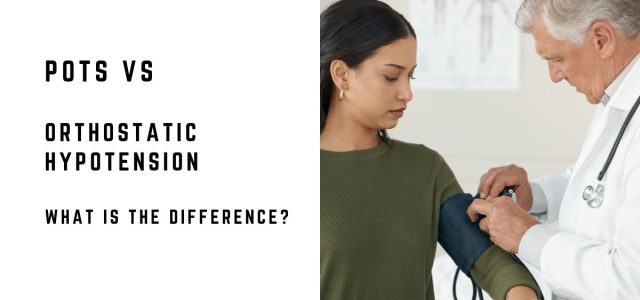
POTS vs Orthostatic Hypotension: What Is the Difference?
Both conditions can make you dizzy or weak after standing
POTS primarily raises heart rate; orthostatic hypotension lowers blood pressure
Measuring both helps determine which pattern you have
If standing makes you dizzy, weak, foggy, or close to fainting, you may wonder whether you have POTS or orthostatic hypotension—and how to tell the difference. The symptoms overlap, but the conditions are not the same.
The central difference is what happens to the circulation after standing. Postural orthostatic tachycardia syndrome (POTS) produces an excessive, sustained increase in heart rate without the sustained blood-pressure decrease required for classical orthostatic hypotension. Orthostatic hypotension produces a significant, sustained decrease in blood pressure, although the heart rate may also change.
This distinction matters because the possible causes, additional testing, safety concerns, and treatment choices may differ.
How Can I Tell Whether I Have POTS or Orthostatic Hypotension?
| Feature | POTS | Orthostatic hypotension |
|---|---|---|
| Primary measured change | Excessive increase in heart rate | Significant decrease in blood pressure |
| Adult threshold | Heart rate increases by at least 30 beats per minute | Systolic pressure decreases by at least 20 mmHg or diastolic pressure by at least 10 mmHg |
| Timing | Within 10 minutes of standing | Within 3 minutes for classical orthostatic hypotension |
| Blood-pressure requirement | No sustained decrease meeting classical orthostatic hypotension criteria | Sustained qualifying decrease is present |
| Clinical requirement | Chronic symptoms that worsen upright, generally for at least 3 months | May be symptomatic or asymptomatic; the measured blood-pressure decrease defines the finding |
What Happens to My Heart Rate With POTS?
POTS is a form of autonomic dysfunction characterized by chronic orthostatic symptoms and an excessive heart-rate increase after standing.
In adults, the heart rate must increase by at least 30 beats per minute within 10 minutes of standing. For adolescents ages 12 through 19, the threshold is at least 40 beats per minute. The increase should be sustained, and there must not be a sustained blood-pressure decrease meeting the definition of orthostatic hypotension.1
The heart-rate measurement alone is not enough. Symptoms should worsen while upright and improve after sitting or lying down, and they generally must have been present for at least three months. Acute dehydration, blood loss, anemia, fever, hyperthyroidism, medication effects, prolonged bed rest, and other explanations for sinus tachycardia should be considered before diagnosing POTS.1
Common symptoms include palpitations, lightheadedness, tremulousness, fatigue, brain fog, blurred vision, exercise intolerance, nausea, and near-fainting. Some patients faint, but fainting is not required for the diagnosis.
What Happens to My Blood Pressure With Orthostatic Hypotension?
Classical orthostatic hypotension is defined as a sustained decrease in systolic blood pressure of at least 20 mmHg or diastolic blood pressure of at least 10 mmHg within three minutes of standing or upright tilt.2–3
Symptoms may include lightheadedness, weakness, blurred or dimmed vision, cognitive slowing, neck and shoulder discomfort, shortness of breath, near-fainting, or fainting. Some people meet the blood-pressure criteria without recognizing symptoms, particularly when the condition is chronic.
Orthostatic hypotension may result from dehydration, blood loss, medication effects, cardiovascular disease, or disorders that impair autonomic reflexes. The heart rate may increase as the body attempts to compensate for falling blood pressure. Therefore, a rapid pulse does not by itself establish POTS.
Can I Have POTS and Orthostatic Hypotension at the Same Time?
A sustained blood-pressure decrease meeting the criteria for classical orthostatic hypotension excludes a simultaneous POTS diagnosis during that assessment. However, the relationship is more nuanced than saying a patient can never experience both patterns.
A brief blood-pressure decrease immediately after standing—called initial orthostatic hypotension—does not necessarily exclude POTS if the pressure recovers quickly. Delayed orthostatic hypotension may appear after the first three minutes. Orthostatic findings can also vary with hydration, meals, heat, illness, medications, and time of day.1,3
A patient may therefore demonstrate one pattern during one evaluation and a different pattern later. Clinicians should interpret the measurements together with the timing, symptom history, and possible contributing conditions.
Why Can’t My Symptoms Alone Tell Me Which One I Have?
Both conditions can reduce effective blood flow to the brain while a person is upright. That overlap can produce similar complaints, including dizziness, fatigue, impaired concentration, weakness, and exercise intolerance.
Palpitations and a prominent racing heartbeat may point toward POTS, while fainting or marked visual dimming may raise concern for orthostatic hypotension. These patterns are not reliable enough to make the distinction without measurements.
Some patients have substantial symptoms that worsen when standing but meet the formal criteria for neither condition. They may still have orthostatic intolerance or another form of autonomic dysfunction that warrants evaluation.
What Tests Help Distinguish POTS From Orthostatic Hypotension?
Evaluation usually begins by measuring both heart rate and blood pressure after the patient has rested lying down and again at timed intervals after standing. Measurements through 10 minutes help assess POTS, while readings during the first three minutes are particularly important for classical orthostatic hypotension.
A tilt-table test may be useful when bedside measurements are inconclusive, symptoms are difficult to reproduce safely, or more detailed monitoring is needed. Continuous beat-to-beat blood-pressure monitoring may identify a brief initial decrease that an ordinary blood-pressure cuff misses.
Testing should also look for conditions that can imitate or contribute to the abnormal response. Depending on the presentation, this may include reviewing medications and fluid intake, obtaining an electrocardiogram, and evaluating for anemia, endocrine disease, cardiac rhythm disorders, neurologic disease, or other causes.
Does Lyme Disease Change the Distinction?
No. The same heart-rate, blood-pressure, symptom, and timing criteria should be applied whether or not a patient has Lyme disease.
POTS and other forms of dysautonomia have been reported during or after Lyme disease, but the published evidence remains limited and does not prove that Lyme disease explains every case.4–5 Patients with Lyme disease may also have orthostatic symptoms without meeting the formal criteria for POTS.
Assigning every episode of dizziness or rapid heart rate to POTS can overlook dehydration, medication effects, anemia, arrhythmia, or orthostatic hypotension. Measuring both heart rate and blood pressure provides a more useful starting point than relying on symptoms or pulse alone.
Frequently Asked Questions
How can I tell whether I have POTS or orthostatic hypotension?
POTS is defined by an excessive, sustained increase in heart rate after standing without the sustained blood-pressure decrease required for classical orthostatic hypotension. Orthostatic hypotension is defined by a significant, sustained decrease in blood pressure after standing.
Can my heart rate rise when my blood pressure falls?
Yes. The heart rate may increase as the body attempts to compensate for falling blood pressure. A fast heart rate alone does not establish POTS; heart rate and blood pressure must be interpreted together.
If my blood pressure drops briefly, can I still have POTS?
Not necessarily. A brief initial decrease immediately after standing that resolves quickly does not automatically exclude POTS. A sustained decrease meeting classical orthostatic hypotension criteria does exclude a simultaneous POTS diagnosis during that assessment.
Which is more serious: POTS or orthostatic hypotension?
Neither condition is automatically worse. Severity depends on the frequency of symptoms, fainting and fall risk, functional impairment, underlying cause, associated illnesses, and response to treatment.
Could Lyme disease be related to my POTS or low blood pressure?
Lyme disease has been associated with POTS and broader autonomic dysfunction in reports and small studies, but evidence remains limited. The presence of Lyme disease does not replace the need to measure heart rate and blood pressure or evaluate other possible causes.
Clinical Takeaway
POTS and orthostatic hypotension can produce remarkably similar symptoms, but they are identified by different circulatory responses. POTS primarily involves an excessive heart-rate increase during upright posture, while orthostatic hypotension involves a sustained blood-pressure decrease.
Symptoms alone cannot reliably separate the two. Measuring heart rate and blood pressure from a resting supine position through timed standing intervals helps identify the dominant pattern and guides the search for contributing conditions.
The most useful first question is not simply whether your pulse rises or you feel dizzy, but what happens to both your heart rate and blood pressure after you stand.
Related Articles
POTS Treatment in Lyme Disease: What Helps?
POTS in Children With Lyme Disease
How Lyme Disease Disrupts Autonomic Regulation
This article is for informational purposes only and is not a substitute for individualized medical advice, diagnosis, or treatment.
References
- Raj, S. R., Fedorowski, A., & Sheldon, R. S. Diagnosis and management of postural orthostatic tachycardia syndrome. CMAJ. 2022;194(10):E378–E385.
- Freeman, R., Wieling, W., Axelrod, F. B., et al. Consensus statement on the definition of orthostatic hypotension, neurally mediated syncope and the postural tachycardia syndrome. Clinical Autonomic Research. 2011;21(2):69–72.
- Wieling, W., Kaufmann, H., Claydon, V. E., et al. Diagnosis and treatment of orthostatic hypotension. The Lancet Neurology. 2022;21(8):735–746.
- Kanjwal, K., Karabin, B., Kanjwal, Y., & Grubb, B. P. Postural orthostatic tachycardia syndrome following Lyme disease. Cardiology Journal. 2011;18(1):63–66.
- Noyes, A. M., Kluger, J., & Grubb, B. P. A tale of two syndromes: Lyme disease preceding postural orthostatic tachycardia syndrome. Annals of Noninvasive Electrocardiology. 2015;20(1):82–86.
Dr. Daniel Cameron, MD, MPH
Lyme disease clinician with over 30 years of experience and past president of ILADS.
Symptoms • Testing • Coinfections • Recovery • Pediatric • Prevention