Why Do Symptoms Worsen After Physical or Mental Activity?
A delayed “crash” may represent post-exertional malaise
Physical, cognitive, emotional, and upright activity can all be triggers
The timing and duration of symptoms help guide evaluation
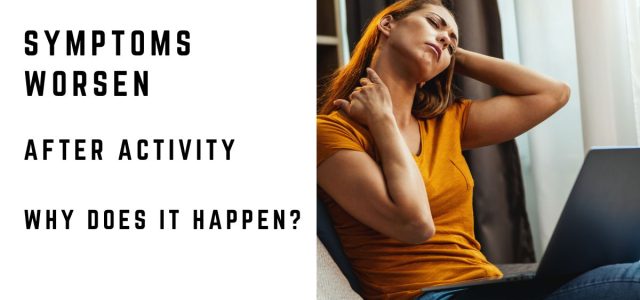
Symptoms that worsen after physical or mental activity may reflect post-exertional malaise (PEM), also called post-exertional symptom exacerbation (PESE). This is not simply feeling tired after doing too much. It is a disproportionate worsening of a person’s existing symptoms—or the appearance of additional symptoms—after activity that may once have been tolerated.
The decline may not occur during the activity. Some people feel reasonably well while walking, preparing a meal, reading, working at a computer, or attending an appointment, only to develop a “crash” later that day or one to two days afterward. Fatigue may intensify, but so can brain fog, pain, headache, dizziness, sleep disturbance, sensory sensitivity, flu-like symptoms, palpitations, or other symptoms.
Post-exertional worsening is strongly associated with myalgic encephalomyelitis/chronic fatigue syndrome (ME/CFS) and is also reported by some people with Long COVID and other post-infectious illnesses. However, becoming tired, breathless, dizzy, weak, or unwell with activity can also result from anemia, heart or lung disease, autonomic dysfunction, medication effects, sleep disorders, endocrine problems, deconditioning, or an illness that has not yet been identified. The pattern should be characterized before every activity-related symptom is labeled PEM.
What Is Post-Exertional Malaise?
Post-exertional malaise is a worsening of symptoms after physical, cognitive, emotional, or other exertion. The activity may be minor relative to the response. According to the Centers for Disease Control and Prevention (CDC), symptoms typically worsen 12 to 48 hours after activity and may last for days or weeks.1 Some people notice symptoms sooner, so the pattern is not defined by one exact delay.
The term “malaise” can be misleading because the reaction may involve far more than a vague sense of illness. A flare can include:
- Profound fatigue or loss of stamina
- Slowed thinking, poor concentration, or difficulty finding words
- Headache, muscle pain, joint pain, or neuropathic pain
- Dizziness, palpitations, weakness, or near-fainting
- Unrefreshing or disrupted sleep
- Sore throat, tender lymph nodes, chills, or a flu-like feeling
- Increased sensitivity to light, sound, touch, or temperature
- A temporary reduction in the ability to work, study, socialize, or complete basic tasks
A single exhausting day does not establish PEM. The more characteristic pattern is reproducible: activity exceeds an individual threshold, symptoms worsen disproportionately, and recovery takes longer than would ordinarily be expected.
Can Mental Activity Cause a Physical Crash?
Yes. Concentrating, reading, writing, solving problems, participating in a long conversation, attending a meeting, driving, or spending extended time on a screen may provoke symptoms in susceptible people. The resulting flare may include physical symptoms as well as cognitive ones.
Mental work still requires sustained attention, sensory processing, autonomic regulation, and energy. It may also occur while sitting or standing upright, adding an orthostatic demand. This helps explain why an activity that looks physically undemanding—such as completing paperwork or attending a telehealth visit—may still be followed by a marked decline.
Emotional strain and sensory overload may contribute as well. This does not mean that the illness is psychological. It means that physical, cognitive, emotional, sensory, and upright activities can draw from the same limited capacity and may accumulate over the course of a day.
How Is PEM Different From Ordinary Fatigue?
Ordinary exertional fatigue usually occurs in proportion to the activity, improves with rest, and does not produce a prolonged multisystem flare. Muscle soreness after unfamiliar exercise also tends to correspond to the muscles used and does not ordinarily cause substantial brain fog, flu-like symptoms, orthostatic intolerance, or a broad relapse.
Features that make PEM more likely include:
- A small or previously manageable activity produces a large response
- The worst symptoms are delayed rather than limited to the activity itself
- Several symptoms worsen together
- Sleep does not restore the person to baseline
- Recovery requires days rather than minutes or hours
- Repeated attempts to “push through” lead to a cycle of temporary activity and recurrent crashes
By contrast, symptoms that occur primarily during exertion and improve soon after stopping may suggest exercise intolerance from cardiopulmonary disease, anemia, deconditioning, medication effects, or another cause. The two patterns can overlap, and some people have both immediate exercise intolerance and delayed post-exertional worsening.
What Conditions Are Associated With Post-Exertional Worsening?
ME/CFS
PEM is a required feature of the 2015 Institute of Medicine diagnostic criteria for ME/CFS. The criteria also require a substantial reduction in pre-illness activity lasting more than six months, profound fatigue not substantially relieved by rest, and unrefreshing sleep. Cognitive impairment or orthostatic intolerance must also be present, and symptoms must occur with sufficient frequency and severity.2
PEM alone does not establish ME/CFS. A person may have a post-exertional pattern before six months have passed, may have another post-infectious illness, or may have a different condition that needs evaluation.
Long COVID and other post-infectious illnesses
Post-exertional symptom exacerbation is reported by some people with Long COVID. The World Health Organization recommends screening for cardiac impairment and exertional oxygen desaturation before exercise training and using energy-conservation approaches when PESE is present.3
A similar pattern may be described after other infections. The preceding infection is clinically relevant, but it should not end the evaluation. New anemia, myocarditis, thyroid disease, sleep disruption, autonomic dysfunction, medication effects, and other treatable problems can coexist with a post-infectious syndrome.
Lyme disease and persistent symptoms
Some patients being evaluated or treated for Lyme disease report delayed flares after physical or cognitive activity. This pattern may affect decisions about daily activity and recovery, but it is not specific to Lyme disease and does not by itself show whether an infection is active, resolved, or responsible for every symptom. The infection history, treatment history, examination, and alternative explanations must be considered together. A separate article discusses post-exertional malaise in Lyme disease and why pacing matters.
Autonomic dysfunction and orthostatic intolerance
Standing, showering, walking, heat exposure, and even sitting upright for a prolonged period can increase circulatory demands. People with orthostatic intolerance may develop dizziness, palpitations, weakness, headache, cognitive slowing, or nausea during upright activity and may feel depleted afterward. POTS is one pattern, but autonomic symptoms can occur without meeting POTS criteria.
Orthostatic intolerance can coexist with PEM. Asking whether symptoms are triggered by being upright, by muscular effort, by cognitive work, or by all three can help separate overlapping mechanisms.
Why Does Post-Exertional Worsening Happen?
No single mechanism has been proven to explain every case. Research in ME/CFS and post-infectious illness has identified possible abnormalities involving energy metabolism, immune signaling, autonomic regulation, blood-flow control, oxygen extraction, and recovery after exertion.4,5 These findings support the biological nature of the illness, but they do not yet provide a routine diagnostic biomarker or justify telling an individual patient that one specific cellular defect has been confirmed.
The current Google AI Overview describes PEM as “cellular energy failure.” That wording is more certain than the clinical evidence allows. Altered energy production and utilization are active areas of research, but PEM is still diagnosed by its characteristic clinical pattern rather than by an ATP test, inflammatory marker, scan, or commercial metabolic panel.
What Else Can Make Symptoms Worse With Activity?
Not every activity-related decline is PEM. A focused evaluation may consider:
- Heart disease: coronary disease, arrhythmia, heart failure, valve disease, or myocarditis may cause exertional chest discomfort, breathlessness, palpitations, faintness, or reduced stamina.
- Lung disease: asthma, chronic lung disease, pulmonary vascular disease, or impaired oxygenation may limit exertion.
- Anemia or nutritional deficiency: reduced oxygen-carrying capacity or deficiencies such as iron or vitamin B12 may contribute to fatigue, weakness, breathlessness, or neurologic symptoms.
- Endocrine or metabolic disease: thyroid disease, adrenal disorders, diabetes, electrolyte abnormalities, kidney disease, or liver disease may affect energy and exercise tolerance.
- Sleep disorders: sleep apnea, insomnia, restless legs syndrome, and circadian disruption may impair recovery.
- Medication or substance effects: sedatives, antihistamines, blood-pressure drugs, beta blockers, alcohol, and other agents may worsen fatigue, dizziness, or exercise tolerance.
- Neuromuscular disease: true weakness, muscle injury, neuropathy, or disorders of neuromuscular transmission require a different evaluation.
- Deconditioning: reduced conditioning after illness or inactivity can cause early breathlessness, muscle fatigue, and a high heart rate. It usually produces a more immediate and proportional response than classic PEM, although deconditioning and PEM may coexist.
- Depression or anxiety: these can reduce energy, sleep quality, concentration, and activity tolerance, but should not be used to dismiss a reproducible delayed multisystem crash.
How Should the Pattern Be Evaluated?
There is no single blood test for PEM or ME/CFS. The CDC recommends a detailed history, physical examination, and targeted testing to identify other conditions that could explain or contribute to the symptoms.6 The evaluation should be guided by the presentation rather than by an indiscriminate panel of tests.
Useful questions include:
- Which physical, cognitive, emotional, sensory, or upright activities trigger symptoms?
- Do symptoms begin during activity, immediately afterward, or the next day?
- Which symptoms worsen, and how long does recovery take?
- How much activity could be tolerated before the illness began?
- Are chest discomfort, breathlessness, palpitations, oxygen desaturation, or fainting present?
- Do symptoms improve when lying down?
- Was there a preceding infection, medication change, operation, pregnancy, or period of inactivity?
- Are there fever, weight loss, bleeding, swollen joints, progressive weakness, or focal neurologic changes?
An activity-and-symptom diary may reveal the delay between a trigger and the later flare. Recording activity, upright time, cognitive load, sleep, heart rate when appropriate, symptom onset, and recovery for one to two weeks is often more informative than recording fatigue alone.
Depending on the history and examination, testing may include a blood count, metabolic panel, thyroid testing, inflammatory markers, iron studies, vitamin levels, urinalysis, ECG, orthostatic vital signs, sleep evaluation, pulmonary testing, cardiac monitoring, imaging, or other targeted studies. Not everyone needs every test.
Should Someone Exercise Through the Symptoms?
Not until the pattern and important contraindications have been considered. Exercise can be beneficial for many causes of fatigue and deconditioning, but a fixed program that increases activity regardless of symptoms can worsen a person who has PEM. NICE advises against graded exercise therapy based on fixed incremental increases for ME/CFS.7
When PEM or PESE is present, activity management—often called pacing—aims to balance activity and rest within an individual’s current limits. The goal is to reduce repeated crashes, not to prescribe permanent inactivity. Physical, cognitive, emotional, and upright demands all count. Activities may need to be divided into smaller portions, alternated with rest, or scheduled with recovery time.
Pacing is individualized and can be difficult when limits change from day to day. Heart-rate data may help some patients but should not be treated as a universal diagnostic cutoff. A wearable device can also encourage excessive monitoring or provide misleading reassurance. Symptoms and function remain central.
When PEM is absent and serious cardiac, pulmonary, or other limitations have been excluded, a gradual, symptom-guided rehabilitation plan may be appropriate. The distinction matters: someone with uncomplicated deconditioning may improve by progressively increasing exercise, while someone with PEM may deteriorate if the same plan ignores delayed consequences.
When Does Worsening After Activity Require Urgent Care?
Call 911 or seek emergency evaluation for:
- New chest pressure, squeezing, or severe chest pain
- Severe or rapidly worsening shortness of breath
- Fainting during exertion
- A new rapid or irregular heartbeat with chest pain, breathlessness, or faintness
- New one-sided weakness, facial droop, trouble speaking, severe imbalance, or confusion
- Blue lips, marked oxygen desaturation, or inability to remain awake
Prompt medical assessment is also appropriate when activity tolerance is progressively declining, symptoms are new after a recent infection, or fatigue is accompanied by fever, unexplained weight loss, bleeding, leg swelling, persistent vomiting, true muscle weakness, or another significant change.
Clinical Takeaway
Symptoms that worsen after physical or mental activity may represent post-exertional malaise when the response is disproportionate, often delayed, multisystem, and prolonged. Mental work, emotional strain, sensory exposure, and upright activity can be triggers as well as exercise.
However, the phrase “symptoms worsen with activity” is not a diagnosis. Immediate exertional symptoms, delayed PEM, autonomic intolerance, deconditioning, and heart or lung disease can overlap but call for different management. Defining the timing, triggers, symptoms, and recovery period is the first step toward a focused evaluation and a safer activity plan.
Frequently Asked Questions
What does it mean when symptoms worsen the day after activity?
A delayed decline the next day can be consistent with post-exertional malaise, particularly when minor activity produces a disproportionate and prolonged worsening of several symptoms. It is not specific to one disease, so the broader clinical picture still requires evaluation.
Can reading or concentrating trigger post-exertional malaise?
Yes. Cognitive exertion such as reading, studying, driving, attending meetings, or prolonged screen use can trigger a flare in susceptible people. Physical symptoms may worsen along with concentration and memory.
Is post-exertional malaise the same as being out of shape?
No. Deconditioning usually causes symptoms during or shortly after activity in proportion to the exertion and often improves with gradual training. PEM is more likely to be delayed, disproportionate, multisystem, and prolonged. The two can coexist.
Does PEM mean someone has ME/CFS?
Not by itself. PEM is a central feature of ME/CFS, but the diagnosis requires additional symptoms, substantial functional impairment, duration criteria, and evaluation for other explanations. PEM may also occur with Long COVID and other post-infectious illnesses.
Is it safe to push through post-exertional symptoms?
Repeatedly pushing beyond current limits can provoke further flares when PEM is present. A symptom-guided pacing plan is generally safer while the cause is evaluated. Exercise recommendations should be individualized after important cardiac, pulmonary, neurologic, and other limitations are considered.
References
1. Centers for Disease Control and Prevention. (2024, May 10). Strategies to prevent worsening of symptoms.
2. Centers for Disease Control and Prevention. (2024, May 10). IOM 2015 diagnostic criteria.
3. World Health Organization. (2025). Post COVID-19 condition.
4. Wormgoor, M. E. A., & Rodenburg, S. C. (2023). Focus on post-exertional malaise when approaching ME/CFS in specialist healthcare: A review. Frontiers in Neurology, 14, 1260330. https://pmc.ncbi.nlm.nih.gov/articles/PMC10722442/
5. Renz-Polster, H., Tremblay, M. E., Bienzle, D., & Fischer, J. E. (2022). The pathobiology of myalgic encephalomyelitis/chronic fatigue syndrome: The case for neuroglial failure. Frontiers in Cellular Neuroscience, 16, 888232. https://pmc.ncbi.nlm.nih.gov/articles/PMC9124899/
6. Centers for Disease Control and Prevention. (2024, May 15). Evaluation of ME/CFS.
7. National Institute for Health and Care Excellence. (2021, October 29). Myalgic encephalomyelitis (or encephalopathy)/chronic fatigue syndrome: Diagnosis and management (NG206).
8. American Heart Association. (2024, September 24). Myocarditis.
This article is for informational purposes only and is not a substitute for individualized medical advice, diagnosis, or treatment.
Dr. Daniel Cameron, MD, MPH
Lyme disease clinician with over 30 years of experience and past president of ILADS.
Symptoms • Testing • Coinfections • Recovery • Pediatric • Prevention