What Does PANS Feel Like in Adults?
A sudden change in thoughts, emotions, or behavior
OCD or severely restricted eating are defining features
Adult presentations require careful evaluation
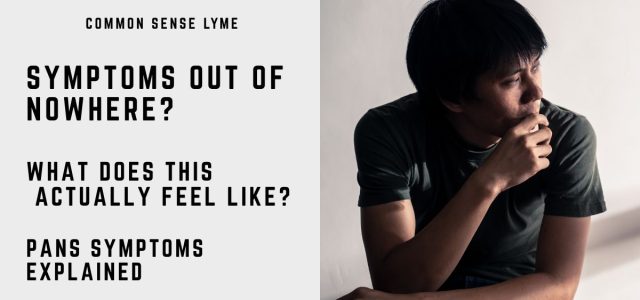
What does PANS feel like? Many patients describe a sudden and confusing shift—new symptoms appear quickly, often without a clear explanation.
PANS symptoms in adults may feel like a rapid change in mood, thinking, or behavior. Symptoms can begin abruptly and may fluctuate over time, making the experience difficult to understand.
Although PANS (Pediatric Acute-onset Neuropsychiatric Syndrome) was originally described in children, similar sudden-onset neuropsychiatric symptoms may occur in adults. Some adults may have symptoms that began during childhood, while rare adult-onset cases resembling PANS have also been reported.
Because the term includes “pediatric,” adult cases may go unrecognized or be attributed to other psychiatric or neurologic conditions. However, the formal diagnostic framework was developed for children, and evidence regarding adult-onset PANS remains limited.
In practice, this means patients may experience a sudden change without a clear diagnosis—especially when symptoms do not follow a typical pattern.
Quick Answer: PANS symptoms often feel like a sudden onset of OCD, anxiety, irritability, or cognitive difficulty, sometimes following an illness or stressor. These symptoms may come and go, rather than follow a steady pattern.
For how this condition is defined and recognized, see PANS in adults.
How Patients Describe PANS Symptoms
Patients often describe PANS as a noticeable change from their usual baseline.
Common descriptions include:
- “I was fine—and then something changed.”
- “It felt like my thoughts weren’t working the same way.”
- “I suddenly became anxious or overwhelmed without a clear reason.”
- “My focus and memory got worse almost overnight.”
This sudden shift is one of the most important features of PANS.
Common PANS Symptoms in Adults
Symptoms can vary, but the defining presentation involves the abrupt onset of obsessive-compulsive symptoms or severely restricted food intake, accompanied by other acute neuropsychiatric changes.
- Sudden onset or worsening of obsessive-compulsive symptoms
- Severely restricted eating or a sudden change in food intake
- Anxiety or panic symptoms
- Irritability or mood instability
- Difficulty concentrating or “brain fog”
- Sleep disturbance
- Sensory sensitivity
These symptoms may overlap with psychiatric, neurologic, autoimmune, infectious, metabolic, or medication-related conditions. A PANS-like presentation should therefore prompt a careful evaluation rather than an assumption that one specific condition is responsible.
Learn more about patterns involving Lyme disease and PANS.
Why Symptoms Can Feel Sudden and Unpredictable
PANS symptoms are often described as sudden because they may appear after an infection, immune response, or other physiologic stressor rather than developing gradually.
These associations do not prove that a particular infection or immune response caused an individual patient’s symptoms. The possible trigger and other explanations must be evaluated carefully.
This can make the experience feel abrupt and difficult to explain.
For more on possible triggers, see what triggers PANS symptoms.
Do PANS Symptoms Stay the Same?
Not always.
Many patients report that symptoms fluctuate—improving at times and worsening at others.
- Symptoms may worsen during an illness
- Fatigue may increase after exertion
- Cognitive symptoms may vary from day to day
This pattern of sudden change can also occur in other conditions involving abrupt psychiatric symptoms. Learn more about when psychiatric symptoms start suddenly.
Does PANS Feel Different From Anxiety or Depression?
Some patients report that PANS feels different from their previous experiences with anxiety or depression.
Features that may distinguish the presentation include:
- Abrupt onset rather than gradual development
- Sudden OCD symptoms or severely restricted eating
- Multiple neuropsychiatric symptoms appearing together
- A fluctuating rather than steadily progressive course
- A possible temporal association with an illness or immune trigger
These features are not sufficient to establish a diagnosis by themselves. Sudden psychiatric or cognitive changes can have many causes and warrant a comprehensive medical and psychiatric evaluation.
Frequently Asked Questions
Does PANS always start suddenly?
Abrupt onset is a defining feature of PANS, particularly the sudden appearance of OCD symptoms or severely restricted food intake. However, some patients may not recognize the exact moment the symptoms began.
Can PANS symptoms come and go?
Yes. Many patients describe fluctuating symptoms rather than a steady progression. Symptoms may improve and then worsen during another illness or period of physiologic stress.
Is PANS the same as anxiety?
No. Anxiety can occur as part of PANS, but anxiety alone does not establish the diagnosis. The pattern typically includes abrupt OCD symptoms or restricted eating together with other sudden neuropsychiatric changes.
Can adults develop PANS?
PANS was defined as a pediatric syndrome. Some adults may have symptoms that began in childhood, and rare adult-onset cases resembling PANS have been reported. However, adult presentations remain insufficiently studied and require careful evaluation for other possible causes.
Clinical Takeaway
PANS can feel like a sudden and unexpected change in how the brain functions. Symptoms may affect thoughts, eating, mood, sleep, sensory processing, and behavior, and they may fluctuate over time.
Because PANS was defined in children and sudden neuropsychiatric symptoms have many possible causes, adults with this presentation need a comprehensive evaluation.
Recognizing the abrupt pattern can help guide further evaluation when symptoms do not fit a typical psychiatric presentation.
Related Articles
Pediatric Lyme disease
Autonomic dysfunction and Lyme disease
References
- National Institute of Mental Health. PANS and PANDAS: Questions and Answers. National Institute of Mental Health.
- Swedo SE, Leckman JF, Rose NR. From research subgroup to clinical syndrome: Modifying the PANDAS criteria to describe PANS. Pediatr Ther. 2012;2:113.
- Gagliano A, Carta A, Tanca MG, Sotgiu S. Pediatric acute-onset neuropsychiatric syndrome: Current perspectives. Neuropsychiatr Dis Treat. 2023;19:1221–1250.
- Mahadevan LSK, et al. Clinicopathologic characteristics of PANDAS in a young adult. 2023.
Dr. Daniel Cameron, MD, MPH
Lyme disease clinician with over 30 years of experience and past president of ILADS.
Symptoms • Testing • Coinfections • Recovery • Pediatric • Prevention