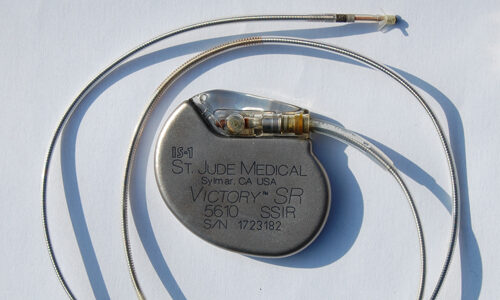
Lyme Carditis Pacemaker: Can You Avoid Permanent Placement?
Lyme carditis can cause dangerous heart block—but early treatment may prevent the need for a permanent pacemaker.
Lyme carditis pacemaker decisions often depend on timing. When Lyme carditis is recognized early, temporary pacing and antibiotics may allow full recovery without permanent device implantation.
Start here: Learn when heart symptoms may signal Lyme in our Lyme carditis guide.
Quick Answer: Can Lyme Carditis Be Treated Without a Pacemaker?
Yes. Many cases of Lyme carditis with high-degree AV block can resolve with antibiotics and temporary pacing, avoiding permanent pacemaker implantation.
The key is recognizing Lyme disease early and treating before irreversible conduction damage occurs.
Why Avoiding a Pacemaker Matters
Permanent pacemaker implantation carries long-term risks, especially for younger patients.
These include infection, lead complications, device replacement procedures, and lifelong dependency on cardiac hardware.
This is particularly relevant because Lyme carditis often affects younger individuals, who may otherwise face decades of device-related care.
This is where identifying Lyme carditis early can significantly change outcomes.
The SILC Score: Identifying Lyme Carditis Risk
The Suspicious Index in Lyme Carditis (SILC) score helps estimate whether high-degree AV block is due to Lyme disease.
The score includes:
- Constitutional symptoms (2 points)
- Tick bite history (3 points)
- Erythema migrans rash (4 points)
- Male sex (1 point)
- Age under 50 (1 point)
- Outdoor exposure in an endemic area (1 point)
A SILC score of 3 or higher should prompt evaluation for Lyme disease.
Do Not Rely Only on Lyme Testing
Lyme serology may be negative early in infection due to delayed antibody production.
This means a negative test does not rule out Lyme carditis.
This becomes especially important when symptoms evolve quickly or do not fit a typical cardiac pattern.
For more on testing limitations, see Lyme test accuracy.
Treat While Waiting for Results
When clinical suspicion is high, antibiotics should be started before test results return.
This is critical because Lyme heart block can progress rapidly, sometimes within hours or days.
Delayed treatment increases the likelihood of requiring a permanent pacemaker.
Close Monitoring Is Essential
Patients with high-degree AV block should be monitored in a hospital setting.
Even mild bradycardia can progress to complete heart block or asystole.
Continuous cardiac monitoring allows rapid response if conduction worsens.
When Temporary Pacing Is Needed
Temporary pacing may be required for symptomatic bradycardia or unstable conduction.
This provides a bridge while antibiotics begin to treat the underlying infection.
For comparison, see temporary vs permanent pacing in Lyme carditis.
When Can a Permanent Pacemaker Be Avoided?
In many cases, heart block caused by Lyme carditis is reversible.
With early diagnosis and appropriate antibiotic treatment, conduction often recovers fully.
The decision depends on whether the block is caused by active infection or permanent cardiac damage.
This is where timing—and clinical judgment—matters most.
Clinical Perspective
High-degree AV block in a younger patient should raise suspicion for Lyme carditis, especially in endemic areas.
Empiric antibiotics and temporary pacing can allow time for recovery and prevent unnecessary lifelong device implantation.
This approach requires recognizing when a cardiac problem may actually be an infectious one.
Frequently Asked Questions
Can Lyme carditis resolve without a permanent pacemaker?
Yes. Many patients recover fully with antibiotics and temporary pacing.
What SILC score should prompt Lyme testing?
A score of 3 or higher should prompt evaluation for Lyme disease.
Can a negative Lyme test rule out Lyme carditis?
No. Early tests may be falsely negative.
When is temporary pacing used?
Temporary pacing is used for symptomatic or unstable heart block while waiting for recovery.
Why is this important in younger patients?
Because Lyme carditis is often reversible, avoiding unnecessary lifelong device dependence is critical.
Clinical Takeaway
Early recognition of Lyme carditis can prevent unnecessary permanent pacemaker implantation.
The goal is not immediate device placement—it is identifying when the condition may still be reversible.
Related Reading:
Lyme Carditis: When Heart Symptoms Can’t Wait
Lyme Carditis May Require Temporary Permanent Pacemaker
Reversible Heart Block in Lyme Disease
Young Adults and Lyme Carditis
Lyme Disease Heart Block Progression
SILC Score and Lyme Carditis
References:
- Yeung C, Baranchuk A. Systematic Approach to the Diagnosis and Treatment of Lyme Carditis and High-Degree AV Block. Healthcare (Basel). 2018;6(4).
Dr. Daniel Cameron, MD, MPH
Lyme disease clinician with over 30 years of experience and past president of ILADS.
Symptoms • Testing • Coinfections • Recovery • Pediatric • Prevention



Thank you so much for looking into this!
Now, can can this also be applied to adrenal and parathyroid tumors?
All post acute Lyme Into persistent…
I appreciated the importance of of the topic. We need creative approached to Lyme disease.
I think my son has undiagnosed Lyme carditis. He has third degree complete heart block that appeared suddenly at nine months old. He had a pacemaker put in at 16 months old. He was never tested for Lyme. Is there any benefit to having him tested now? It has been ten years.
I’m sorry your son went through that—complete heart block at such a young age is a serious and frightening experience.
Lyme carditis can affect the heart’s electrical system, sometimes leading to conduction problems like heart block. While it’s most often recognized in older children and adults, questions do come up when heart block appears without a clear cause.
Even after many years, there may still be value in discussing Lyme disease with his physician—especially if the original cause of the heart block was never clearly identified. Testing at this stage can be more complex, as standard tests rely on antibody responses that may change over time, but a careful clinical review can still be helpful.
It may be worth speaking with a clinician experienced in Lyme disease to review his history and consider whether any further evaluation makes sense.