How Do Ticks Move When Seeking a Host?
How do ticks move when seeking a host? Ticks are often thought to simply wait for a host to brush past them, but research shows adult blacklegged ticks (Ixodes scapularis) may actively move toward nearby hosts once they detect them.
Understanding how ticks move helps explain how people encounter ticks outdoors and how to reduce the risk of tick bites and tick-borne infections.
As the authors point out, “less is known about the distances adult ticks are willing and able to travel in the short term and when a host is in close proximity.”
Do Ticks Jump or Fly?
Ticks do not jump or fly.
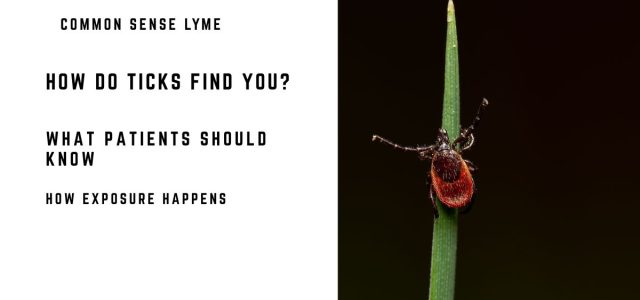
Instead, they typically reach hosts through a behavior known as questing. Questing occurs when a tick climbs vegetation and extends its front legs outward to latch onto a passing animal or person.
However, research suggests adult deer ticks may also move toward nearby hosts once they detect heat, carbon dioxide, vibration, or movement.
How Far Can Ticks Travel?
In this study, adult blacklegged ticks were able to move more than 110.5 cm (over 3 feet) toward a nearby host within 30 minutes.
This finding suggests that ticks may actively move short distances when they detect a potential host nearby rather than relying entirely on a passive sit-and-wait strategy.
Curtis and colleagues studied how adult ticks move on public trails with increasing levels of terrain complexity and a potential host nearby.
The study aimed to:
- Examine whether adult ticks actively search for hosts rather than relying only on a sit-and-wait strategy.
- Determine whether ticks can locate the position of a host under natural conditions.
- Assess the role of terrain complexity on the distance ticks travel within a short period of time.
Observation Methods
Ticks were collected, marked with a painted dot, and returned to the observational area, which included four quadrants with increasing terrain complexity.
The observer, representing a potential host, was placed in one quadrant approximately 50 cm (about 1.5 feet) from the tick.
The tick’s movement and questing behavior were observed every minute for 30 minutes.
Questing behavior was defined as the tick holding its forelegs outstretched and waving them while waiting for a host to pass.
If a tick approached within 10 cm of the observer, the host was allowed to step back.
Study Findings
Overall, ticks were observed moving during 72% of the observations and were stationary only 28% of the time.
Two-thirds of ticks moved toward the quadrant containing the observer. In fact, “31 ticks (69%) were able to successfully move in the direction of the host in natural conditions.”
Ticks spent a greater proportion of time in the quadrant that contained the host.
Adult Deer Ticks May Actively Search for Nearby Hosts
Seven ticks (15.5%) reached the observer within 30 minutes. The furthest distance traveled toward the host was 110.5 cm (more than 3 feet).
According to Curtis, “Although ticks may indeed utilize a sit-and-wait strategy when no host is detected, this study suggests that adult Ixodes scapularis ticks utilize an active-search strategy when a potential host is detected nearby.”
Why Adult Ticks Matter
The authors remind readers that:
- Adult ticks may carry higher infection rates than nymphal ticks in some regions.
- Adult ticks seek hosts primarily in the spring and fall, whereas nymphal ticks are more active during summer.
- Adult ticks may actively move toward hosts once they detect them nearby.
The authors suggest that this host-seeking behavior may increase the likelihood of ticks finding animals that have stopped to rest, sleep, or feed.
Weather May Influence Tick Movement
The study was conducted in dry conditions.
The authors noted that ticks may be less likely to actively search when it is raining or when vegetation has standing water.
“Ticks may be less likely to actively search when it is raining or vegetation has standing water as ticks avoid liquid water,” the authors write.
How Tick Movement May Increase Human Exposure
Understanding how ticks move within different terrains is important for developing strategies to reduce the risk of tick bites and tick-borne infections.
Human activity may unintentionally increase the likelihood of tick encounters.
Walking trails, landscaping, trimming vegetation, and mowing lawns may create conditions that make it easier for ticks to move toward nearby hosts.
Individuals who engage in stationary outdoor activities such as picnicking, resting, or reading outdoors should also be aware that ticks may be present and actively searching for hosts.
“Humans effectively reduce the complexity of terrain (by walking on, manicuring, trimming, landscaping, etc.), thereby promoting the horizontal movement of ticks and the likelihood of tick exposure in a short period of time,” the authors write.
Note: The authors did not include nymphal ticks in their study. Researchers have generally assumed nymphal ticks rely more heavily on a passive wait-and-quest strategy and are more susceptible to desiccation. In addition, nymphal ticks are very small and difficult to observe using this study design.
Frequently Asked Questions
Do ticks jump or fly?
No. Ticks do not jump or fly. They typically reach hosts through questing behavior.
Can ticks move toward people?
Research suggests adult blacklegged ticks may actively move short distances toward nearby hosts after detecting a potential host.
How far can ticks crawl?
In one study, adult blacklegged ticks moved more than 110 cm (over 3 feet) toward a nearby host within 30 minutes.
Related Articles
When Do Ticks Quest While Waiting for Their Next Meal?
Have You Been Bitten by a Partially Fed Tick?
What Blood Type Do Ticks Prefer?
References
- Curtis TR, Shi M, Qiao X. Patience is not always a virtue: effects of terrain complexity on the host-seeking behaviour of adult blacklegged ticks, Ixodes scapularis, in the presence of a stationary host. Med Vet Entomol. 2020.
Dr. Daniel Cameron, MD, MPH
Lyme disease clinician with over 30 years of experience and past president of ILADS.
Symptoms • Testing • Coinfections • Recovery • Pediatric • Prevention