Single-Dose Doxycycline After a Tick Bite in Children
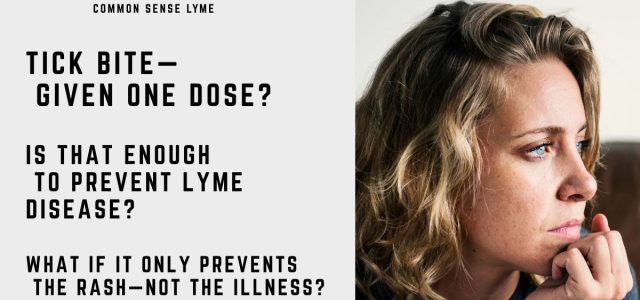
The use of a single dose of doxycycline after a tick bite has become a widely discussed strategy for Lyme disease prevention. In children, however, the evidence is more limited than many families realize.
Current recommendations for children 8 years and older are largely based on evidence from adult studies rather than pediatric clinical trials. This distinction matters because the main adult study measured prevention of an erythema migrans rash, not all possible manifestations of Lyme disease.
What Is the Recommendation?
Carriveau and colleagues reviewed Lyme disease management in children and noted that a single dose of doxycycline is recommended for certain pediatric patients 8 years or older after a qualifying tick bite.
They write: “In the pediatric patient 8 years or older, a single 4-mg/kg dose of doxycycline is recommended, up to 200 mg.”
The authors also address younger children, writing: “At this time, prophylactic treatment for children younger than 8 is not recommended.”
For a broader discussion of when single-dose prophylaxis is considered, see Single Dose Doxycycline After a Tick Bite.
What Evidence Supports Single-Dose Doxycycline?
The recommendation is largely based on a small adult trial conducted by Nadelman, Fish, Wormser, and colleagues. In that study, participants received either a single 200 mg dose of doxycycline or placebo after an Ixodes scapularis tick bite.
The placebo group developed 8 erythema migrans rashes after a tick bite, while the group that received single-dose doxycycline developed 1 erythema migrans rash.
These findings suggest that a single dose of doxycycline may reduce the risk of developing an erythema migrans rash after a high-risk tick bite. However, the study was conducted in adults, not children.
What the Adult Study Did Not Prove
The Nadelman study was designed to evaluate whether a single dose of doxycycline could prevent an erythema migrans rash. It was not designed to determine whether single-dose prophylaxis prevents other acute or later manifestations of Lyme disease.
These manifestations may include Bell’s palsy, Lyme carditis, heart block, Lyme arthritis, neurologic Lyme disease, or persistent symptoms following infection.
This distinction is important because preventing an erythema migrans rash is not the same as proving prevention of all possible Lyme disease outcomes.
For a broader discussion of the evidence, see Can One Dose of Doxycycline Prevent Lyme Disease?.
What About Pediatric Evidence?
Carriveau and colleagues specifically acknowledge the pediatric evidence gap. They write, “Recommendations for oral prophylaxis have yet to be tested on children, and have been extrapolated to include children older than 8.”
This means that current pediatric recommendations are not based on a clinical trial demonstrating that single-dose doxycycline prevents Lyme disease in children after a tick bite. Instead, they are largely extrapolated from adult data.
Direct pediatric evidence remains limited, particularly regarding whether single-dose prophylaxis prevents later complications or symptoms beyond an erythema migrans rash.
ILADS Perspective
In the 2014 evidence-based guidelines, the International Lyme and Associated Diseases Society (ILADS) advised against relying on a single dose of doxycycline for tick bite prophylaxis in adults. The guideline panel concluded that the available evidence was insufficient to support single-dose prophylaxis as a reliable strategy for preventing all clinically important outcomes of Lyme disease.
The ILADS guidelines recommend a three-week course of antibiotics with clinical follow-up when prophylactic treatment is chosen.
For an in-depth discussion of ILADS’ rationale, see ILADS Lyme Disease Treatment Guidelines.
Editor’s note: For transparency, I am one of the authors of the ILADS evidence-based guidelines.
Frequently Asked Questions
Is one dose of doxycycline recommended after a tick bite in children?
Some guidelines recommend a single 4-mg/kg dose of doxycycline, up to 200 mg, for children 8 years or older after certain high-risk tick bites. However, direct pediatric evidence remains limited.
Was single-dose doxycycline tested in children?
No. The key prophylaxis study was conducted in adults. Carriveau and colleagues note that recommendations for children have been extrapolated from adult data.
What did the adult single-dose doxycycline study show?
The study found fewer erythema migrans rashes in the doxycycline group than in the placebo group. It was not designed to evaluate prevention of Bell’s palsy, Lyme carditis, Lyme arthritis, neurologic Lyme disease, or persistent symptoms.
Does single-dose doxycycline prevent all Lyme disease complications?
The available adult study demonstrated a reduction in erythema migrans rash but did not establish whether single-dose prophylaxis prevents all acute or later manifestations of Lyme disease.
Clinical Takeaway
Single-dose doxycycline after a tick bite in children is recommended by some guidelines, but that recommendation is based largely on adult evidence. The pivotal adult trial demonstrated a reduction in erythema migrans rash but was not designed to determine whether single-dose prophylaxis prevents all manifestations of Lyme disease.
Families and clinicians should understand both the potential benefits and the limitations of the available evidence when discussing tick bite prophylaxis in children.
Related Articles
- Single Dose Doxycycline After a Tick Bite
- Can One Dose of Doxycycline Prevent Lyme Disease?
- Pros and Cons of Doxycycline for Children with Lyme Disease
- ILADS Lyme Disease Treatment Guidelines
References
- Carriveau A, Poole H, Thomas A. Lyme Disease. Nurs Clin North Am. 2019;54(2):261-275.
- Nadelman RB, Nowakowski J, Fish D, et al. Prophylaxis with single-dose doxycycline for the prevention of Lyme disease after an Ixodes scapularis tick bite. N Engl J Med. 2001;345(2):79-84.
- Cameron DJ, Johnson LB, Maloney EL. Evidence assessments and guideline recommendations in Lyme disease: the clinical management of known tick bites, erythema migrans rashes and persistent disease. Expert Rev Anti Infect Ther. 2014;12(9):1103-1135.
Dr. Daniel Cameron, MD, MPH
Lyme disease clinician with over 30 years of experience and past president of ILADS.
Symptoms • Testing • Coinfections • Recovery • Pediatric • Prevention