Lyme Carditis and Heart Block: A Case You Don’t Want to Miss
It can cause sudden heart block.
Even in young, otherwise healthy patients.
Lyme carditis heart block is a serious complication that can develop rapidly—and may be missed if symptoms are nonspecific.
Lyme carditis often presents with symptoms such as lightheadedness, fainting (syncope), shortness of breath, palpitations, or chest pain. However, up to 30% of patients may have no symptoms at all.
The most common manifestation is atrioventricular (AV) block, which can develop suddenly and progress quickly to complete heart block.
A Case of Complete Heart Block in a Young Man
In a case report by Carnazzo and colleagues, a 37-year-old man developed complete heart block as a complication of Lyme disease.
The patient presented to the emergency department after two episodes of syncope over a 5-day period. He also reported worsening dizziness and near-syncope.
In the weeks prior, he had experienced fever, chills, muscle aches, and a rash on both legs that had resolved before presentation.
Two months earlier, he had removed several ticks from his thigh and groin.
Why Lyme Carditis Is Missed
Lyme carditis can be difficult to recognize when classic Lyme symptoms are absent or no longer visible.
Patients may not recall a tick bite. A rash may have resolved. And early symptoms may be attributed to other causes.
Clinical pattern: unexplained heart block in a younger patient—especially in an endemic area—should raise suspicion for Lyme disease.
Diagnosis and Treatment
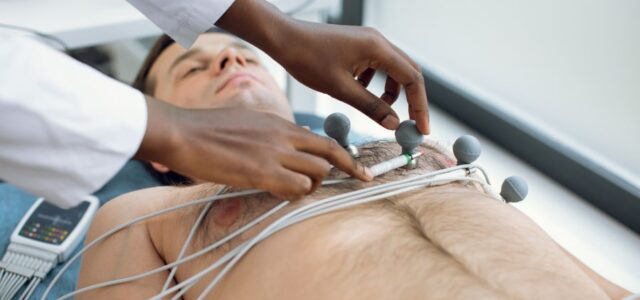
An electrocardiogram (ECG) revealed complete heart block, and a temporary pacemaker was placed.
Lyme disease was confirmed by Western blot testing, and the patient was treated with intravenous ceftriaxone.
Within 9 days, the heart block completely resolved.
[bctt tweet=”Lyme carditis can cause sudden heart block—but may reverse with timely antibiotic treatment.” username=”DrDanielCameron”]
Who Is Most at Risk?
Young adults—particularly males—appear to be at higher risk for Lyme carditis.
Clinicians should maintain a high level of suspicion in patients with unexplained high-grade AV block.
Clinical Takeaway
Lyme carditis heart block can develop quickly—but is often reversible with early diagnosis and treatment.
Recognizing this condition is critical. Timely treatment can stabilize the patient, allow recovery of normal heart rhythm, and help avoid unnecessary permanent pacemaker placement.
Key question to ask: Could Lyme disease explain unexplained heart block—especially in younger patients with possible tick exposure?
Related Articles:
Lyme carditis presents without typical Lyme disease symptoms
Successful removal of pacemakers for Lyme carditis
Lyme carditis causes complete heart block in a 26-year-old man
Reference:
- Carnazzo MC, et al. Lyme disease presenting as complete heart block. IDCases. 2023.
Dr. Daniel Cameron, MD, MPH
Lyme disease clinician with over 30 years of experience and past president of ILADS.
Symptoms • Testing • Coinfections • Recovery • Pediatric • Prevention


Does the COVID-19 vaccination increase the incidence of Carditis for those with Lyme disease since both the shot and Lyme infection are indicated as risk factors for heart injury?
I don’t know the answer, yet.
Dr. Cameron good afternoon. I have been experiencing low blood pressure for two weeks and as of yesterday when bending over my blood pressure was very high and I was rather short of breath like I was getting no air. I am also ridiculously tired from the babesia I. I sweat profusely day and night during the day. It’s when I bend over and it just pours from my temple areas in my head and my face has been bilaterally. Numb for about four months where before that it was just one spot on my left cheek bone I am wondering if this is related if you have an answer or any ideas for me I’d sure appreciate your response. Thank you have a great day.
Excellent case report on Lyme carditis, similar to cases seen in SE Massachusetts. They deserve IV ceftriaxone, just as done, even if the heart block doesn’t resolve.