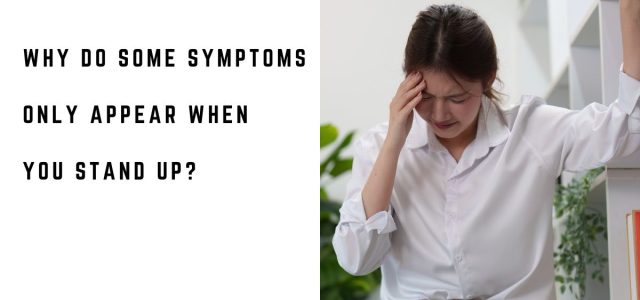
Why Do Some Symptoms Only Appear When You Stand Up?
Symptoms may appear or worsen only while upright
Heart rate, blood pressure, blood volume, and autonomic regulation may be involved
Orthostatic intolerance does not automatically mean POTS
Some people feel reasonably well while lying down or sitting but develop symptoms when standing up. They may become dizzy, weak, foggy, nauseated, shaky, exhausted, or aware of a racing heart after being upright for several minutes.
This pattern can be an important clinical clue. Symptoms when standing up may reflect difficulty adapting to the circulatory changes that occur when the body moves from a reclining position to an upright one. The broad term orthostatic intolerance describes symptoms that develop or worsen while upright and often improve after sitting or lying down.
Orthostatic intolerance is not a single diagnosis, and it does not automatically mean that someone has postural orthostatic tachycardia syndrome (POTS). Understanding what happens when we stand helps explain why several different medical problems can produce a similar pattern.
Why Does Standing Change How You Feel?
Standing seems simple, but it requires a rapid physiologic adjustment.
When you move upright, gravity shifts blood toward the legs and abdomen. This temporarily reduces the amount of blood returning to the heart. The autonomic nervous system normally responds by tightening blood vessels and making appropriate adjustments in heart rate and circulation.
Most people make these adjustments without noticing them.
But if the response is inadequate or exaggerated, remaining upright may bring out symptoms that were not noticeable while reclining. These symptoms can improve when the person sits or lies down because the circulatory demands created by gravity are reduced.
What Symptoms Can Appear When You Stand?
Many people associate orthostatic problems with dizziness or fainting. However, the symptoms can be much broader.
- Dizziness or lightheadedness
- Feeling faint or unsteady
- Blurred, dimmed, or tunnel vision
- Weakness
- Shakiness or tremulousness
- Rapid heart rate or palpitations
- Brain fog or difficulty concentrating
- Nausea
- Head pressure or headache
- Shortness of breath
- Sudden fatigue
- Exercise intolerance
The timing matters. A person may feel relatively normal while reclining, become progressively symptomatic after standing, and then begin to recover after sitting or lying down.
Why Can I Feel Fine Lying Down but Sick When I Stand Up?
Lying down reduces the effect of gravity on circulation. Blood does not have to travel against the same gravitational forces to return from the lower body to the heart.
Standing creates a physiologic challenge. The body must maintain adequate circulation despite blood shifting downward. If blood vessels do not constrict appropriately, circulating blood volume is reduced, heart rate rises excessively, blood pressure falls, or autonomic regulation is impaired, symptoms may become apparent only when the person is upright.
This is why the position in which symptoms occur can provide useful diagnostic information. The question is not simply what symptoms do you have? It may also be important to ask what happens to those symptoms when you stand?
What Is Orthostatic Intolerance?
Orthostatic intolerance is an umbrella term describing symptoms that occur or worsen while upright and improve with reclining.
It can occur for different reasons. Possible contributors include:
- Dehydration
- Reduced circulating blood volume
- Medication effects
- Anemia
- Prolonged bed rest or deconditioning
- Orthostatic hypotension
- POTS
- Other forms of autonomic dysfunction
- Heart rhythm or cardiovascular disorders
- Neurologic disorders affecting autonomic function
- Endocrine or metabolic disorders
- Illnesses associated with autonomic dysfunction
Because many conditions can produce dizziness, weakness, fatigue, palpitations, and brain fog, the presence of these symptoms alone does not identify the underlying cause.
Does Feeling Worse When Standing Mean You Have POTS?
No. POTS is one form of orthostatic intolerance, but orthostatic intolerance and POTS are not interchangeable terms.
In adults, POTS generally involves a sustained increase in heart rate of at least 30 beats per minute within 10 minutes of standing or head-up tilt, without the blood-pressure decrease required for orthostatic hypotension. In adolescents ages 12 through 19, the heart-rate threshold is generally at least 40 beats per minute.
The diagnosis also requires a characteristic pattern of chronic orthostatic symptoms and evaluation for other explanations for the increased heart rate, including dehydration, anemia, fever, hyperthyroidism, medications, and other medical conditions.
Some people have substantial symptoms while standing without meeting the diagnostic criteria for POTS. Others may have orthostatic hypotension or another explanation for their symptoms.
For more about the specific POTS pattern, see Can Lyme Disease Cause POTS? Symptoms and Diagnosis.
Can You Have Orthostatic Intolerance With Normal Blood Pressure?
Yes. This is an important distinction.
Orthostatic hypotension involves a significant decrease in blood pressure after standing. But not everyone with orthostatic symptoms develops that blood-pressure pattern.
In POTS, for example, blood pressure may remain relatively stable while heart rate rises excessively. Other patients may experience symptoms of orthostatic intolerance without meeting the formal criteria for either POTS or orthostatic hypotension.
A normal blood-pressure reading therefore does not automatically explain persistent symptoms that reliably appear during prolonged standing.
Why Can Brain Fog Appear When You Stand?
Brain fog may seem unrelated to posture, but some patients notice a striking difference in their ability to think while lying down compared with standing.
Studies of POTS have described cognitive symptoms including difficulty with attention, concentration, and executive function. Upright circulatory changes, autonomic activation, fatigue, and alterations in cerebral blood flow have all been investigated as possible contributors.
This means a person can potentially perform reasonably well cognitively while reclining yet have more difficulty concentrating, reading, working, or carrying on a conversation after remaining upright.
This positional pattern can be easy to miss during a routine medical visit, particularly when the examination is performed largely while the patient is sitting. I have discussed this relationship in more detail in POTS and Lyme Disease: Does Standing Worsen Brain Fog?.
Why Do Heat, Showers, Meals, and Exercise Sometimes Make Symptoms Worse?
Patients with orthostatic intolerance often notice that standing is not the only trigger.
Heat can dilate blood vessels. A hot shower combines heat with prolonged standing. After a meal, more blood is directed toward the gastrointestinal system. Exercise places additional demands on circulation.
These situations may make an underlying problem with circulatory or autonomic regulation more noticeable.
That is why someone may tolerate sitting in a cool room but feel considerably worse while showering, standing in a checkout line, cooking at the stove, walking through a store, or exercising.
Can Symptoms After an Infection Become Worse When Standing?
Yes. Autonomic dysfunction and orthostatic symptoms have been described following infections.
POTS can begin after an infectious illness in some patients, although the mechanisms are still being investigated and not every case of post-infectious dizziness or fatigue represents POTS.
This relationship has received increasing attention in Long COVID research. The NIH RECOVER Initiative has studied autonomic dysfunction and POTS associated with Long COVID. The RECOVER-AUTONOMIC program has evaluated potential treatments for Long COVID-related POTS, a condition that can include dizziness, fatigue, and rapid heart rate.
The broader lesson extends beyond any single infection: when symptoms change substantially with posture after an illness, autonomic and circulatory responses to standing may deserve consideration as part of the evaluation.
What About Lyme Disease and Symptoms When Standing?
Orthostatic intolerance and autonomic dysfunction have also been described in patients with Lyme disease.
A published case series described two women who developed persistent orthostatic intolerance consistent with POTS following treated Lyme disease. More recent literature has continued to examine dysautonomia among patients with persistent symptoms following Lyme disease, although the relationship remains incompletely understood.
In my practice, I have evaluated Lyme disease patients who report a very distinct positional pattern: they may feel considerably better while reclining but develop dizziness, weakness, palpitations, nausea, brain fog, or fatigue after standing.
That does not mean Lyme disease should automatically be assumed to be the cause of orthostatic symptoms. Dehydration, anemia, medication effects, cardiac disorders, endocrine problems, POTS, orthostatic hypotension, and other neurologic or autonomic conditions may need to be considered.
Likewise, diagnosing POTS does not necessarily identify why the autonomic dysfunction developed. The underlying clinical history still matters.
For a Lyme-specific discussion of this pattern, see Why Do Some Lyme Disease Patients Feel Worse When Standing?.
How Are Symptoms That Occur When Standing Evaluated?
The evaluation begins with the pattern of symptoms. A clinician may ask whether symptoms begin immediately after standing or only after several minutes, how long the person can remain upright, whether symptoms improve after lying down, and whether heat, meals, showers, or exertion make them worse.
Heart rate and blood pressure can be measured while lying down and again after standing. In selected patients, a longer standing test or tilt-table testing may help characterize the physiologic response.
The evaluation may also look for other explanations based on the clinical history, such as anemia, dehydration, medication effects, thyroid disease, cardiac rhythm abnormalities, neurologic disease, or other medical conditions.
One normal measurement does not necessarily reproduce what happens during prolonged standing at home. The timing of the measurement and whether symptoms were actually present during testing can matter.
Why the Pattern Matters
Symptoms such as fatigue, nausea, weakness, palpitations, dizziness, and brain fog are nonspecific when considered individually.
But a consistent pattern can make them more informative.
If several seemingly unrelated symptoms repeatedly appear after standing and improve after reclining, they may not be separate problems. They may reflect a shared physiologic response to upright posture.
Recognizing that pattern can help guide a more focused evaluation rather than considering every symptom in isolation.
Frequently Asked Questions
Why do I only feel sick when I stand up?
Standing shifts blood toward the legs and abdomen and requires rapid adjustments in heart rate, blood vessels, and circulation. If these adjustments are inadequate or exaggerated, symptoms such as dizziness, nausea, weakness, brain fog, palpitations, or fatigue may appear while upright and improve after lying down.
Can orthostatic intolerance occur without low blood pressure?
Yes. Orthostatic hypotension is one cause of symptoms while standing, but orthostatic intolerance can occur without a significant blood-pressure drop. POTS is an important example because heart rate rises excessively while orthostatic hypotension is absent.
Does dizziness when standing always mean POTS?
No. Dizziness when standing can result from dehydration, medications, anemia, orthostatic hypotension, POTS, autonomic dysfunction, cardiovascular problems, and other conditions. POTS requires a specific heart-rate pattern along with chronic orthostatic symptoms and exclusion of competing explanations.
Why does my brain fog get worse when I stand?
Some patients with orthostatic intolerance and POTS experience worsening concentration and cognitive function while upright. Changes in circulation, autonomic activity, fatigue, and cerebral blood flow are among the mechanisms being investigated.
Can an infection lead to symptoms that worsen when standing?
Yes. Orthostatic intolerance and autonomic dysfunction have been reported after infections. POTS has been studied following viral illnesses, including COVID-19, and orthostatic syndromes have also been reported following Lyme disease. However, post-infectious symptoms do not automatically establish POTS or identify the underlying cause.
Clinical Takeaway
When symptoms consistently appear or worsen while standing and improve after sitting or lying down, posture itself may be providing an important diagnostic clue.
Orthostatic intolerance can produce much more than dizziness. Weakness, nausea, palpitations, shakiness, brain fog, visual changes, fatigue, and exercise intolerance may all become more noticeable while upright.
These symptoms do not automatically mean POTS, and POTS does not by itself explain why the problem developed. Heart rate, blood pressure, medications, hydration, blood volume, underlying illnesses, and other potential causes may all need consideration.
Recognizing that symptoms change with posture can help turn a collection of seemingly unrelated complaints into a physiologic pattern that can be evaluated more systematically.
Related Articles
These articles explore related patterns involving autonomic symptoms, POTS, and Lyme disease:
POTS in Lyme Disease: Why You Feel Worse Standing
POTS Treatment Options for Lyme Disease Patients
POTS Brain Fog and Memory Loss: What the Research Shows
Adrenaline Surges in POTS: Why Your Body Feels on Edge
References
- Vernino S, Bourne KM, Stiles LE, et al. Postural orthostatic tachycardia syndrome (POTS): State of the science and clinical care from a 2019 National Institutes of Health Expert Consensus Meeting – Part 1. Autonomic Neuroscience. 2021;235:102828.
- Sheldon RS, Grubb BP II, Olshansky B, et al. 2015 Heart Rhythm Society Expert Consensus Statement on the diagnosis and treatment of postural tachycardia syndrome, inappropriate sinus tachycardia, and vasovagal syncope. Heart Rhythm. 2015;12(6):e41-e63.
- Noyes AM, Kluger J. A tale of two syndromes: Lyme disease preceding postural orthostatic tachycardia syndrome. Annals of Noninvasive Electrocardiology. 2015;20(1):82-86.
- National Institutes of Health RECOVER Initiative. RECOVER Research Update: June 2026. RECOVER. 2026.
Dr. Daniel Cameron, MD, MPH
Lyme disease clinician with over 30 years of experience and past president of ILADS.
Symptoms • Testing • Coinfections • Recovery • Pediatric • Prevention