Contact us at 914-666-4665

Dr. Daniel Cameron

Dr. Daniel Cameron is a board-certified physician and epidemiologist specializing in Lyme disease and tick-borne illnesses. He is a past president of ILADS and has contributed to Lyme disease treatment guidelines, with a clinical focus on diagnosis, testing limitations, and complex cases.

Dr. Daniel Cameron
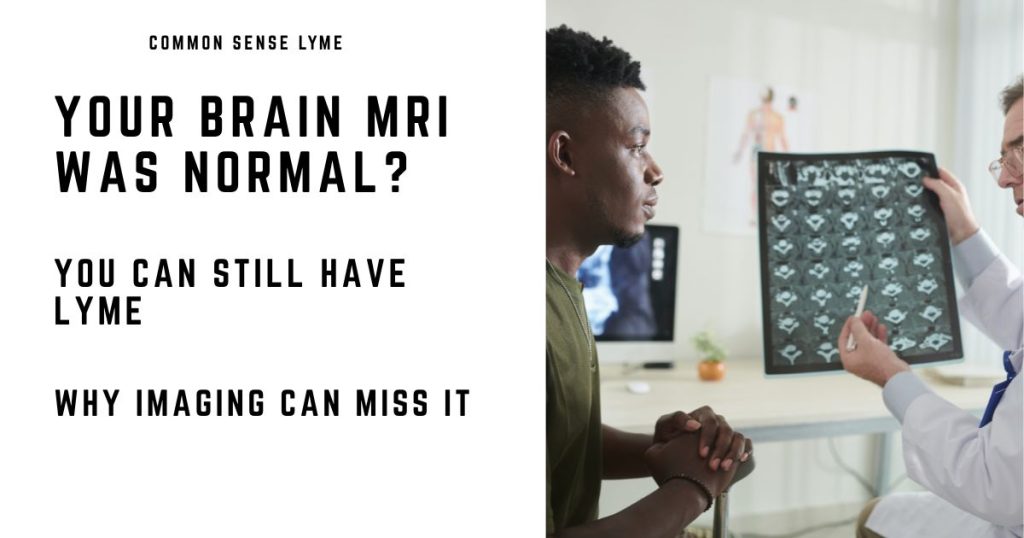
YOUR BRAIN MRI WAS NORMAL

Can Lyme Disease Show Up on an MRI? What Brain Imaging Reveals

Can Lyme Disease Show Up on an MRI? What Brain Imaging Reveals Can Lyme disease show up on an MRI? Sometimes—but often it does not. Many patients with neurologic Lyme disease have normal brain imaging, even when symptoms such as brain fog, memory problems, or nerve pain are severe. Quick answer: Brain MRI in Lyme […]

Can Lyme Disease Show Up on an MRI? What Brain Imaging Reveals Read More »

C6 peptide ELISA used for Lyme disease testing

C6 peptide test may indicate Borrelia miyamotoi infection

C6 Peptide Test May Indicate Borrelia miyamotoi Infection POSITIVE C6 TEST—BUT WESTERN BLOT IS NEGATIVE? IT MAY NOT BE LYME DISEASE Quick Answer: A positive C6 peptide test with a negative Western blot may suggest Borrelia miyamotoi infection rather than Lyme disease. Clinical Insight: When laboratory results don’t match the clinical picture, alternative tick-borne infections

C6 peptide test may indicate Borrelia miyamotoi infection Read More »

Treatment of Lyme Arthritis

Treatment of Lyme arthritis with disease-modifying antirheumatic drugs (DMARD)

Treatment of Lyme Arthritis: Are DMARDs Appropriate? The decision to use DMARD therapy in Lyme arthritis depends on whether persistent infection has been adequately treated or excluded. The treatment of Lyme arthritis with disease-modifying antirheumatic drugs (DMARDs) remains controversial. DMARDs are designed to slow inflammatory disease progression, but their role in Lyme arthritis depends on

Treatment of Lyme arthritis with disease-modifying antirheumatic drugs (DMARD) Read More »

Brain Imaging in Lyme Disease: MRI & MRS for Cognitive Impairment

Brain Imaging in Lyme Disease: Can MRI or MRS Detect Cognitive Impairment? Brain imaging in Lyme disease may provide insight into cognitive symptoms, even when standard tests appear normal. Patients with Lyme disease frequently report cognitive symptoms such as memory problems, slowed processing, and difficulty concentrating. Yet conventional imaging studies are often unrevealing. Emerging techniques

Brain Imaging in Lyme Disease: MRI & MRS for Cognitive Impairment Read More »

delayed treatment Lyme disease

Consequences of antibiotic stewardship for Lyme disease patients. An opinion.

Delayed Antibiotics and Lyme Disease: What Are the Risks? Delays can change outcomes Early treatment matters Stewardship has trade-offs Timing may be critical Does delaying antibiotics affect outcomes? A large study suggests that delayed or withheld antibiotic treatment can significantly increase complications—and raises important questions for Lyme disease care. What the Study Found In a

Consequences of antibiotic stewardship for Lyme disease patients. An opinion. Read More »

children with Lyme disease symptoms

Children With Lyme Disease: Parents Describe Fear, Frustration, and Delays

Children With Lyme Disease: Delays and Challenges Parents of children with Lyme disease often describe a difficult path marked by delayed diagnosis, persistent symptoms, and frustration with the medical system. In fact, one study found that in Ontario, Canada adolescents ages 15 to 19 comprised the group most frequently hospitalized for Lyme disease.¹ The number

Children With Lyme Disease: Parents Describe Fear, Frustration, and Delays Read More »

How Many Patients Do Not Meet the CDC Criteria for Lyme Disease?

How Many Patients Do Not Meet the CDC Criteria for Lyme Disease? How many patients do not meet the CDC criteria for Lyme disease? A study by Kobayashi and colleagues found that nearly 3 out of 4 patients referred to an infectious diseases clinic did not meet the CDC criteria for Lyme disease based on

How Many Patients Do Not Meet the CDC Criteria for Lyme Disease? Read More »

Hispanic risk of Lyme disease

Hispanic Risk of Lyme Disease Hispanic risk of Lyme disease may be influenced by differences in access to care, awareness, and prevention practices. In their article, “Knowledge and prevention of tick-borne diseases among Hispanic and non-Hispanic residents of Maryland and Virginia,” Hu and colleagues found that Hispanics were more likely to have disseminated Lyme disease

Hispanic risk of Lyme disease Read More »

Lyme vaccine for humans. The race for a new vaccine.

Lyme Vaccine for Humans: The Race for a New Vaccine Lyme vaccine for humans remains an important goal, but past challenges continue to shape the path forward. LYMErix was withdrawn from the market in 2002 after concerns over its safety, raising ongoing questions about whether researchers can develop an effective and safe Lyme disease vaccine.

Lyme vaccine for humans. The race for a new vaccine. Read More »

Babesia duncani emerges in Eastern U.S. and may go undetected

Babesia duncani Emerges in Eastern U.S. and May Go Undetected TESTING NEGATIVE—BUT SYMPTOMS CONTINUE? A DIFFERENT BABESIA SPECIES MAY BE MISSED “My test was negative—but I still have night sweats and fatigue.” For some patients, the issue isn’t whether Babesia is present—it’s whether the right species is being tested. Quick Answer: Babesia duncani is now

Babesia duncani emerges in Eastern U.S. and may go undetected Read More »