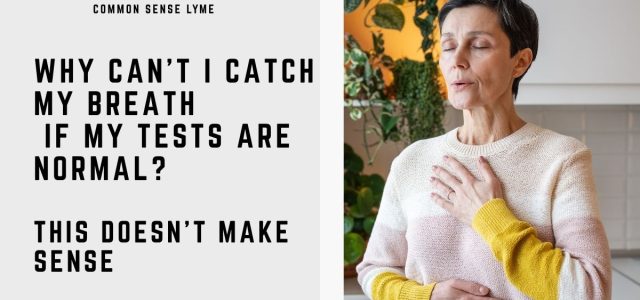
Babesia Autonomic Dysfunction: Air Hunger, Breathing Changes, and Severe Symptoms
Babesia autonomic dysfunction may cause air hunger, crushing fatigue, night sweats, chest pressure, palpitations, and severe autonomic symptoms even when oxygen levels and imaging are normal.
Many patients describe an overwhelming sensation that something is profoundly wrong physically, even when emergency evaluations appear reassuring.
Patients often use these words not for drama, but because Babesia can create a powerful body-wide sense of physiologic threat.
Air hunger, chest pressure, palpitations, dizziness, weakness, and a feeling of impending collapse are among the most distressing symptoms reported.
Many patients say they have never felt this sick before, even if they have lived through Lyme disease or other serious illnesses.
Why Babesia Can Cause Severe Breathing Symptoms
Babesia is a malaria-like parasitic infection that infects red blood cells, but its most frightening symptoms are not explained by anemia alone.
Many patients develop sudden air hunger, chest tightness, palpitations, dizziness, repeated yawning, weakness, or a sense of suffocation despite normal lung examinations and normal oxygen saturation.
Some describe breathing that feels manual rather than automatic.
In many cases, these symptoms are best explained by autonomic nervous system dysregulation.
Babesia can trigger an intense physiologic stress response that disrupts breathing control, heart rate regulation, vascular tone, and carbon dioxide sensing.
The result can be a powerful sensation of danger or suffocation even when standard cardiopulmonary testing appears reassuring.
This is not airflow obstruction and not “just anxiety.” It is a physiologic disturbance of regulation.
Why Oxygen Levels Can Remain Normal
One of the most confusing aspects of Babesia-related air hunger is that oxygen saturation is often normal.
Standard tests primarily measure oxygen exchange and lung function—not autonomic regulation of breathing patterns or physiologic stress signaling.
As a result, patients may feel unable to get a satisfying breath even when pulse oximetry, chest imaging, pulmonary testing, and cardiac studies appear normal.
This mismatch between symptoms and testing can leave patients feeling frightened, misunderstood, or dismissed.
Why These Symptoms Are Often Missed
Babesia testing has well-recognized limitations. Blood smears may be negative. Antibody responses can be delayed or absent. PCR sensitivity varies.
Some patients continue to experience persistent or relapsing symptoms even after acute infection appears to improve.
The absence of detectable parasitemia does not necessarily mean the absence of physiologic impact.
Autonomic dysregulation, inflammatory signaling, residual red blood cell effects, or overlapping tick-borne coinfections may continue contributing to symptoms in some patients.
As a result, patients are sometimes told that testing is normal or that Babesia cannot explain how sick they feel.
Feeling unable to breathe normally while being told nothing is wrong can become one of the most destabilizing aspects of this illness.
Babesia and Persistent Symptoms
Some patients continue to experience exertional intolerance, palpitations, air hunger, dizziness, weakness, or autonomic instability even after the acute phase of infection has improved.
These persistent symptoms may overlap with post-treatment Lyme disease syndrome (PTLDS), dysautonomia, or broader persistent Lyme disease mechanisms.
In some patients, autonomic dysfunction and anemia coexist, compounding symptom severity.
Recognizing these overlapping mechanisms may help explain why recovery patterns vary significantly between patients.
What Helps
Patients often improve when Babesia is accurately identified and treated, co-infections are addressed, and autonomic instability is recognized.
Understanding why the body feels this way can reduce fear, even before symptoms fully resolve.
Many patients report improvement once breathing dysregulation, autonomic symptoms, and overlapping infections are addressed together rather than viewed as isolated problems.
Clinical Takeaway
Babesia autonomic dysfunction can create severe breathing discomfort, air hunger, chest pressure, and physiologic distress even when oxygen levels and imaging appear normal.
When patients report unexplained air hunger, palpitations, autonomic symptoms, drenching night sweats, or profound fatigue following tick exposure, Babesia and overlapping autonomic dysfunction may warrant consideration.
Frequently Asked Questions
What is Babesia autonomic dysfunction?
Babesia autonomic dysfunction refers to disruption of autonomic nervous system regulation associated with Babesia infection, leading to symptoms such as air hunger, palpitations, dizziness, temperature dysregulation, and breathing abnormalities.
Why does Babesia cause air hunger?
Babesia may disrupt autonomic breathing control, vascular regulation, and physiologic stress signaling, creating the sensation of not getting enough air despite normal oxygen levels.
Can oxygen levels remain normal?
Yes. Many patients with Babesia-related air hunger have normal oxygen saturation, chest imaging, pulmonary testing, and cardiac studies.
Can Babesia feel like anxiety?
Symptoms may mimic panic or anxiety, but many patients experience a true physiologic disturbance involving autonomic regulation rather than a primary psychiatric disorder.
Can symptoms persist after treatment?
Some patients continue to experience autonomic symptoms, exertional intolerance, or breathing dysregulation even after the acute infection improves.
Related Articles
- Babesia Symptoms and Treatment
- Autonomic Dysfunction in Lyme Disease
- Lyme Disease Coinfections
- Post-Treatment Lyme Disease Syndrome
- Night Sweats and Babesia
- Lyme Disease Symptoms Guide
References
- Vannier E, Krause PJ. Human babesiosis. N Engl J Med. 2012;366(25):2397-2407.
- Adler BL, Vernino S. Dysautonomia following Lyme disease: A key component of post-treatment Lyme disease syndrome?. Front Neurol. 2024;15:1344862.
- Raj SR. Postural tachycardia syndrome (POTS). Circulation. 2013;127(23):2336-2342.
- Krause PJ, Auwaerter PG, Bannuru RR, et al. Clinical practice guidelines by the Infectious Diseases Society of America (IDSA): 2020 guideline on diagnosis and management of babesiosis. Clin Infect Dis. 2021;72(2):e49-e64.
Dr. Daniel Cameron, MD, MPH
Lyme disease clinician with over 30 years of experience and past president of ILADS.
Symptoms • Testing • Coinfections • Recovery • Pediatric • Prevention

Hi,
Does Babesia linger and have flare ups even after treatment?
Thank you
i have the same question too.
Absolutely. Not enough research so we use ant malarials. There are quite a few of us who will be treating Babesia for rest of our lives.
Babesia can be persistent in some patients, and symptoms may recur or fluctuate after treatment. This can reflect incomplete clearance, immune factors, or other overlapping conditions. Ongoing or returning symptoms should be evaluated individually rather than assumed to be a flare.
I’ve had chronic air hunger for 8 months. PFT normal with no bronchiodiolator response, endoscopy normal, PPI trial do nothing, CBC/Ferritin blood panels healthy, essentially all diseases have been ruled out with heart and lungs. Could I have babesia? I have really no other symptoms maybe some mild fatigue every so often. I just have this unbearable air hunger which I do not believe is anxiety or breathing pattern at all if I’m being totally honest. I’m 5’9” 149lbs male who is active and fit (the air hunger has made this harder), however I still regularly workout and am able to maintain my physical health.
Yes—Babesia can cause persistent air hunger, sometimes with minimal other symptoms and normal heart and lung testing. It’s reasonable to discuss targeted Babesia testing with a clinician experienced in tick-borne disease, especially when standard evaluations are unrevealing.
I was diagnosed with Lyme in 2005, but I was very sick for two years prior to getting a diagnosis. I’ve had three LLMDs, and the third told me I had three co-infections: babesia, erhrlichiosis, and mycoplasma pneumonia. That was in 2009, and I went into remission at that time. I’ve been so much better over the years, but I still have to pace myself because of fatigue. I can literally do pretty much any activity I want to, but I pay for it for days. I usually don’t feel the fatigue for hours after exercising, and sometimes it’s the next day. Early on in 2003, I had air hunger, and I still have it on occasion. Sometimes it is painful to take a deep breath. Could it be that I still have untreated babesia?
Here’s a concise, safe response you can use:
—
Thank you for sharing this—many patients describe a similar pattern of improvement with ongoing limits like delayed fatigue and occasional symptoms such as air hunger.
I can’t provide individual medical advice here, but symptoms like fatigue and shortness of breath can have multiple causes over time. In some cases, conditions like Babesia infection may be part of the discussion, while in others, lingering or overlapping factors need to be considered.
A careful, individualized evaluation can help sort out what’s contributing now and what next steps make sense.