Night Sweats Babesia: The Symptom Doctors Miss
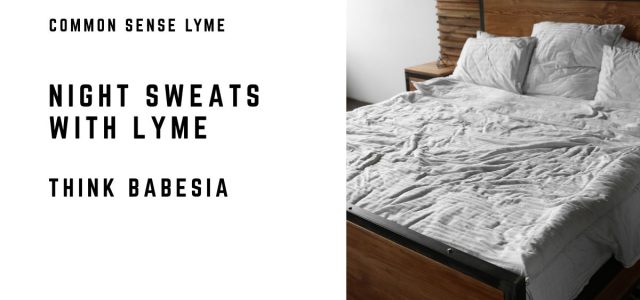
Night sweats from Babesia are one of the most distinctive — and most commonly missed — symptoms in tick-borne illness. Patients describe drenching sweats that soak bedding and clothing, often appearing without explanation and resistant to standard treatment.
Night sweats can significantly disrupt sleep and are part of broader sleep disorders in Lyme disease, especially when co-infections such as Babesia fragment sleep night after night.
For a broader overview of Babesia symptoms, testing, and treatment, see our Babesia and Lyme disease guide.
When night sweats follow a tick bite or appear alongside Lyme disease, Babesia coinfection deserves serious consideration. Yet many clinicians attribute these sweats to menopause, stress, or anxiety — delaying diagnosis and prolonging suffering.
Understanding the connection between night sweats and Babesia can change the course of care.
What Night Sweats From Babesia Feel Like
Night sweats caused by Babesia are different from ordinary sweating. Patients commonly describe:
- Drenching sweats that soak sheets, pillows, and clothing
- Episodes that occur multiple times per night
- Sweats accompanied by chills, shaking, or temperature swings
- Waking up soaked even in a cool room
- Sweating patterns that do not respond to hormone treatment or anxiety management
These episodes are often the first clue that something beyond Lyme disease is at play. For many patients, night sweats from Babesia are the symptom that eventually leads to a correct diagnosis.
Why Babesia Causes Night Sweats
Babesia is a microscopic parasite that infects red blood cells, similar to malaria. Unlike Lyme disease, which is bacterial, Babesia is a protozoal infection requiring different medications for effective treatment.
The parasite triggers cycles of red blood cell destruction and immune activation that produce fever-like responses — including drenching night sweats, chills, and temperature dysregulation — similar to the cyclical symptoms seen in malaria.
Because Babesia lives inside red blood cells, the immune system’s attempt to clear the infection generates intense inflammatory responses that can contribute to nighttime sweats and chills.
This malaria-like behavior helps explain why many patients experience recurring episodes rather than isolated hot flashes. The cyclical nature of the infection may contribute to repeated nighttime symptoms.
Night Sweats, Babesia, and Other Symptoms Doctors Miss
Night sweats from Babesia rarely appear in isolation. Other symptoms that raise suspicion for Babesia coinfection include:
- Air hunger — unexplained shortness of breath or inability to get a satisfying breath
- Severe fatigue — often described as crushing and disproportionate to activity
- Temperature dysregulation — unexplained hot-and-cold sensations
- Pressure headaches — different from prior headache patterns
- Autonomic symptoms — anxiety or sense of doom
- Vivid dreams — unusually intense or disturbing dreams
When these symptoms appear alongside night sweats — particularly after treatment for Lyme disease — Babesia coinfection deserves evaluation.
Why Night Sweats From Babesia Are Often Blamed on Something Else
Night sweats are a nonspecific symptom with a broad differential diagnosis. Clinicians commonly attribute them to menopause, anxiety, medication side effects, or stress — often before considering tick-borne infection.
This is especially problematic for women in their 40s and 50s, where Babesia night sweats are frequently dismissed as hormonal. The sweats may look similar on the surface, but Babesia sweats typically do not respond to hormone therapy and are accompanied by the constellation of symptoms described above.
When standard explanations do not fit — or when sweats appear alongside fatigue, air hunger, or cognitive changes — Babesia should remain on the differential diagnosis.
Babesia and Lyme Disease Often Occur Together
Babesia and Lyme disease share the same tick vector and frequently occur together. Coinfected patients may experience overlapping symptoms, making diagnosis more difficult.
A report from Atlantic Canada described a patient with repeated Lyme disease episodes who later developed PCR-confirmed babesiosis. The case illustrates how Babesia may emerge in regions where Lyme disease is already established and why clinicians should consider coinfection when unexplained fever, fatigue, thrombocytopenia, or night sweats develop.
Why Babesia Is Often Missed on Testing
Laboratory testing for Babesia has significant limitations. Blood smears frequently fail to detect infection, particularly in chronic or low-level cases. The parasites may be present in numbers too small to visualize.
Antibody testing may also be negative early in disease or in patients with immune dysfunction.
As a result, Babesia is often a clinical diagnosis — based on symptom patterns, night sweats history, and response to treatment rather than laboratory confirmation alone.
Persistent symptoms after Lyme disease have been reported in prospective studies, particularly in patients with disseminated infection. Symptoms such as fatigue, musculoskeletal pain, cognitive difficulties, and night sweats highlight the importance of considering coinfections and maintaining a broad differential diagnosis.
The Relapse Pattern: When Night Sweats Return After Lyme Treatment
One of the most telling patterns is when night sweats appear or return after completing Lyme disease antibiotics.
Patients often describe meaningful improvement during treatment, followed weeks later by returning symptoms — fatigue, night sweats, air hunger, and cognitive difficulty.
The gains slip away.
This happens because standard Lyme antibiotics do not treat Babesia.
As a result, persistent symptoms may be mistakenly attributed to Lyme relapse when an untreated coinfection is contributing to the clinical picture.
When treatment stops, the parasite continues causing symptoms that look like Lyme relapse but are actually untreated coinfection.
This is one reason persistent symptoms after Lyme treatment may require evaluation for coinfections rather than assuming Lyme therapy failed.
Can Night Sweats From Babesia Improve?
Yes.
When Babesia is identified and treated with appropriate antimicrobial therapy — typically atovaquone and azithromycin — night sweats often improve or resolve.
Some patients notice improvement within the first week of treatment, while others require longer courses.
Because Babesia is a parasite rather than a bacterium, it requires different medications than Lyme disease.
Clinical Takeaways
Recognizable pattern: Babesia night sweats are typically drenching, recurrent, and resistant to standard explanations such as menopause or anxiety.
Cluster of symptoms: Night sweats often occur alongside air hunger, fatigue, temperature swings, and autonomic symptoms — forming a recognizable clinical pattern.
Why symptoms persist: Standard Lyme antibiotics do not treat Babesia, which may explain relapse after Lyme treatment.
Testing limitations: Babesia is frequently missed on laboratory testing, making clinical pattern recognition essential.
Frequently Asked Questions
Can Babesia cause night sweats?
Yes. Babesia night sweats are one of the most distinctive symptoms of the infection and are often drenching episodes accompanied by chills and temperature swings.
How are Babesia night sweats different from menopause?
Babesia night sweats typically do not respond to hormone therapy and are accompanied by symptoms such as air hunger, crushing fatigue, temperature swings, and cognitive changes.
Why do night sweats return after stopping Lyme antibiotics?
Untreated Babesia coinfection is one possible explanation. Standard Lyme antibiotics do not treat Babesia because it is a parasite requiring different medications.
Related Reading
- Vivid Dreams and Night Sweats in Lyme Disease
- Sweats May Be a Sign of Babesia
- Babesia: What Lyme Patients Need to Know
- Why Babesia Causes Air Hunger
- Babesia Testing: Why False Negatives Delay Treatment
- Autonomic Dysfunction and Lyme Disease
References
References
- Geebelen L, Lernout T, Devleesschauwer B, et al. Non-specific symptoms and post-treatment Lyme disease syndrome in patients with Lyme borreliosis: a prospective cohort study in Belgium (2016–2020). BMC Infect Dis. 2022;22:756.
- Ścieszka J, Dąbek J, Cieślik P. Post-Lyme disease syndrome. Reumatologia. 2015;53(1):46-48.
- Allehebi ZO, Khan FM, Robbins M, et al. Lyme Disease, Anaplasmosis, and Babesiosis, Atlantic Canada. Emerg Infect Dis. 2022;28(6):1292-1294.
Dr. Daniel Cameron, MD, MPH
Lyme disease clinician with over 30 years of experience and past president of ILADS.
Symptoms • Testing • Coinfections • Recovery • Pediatric • Prevention