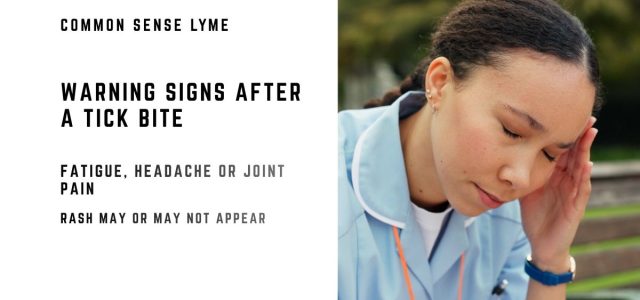
Bad Signs After a Tick Bite: 7 Warnings You Shouldn’t Ignore
It often begins with something easy to dismiss.
A small rash that fades. A few days of fatigue. A headache that doesn’t quite make sense. These are the bad signs after a tick bite that too often get dismissed. Weeks later, joint pain or brain fog appears—and the tick bite is long forgotten.
By the time symptoms are recognized as something more serious, they are often blamed on stress, aging, or another unrelated condition.
Delayed recognition of tick-borne illness remains common when early symptoms are subtle, inconsistent, or mistaken for unrelated conditions.
Knowing the bad signs after a tick bite can make a critical difference in outcomes. Many of these warning signs overlap with broader symptom patterns seen in Lyme disease, particularly when diagnosis is delayed.
1. A Red, Expanding Rash
An expanding skin rash—known as erythema migrans—is one of the clearest early signs of Lyme disease.
Key features include:
- Appears 3 to 30 days after a tick bite
- Gradually expands outward
- May be solid red, blotchy, or bruise-like—not always a classic bull’s-eye
- Usually not itchy or painful, but may feel warm
If a rash grows beyond 2 inches or continues to expand, medical evaluation is warranted.
Other skin findings to watch for:
- Multiple rashes in different locations (possible dissemination)
- Significant swelling or discoloration around the bite
- Blisters or ulcerations, which may suggest another tick-borne infection
2. Flu-Like Symptoms Without a Clear Cause
Early tick-borne illness often resembles a viral infection—but without typical respiratory symptoms.
Possible signs include:
- Fever or chills
- Night sweats
- Severe fatigue that does not improve with rest
- Muscle or joint aches that worsen over time
If these symptoms occur outside of flu season, or persist longer than expected, tick-borne illness should be considered. Many patients describe feeling like they have the flu but without the cough or congestion—a pattern worth noting.
3. Joint Pain, Muscle Aches, or Stiffness
Lyme disease and related infections can affect joints and muscles in ways that mimic other conditions.
Concerning patterns include:
- Pain that moves from one joint to another
- Swelling of large joints, especially the knees
- Deep, persistent muscle pain rather than brief soreness
These symptoms may appear weeks or months after a tick bite and are sometimes mistaken for aging, overuse, or autoimmune disease. When joint symptoms appear without a clear cause, a history of tick exposure should be part of the evaluation.
Some individuals experience fluctuating symptoms over time, with periods of improvement followed by worsening fatigue, pain, dizziness, or cognitive problems.
4. Headaches, Neck Stiffness, or Neurologic Symptoms
When infection involves the nervous system, symptoms may include:
- Persistent or severe headaches
- Neck stiffness
- Tingling, numbness, or shooting pains
- Balance problems or dizziness
- Facial weakness (Bell’s palsy)
- Cognitive symptoms such as brain fog or difficulty concentrating
Because these symptoms overlap with migraines, stress, or anxiety, the connection to a prior tick bite is sometimes missed. Neurological involvement is one of the more serious bad signs after a tick bite—and early treatment can prevent lasting damage.
5. Chest Pain, Palpitations, or Shortness of Breath
Lyme disease can affect the heart, a condition known as Lyme carditis.
Warning signs include:
- Chest pain or pressure
- Irregular heartbeat or palpitations
- Lightheadedness or fainting
- Shortness of breath with minimal exertion
These symptoms require urgent medical evaluation. Lyme carditis can cause heart block and, in rare cases, has been fatal—particularly in young, otherwise healthy individuals.
Some patients with tick-borne illness also develop autonomic symptoms involving heart rate regulation, dizziness, temperature instability, or exercise intolerance. For more on how Lyme disease affects the autonomic nervous system, see autonomic dysfunction in Lyme disease.
6. Digestive Symptoms After a Tick Bite
Some tick-borne infections can cause gastrointestinal symptoms such as:
- Nausea or vomiting
- Abdominal pain
- Diarrhea or constipation
- Loss of appetite or unintended weight loss
Digestive symptoms are often overlooked but can be part of the clinical picture. When standard GI workups come back normal but symptoms persist, tick-borne illness deserves consideration.
7. Mood or Behavioral Changes
Tick-borne infections can affect mood and behavior, sometimes mimicking psychiatric conditions.
Possible changes include:
- Sudden anxiety or panic
- Irritability or mood swings
- Depression that does not respond to usual treatment
- In severe cases, paranoia or obsessive thoughts
These neuropsychiatric symptoms can be particularly distressing—and are often attributed to stress or preexisting mental health conditions rather than infection.
When to Seek Medical Care
Not every tick bite leads to illness—but when symptoms evolve, persist, or involve the nervous system or heart, early evaluation matters.
If you recognize one or more of these bad signs after a tick bite, do not wait for symptoms to worsen or for tests to become positive. A careful clinical evaluation—guided by symptoms and exposure history—can make a meaningful difference in outcomes.
Clinical Takeaway
Bad signs after a tick bite include expanding rash, flu-like illness, joint pain, neurologic symptoms, heart symptoms, digestive changes, and mood or behavioral shifts.
When these symptoms appear after outdoor exposure — especially in Lyme-endemic areas — early evaluation is warranted regardless of whether testing is positive or a tick was ever seen.
Related Articles
- Lyme Disease Symptoms Guide
- Lyme Carditis: What You Need to Know
- Autonomic Dysfunction in Lyme Disease
- Preventing Chronic Lyme Disease: Why Early Treatment Is Critical
References
- CDC. Signs and Symptoms of Untreated Lyme Disease. Centers for Disease Control and Prevention.
Dr. Daniel Cameron, MD, MPH
Lyme disease clinician with over 30 years of experience and past president of ILADS.
Symptoms • Testing • Coinfections • Recovery • Pediatric • Prevention


I have found 3 seed ticks on me in the last month. Each spot itched like crazy after they were removed and my ankle became really sore like I sprained it. Also my right shoulder is sore some days I can raise it and move with no problem and other days I can’t hardly raise it at all. Also get tired easily.
While visiting Philadelphia Wissahickon woods Nov. 2025, I got a tick bite. Not a woodtick or deer tick I would see in Minnesota. I was headed home the next day and developed large itchy reddened area on leg. I had washed and applied antiseptic after removing. Living in Minnesota and experience with Lymes, I tend to have doxycycline on hand. I started having symptoms, redness pain in the bite area, but symptoms progressed during the flght home that took a full day. My brain felt pain inside my head if I moved it too quickly. I felt foggy, tired. I took doxycycline as soon as I got home. After two doses, I started to feel improvement and continued with doxycycline for 2 wks. Brain fog remained for quite some time but gradually improved. Memory issues became more apparent and recently diagnosed with Alzheimers. Is it too coincidental? Is it possible there is a connection?
Bonjour il y a 3-4 ans je me suis faite piqué par une tique brune. Je l’ai retiré comme il fallait. Cependant depuis une plaque rouge gros comme une pièce de 10 cent est demeuré depuis cela démange souvent et je peux pas empêché les frotis de vêtements dessus alors je mets un diachilon dessus. Est-ce inquietant?
That would be up to the doctor for an assessment
What does a hard lump under the skin from a tick biye
I have seen a bump just from the irritation from the tick
I have been diagnosed with Lyme co-infection of anaplasmosis. Have had it for several months. I complained of headaches, brain fog, muscle pain, flu-like symptoms, bone pain, severe fatigue. I am now taking doxycycline. Will it get rid of all my symptoms?
I very rarely go outside i e been bit 2 times by a large tick and a small tick what do i do if anything
I found a ticket at the bass of my neck. I didn’t know it was a tic and I pulled it out and thought it was a bump. This was on June 28th. I’ve felt nauseous, headache and terrible since then. It’s an American female dog tic.
I’ve had GI issues. Fatigue. I have autoimmune disease. Should I go to the dr.
I encourage my patient to be assessed if ill
My husband is currently waiting in ER…
He had a raging fever last night, and quite by accident I saw a huge angry red circle with big spit in the middle..there was another pinkish circle around the red one…quite large a baseball size… on his calf.
Not itchy…. Just in the centre. We visited our local Pharmacist. Who told him to go straight to the Hospital …. They took him in immediately… diagnosis was a tick bite. He had been waiting 4 hrs. now, for them to assess it, to provide the proper treatment.
This certainly explained his unusual fatigue. We are in wooded farmland country… but he takes much caution when out working.
Still waiting for his treatment diagnosis.
Thank for your information… very helpful!👍🏼
same thing right now, waiting for er diagnosis. hope your better.
Hard to tell symptoms as I also have PMR and am seining off steroids it gives the same symptoms . But I will continue to monitoe